Cold email remains one of the most effective outbound channels for B2B SaaS companies. Studies show it can generate reply rates of around 1% to 10%, depending on targeting and message quality, making it a consistent source of qualified leads.
It allows SaaS teams to reach decision makers directly without relying only on paid ads or inbound traffic. Success depends on precise targeting, strong messaging, and a structured approach that focuses on real business problems instead of generic promotion.
When executed well, it supports predictable pipeline growth and long-term revenue impact. Read the full post to explore each step and improve SaaS outreach results.
What Is A B2B SaaS Cold Email?
A B2B SaaS cold email is a first message sent to a business contact who has no prior interaction with your software company. The goal is to introduce your product, show clear value, and start a conversation that can lead to a demo or trial. In the SaaS space, this email focuses on solving a specific business problem through a digital solution, not just selling a service.
Unlike general outreach, SaaS cold emails rely on product use cases, data points, and quick proof of value. They often highlight how the software fits into existing workflows and improves results.
Distinct traits of B2B SaaS cold email:
- Focus on product benefits tied to real problems.
- Clear call to try, test, or book a demo.
- Short, direct message with measurable outcomes.
- Use of automation tools for scale.
- Personalization based on company or role.
Why Cold Email Still Drives SaaS Growth
The reasons that make cold email effective for SaaS growth and consistent lead generation across industries are:
- Direct access to decision makers allows SaaS teams to start conversations without waiting for inbound traffic or platform algorithms
- Low cost per contact makes it attractive for early stage SaaS companies aiming to grow without heavy marketing budgets
- Scalable outreach systems enable teams to contact large prospect lists while keeping messaging consistent and efficient
- Measurable performance metrics such as open rates and replies help refine campaigns and improve results over time
- Personalization at scale increases relevance, helping messages connect with specific roles, industries, and business pain points
How Should a Cold Email Strategy for B2B SaaS Be Structured?
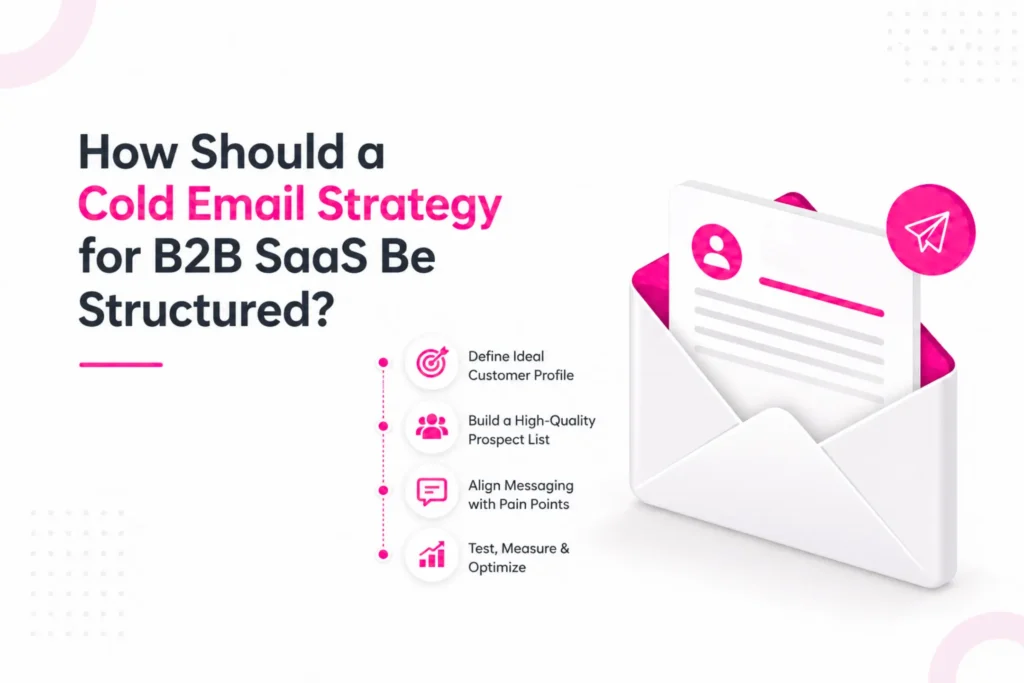
To be effective, a B2B SaaS cold email strategy needs to be organized in this way:
Defining Ideal Customer Profile (ICP)
A clear Ideal Customer Profile helps you target companies that gain the most value from your SaaS product. Start with firmographics like industry, company size, and revenue, then add role-specific details such as job title, goals, and daily challenges that shape buying decisions.
This focus helps avoid wasted outreach and improves response rates over time. For example, a CRM SaaS company may target sales managers at B2B firms with 20 to 100 employees who struggle with lead tracking and follow-ups.
A project management tool might focus on tech startups that need better team coordination across remote workers. A well-defined ICP ensures your emails reach the right audience and increase meaningful replies.
Building a high-quality prospect list
A strong prospect list ensures your emails reach people who fit your ICP and have real interest in your solution. Use trusted sources like LinkedIn, company websites, and verified data tools to collect accurate contact details with strong relevance.
Focus on quality B2B prospect lists instead of volume. A SaaS tool for HR teams can gather HR managers from mid-sized firms instead of sending emails to unrelated departments that reduce engagement.
Prospect list building steps for better accuracy and engagement:
- Use LinkedIn for role-based searches across relevant industries
- Pull contacts from verified databases with updated information
- Filter companies by size, revenue, and industry fit
- Remove inactive, duplicate, or invalid email addresses regularly
- Double-check job titles to match decision-making roles
Clean data improves deliverability, protects sender reputation, and increases reply rates from the same outreach effort.
Aligning messaging with SaaS pain points
Your message should connect with real problems your audience faces and clearly show how your SaaS product solves them in practical situations. Avoid generic claims and focus on outcomes that matter in daily work. Speak in simple terms and highlight value early so readers understand relevance within seconds.
If your SaaS improves customer support, show how it lowers response times and increases customer satisfaction scores. Match messaging to role priorities since finance leaders care about cost savings while marketers focus on growth and conversions, which improves response rates.
Writing clear and engaging email copy
Your email copy should stay simple, direct, and easy to read while guiding the reader from problem to solution without confusion. Start with a short intro that grabs attention and moves quickly toward value.
Keep sentences structured but not overly short, and avoid complex terms that slow down understanding. Focus on one core idea per email to maintain clarity and impact.
Explain how the product works in one or two lines using practical language. End with a clear next step such as booking a demo or starting a short conversation.
Testing and improving campaign performance
Regular testing helps improve results and keeps your strategy effective over time through data-driven adjustments across multiple variables. Try different subject lines, email formats, and calls to action to identify what drives stronger engagement.
Track open rates, replies, and conversions to measure performance and spot weak areas.
Performance improvement actions to refine cold email results:
- Test subject lines focused on time savings versus business growth outcomes
- Compare messages centered on revenue impact and operational efficiency
- Adjust email length and structure for better readability and engagement
- Review reply quality to identify high-intent prospects, not just volume
- Refine targeting based on response data and engagement patterns over time
Use results to improve future campaigns, as continuous testing creates steady improvement and stronger cold email performance across SaaS outreach efforts.
What Cold Email Practices Work Best for B2B SaaS?
Effective cold email practices require the following components:
- Personalization: Use company details, role context, and recent activity to make each email feel relevant and specific to the recipient
- Benefit-driven messaging: Highlight clear outcomes your product delivers, such as saving time, reducing costs, or improving team performance
- Short and clear emails: Keep emails concise with simple language so readers quickly understand value without losing interest or attention
- Strong subject lines: Write subject lines that spark curiosity or show value, increasing open rates across different audience segments
- Clear call to action: Guide the reader toward one simple next step, such as booking a demo or replying for more details
- Consistent follow-ups: Send polite follow-ups to stay visible and increase chances of response without overwhelming the recipient
- Relevant timing: Send emails at times when business users are active, improving the likelihood of opens and replies
What Is an Effective Cold Email Framework for B2B SaaS?
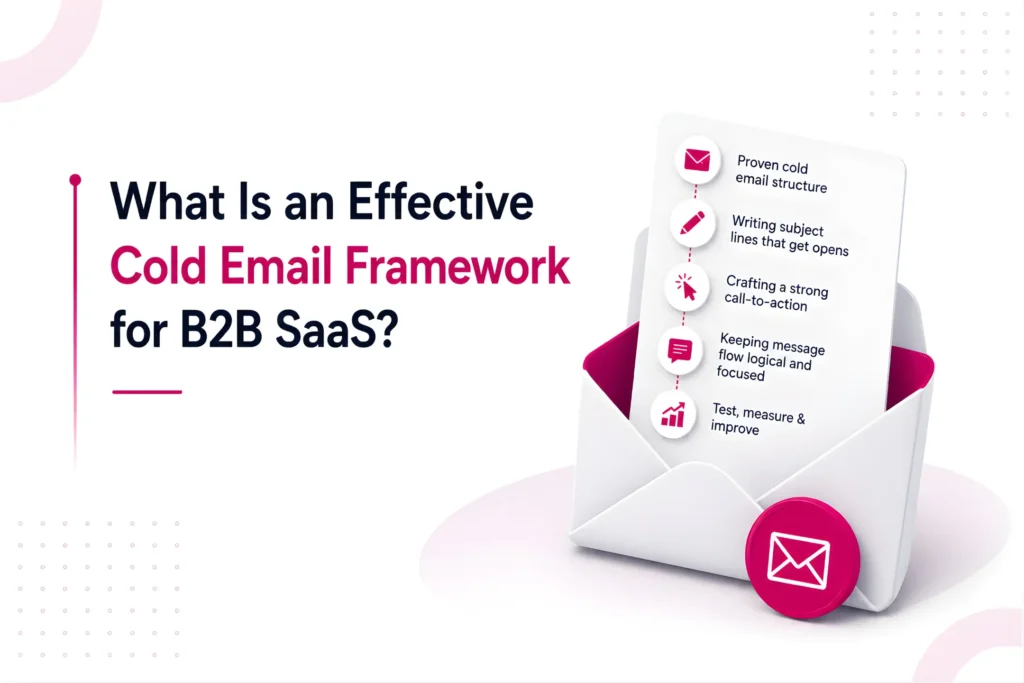
A well-structured SaaS cold email framework should appear in this format:
Proven cold email structure
A strong cold email structure keeps your message easy to follow and focused on value. Start with a short opening that shows relevance, such as a quick observation about the company or role. Move into a clear problem that your audience faces, then present your SaaS product as a simple solution.
Add one specific benefit that shows impact. Keep the body concise and avoid extra details. For example, a sales tool can mention lost leads and then show how it improves tracking. End with a clear next step that invites a reply or demo.
Writing subject lines that get opens
Subject lines decide if your email gets opened, so they must stay clear and relevant. Focus on one idea and keep the length short. Use simple words that connect with a real problem or outcome.
For example, a subject line like “Cut reporting time by 40 percent” speaks to a clear benefit.
Avoid clickbait or vague phrases that reduce trust. Personal details such as company name or role can improve open rates. Test different styles to see what works best. A strong subject line creates curiosity while setting the right expectation for the message.
Crafting a strong call-to-action
A strong call to action guides the reader toward a simple and clear next step. Keep it direct and easy to follow. Avoid multiple options that can confuse the reader and reduce replies.
Use friendly language that feels natural and not forced. A line like “Open to a quick 10 minute chat this week?” works well. Place the call to action at the end so it feels like a natural close to the message.
Keeping message flow logical and focused
A clear message flow helps readers move through your email without confusion. Each part should connect smoothly, starting with relevance, then problem, followed by solution and value. Avoid jumping between ideas, as this can break attention.
For example, an email about a marketing tool should not mix unrelated features in one message. Keep the focus on one main outcome, such as improving campaign results. This structure makes your email easier to read and increases the chance of a response.
Which Cold Email Copywriting Formula Works Best for B2B SaaS?
The most effective cold email copywriting formula for B2B SaaS focuses on real problems, clear outcomes, and a simple structure that drives replies. PAS, which stands for Problem, Agitate, Solve, works very well in this space and keeps messaging direct.
A refined version of PAS is the Before-After-Bridge model. It shows the current situation, presents a better outcome, and connects your product as the solution that delivers that result.
Core elements that make this formula effective in SaaS outreach:
- Start with a clear problem that your target audience faces in daily work.
- Build urgency by showing the cost of ignoring that problem over time.
- Present your SaaS product as a simple and practical solution.
- Focus on outcomes like time saved, revenue growth, or efficiency gains.
- Use one low-friction call to action, such as a quick reply or short call
For example, a finance tool can mention manual reporting delays, highlight hours lost weekly, then show how automation saves time. Personalization adds relevance by connecting the message to the recipient’s role or company.
Let’s check a sample email below:
Subject: Reducing manual reporting time for finance teams
Hi {{FirstName}},
Many finance teams spend hours each week compiling reports manually, which slows down decision-making and increases workload pressure.
This often leads to delayed insights, higher error rates, and less time for strategic planning across the team.
{{ProductName}} helps automate reporting so finance teams can reduce manual work and get accurate insights faster. It saves time, improves reporting consistency, and supports better financial decisions.
Teams using it typically reduce reporting time by several hours each week while improving accuracy across key reports.
Open to a quick call to see if this fits your workflow?
How Do You Stay Compliant with GDPR and CAN-SPAM?
Cold email in SaaS must follow legal rules to protect user data, ensure transparency, and avoid penalties. Here’s how to ensure compliance:
GDPR requirements for cold email
GDPR sets strict rules for contacting prospects in the European Union. You need a lawful basis to send emails, such as legitimate interest linked to your business goals. Clearly explain why you contact the person and how you collected their data.
Maintain transparency in every message and store data responsibly. Target only relevant prospects whose roles align with your offer to reduce risk. Include a clear opt-out option and respect user data rights at all times.
CAN-SPAM compliance essentials
CAN-SPAM applies to commercial emails sent to recipients in the United States. It requires a clear sender identity so recipients know who contacts them. Use accurate subject lines that match the content of your message and avoid misleading claims.
Include a visible unsubscribe option in every email and honor requests without delay. Add a valid business address in your email footer. Keep your messaging honest and clear to maintain compliance and protect your sending reputation.
Best Practices to Avoid Spam Filters
Avoiding spam filters in SaaS cold email requires strong technical setup and clean content practices. Here we mention the proven ones:
- Set up SPF, DKIM, and DMARC records correctly to verify your domain and improve email authentication across different email providers
- Warm up new domains and email accounts gradually by sending small volumes before scaling outreach campaigns to larger prospect lists
- Keep email lists clean by removing invalid, inactive, or bounced addresses to maintain a strong sender reputation over time
- Avoid spam trigger words and excessive punctuation that can signal low-quality or promotional content to email filtering systems
- Use plain text or lightly formatted emails instead of heavy HTML designs that may reduce trust and increase spam risk
- Maintain consistent sending volume and avoid sudden spikes that can alert spam filters and harm deliverability performance
- Personalize emails with relevant details to improve engagement, which signals positive behavior to inbox providers
- Include a clear unsubscribe option so recipients can opt out instead of marking your email as spam
Should You Outsource B2B SaaS Cold Email Campaigns?
Yes, outsourcing B2B SaaS cold email campaigns can make sense when your team lacks time, expertise, or technical setup to run campaigns effectively. It allows you to focus on product and sales while experts handle outreach execution.
Outsourcing works well when you need faster results, better deliverability, and consistent campaign management without building an in-house system. It also helps when scaling outreach becomes difficult due to limited resources or knowledge gaps.
Our B2B cold email outreach service helps SaaS companies grow by building targeted lists, crafting high-converting emails, and managing campaigns end to end. We focus on generating qualified leads and consistent pipeline growth through structured outreach systems.
Final Thoughts
Cold email continues to support B2B SaaS growth when executed with focus and discipline. Success depends on clear targeting, simple messaging, and consistent effort across each campaign. Many struggle because they prioritize volume over relevance, which reduces engagement and wastes resources.
A structured approach built on real pain points, short emails, and a clear next step produces stronger results over time. Testing also plays an important role, since small adjustments can significantly improve reply rates.
Overall, cold email works best as a system rather than a one-time activity. SaaS companies that follow a disciplined process tend to build a more predictable pipeline and stronger connections with ideal prospects.