Early cold email campaigns taught me a hard truth, “even strong copy fails if it lacks structure”. Open rates dropped, spam complaints rose, and replies barely arrived. However, focusing on processes changed everything.
Implementing practices like controlled sending volumes, batch rotation, and focusing on one pain point made a noticeable difference in my campaigns.
Short, human messages with light personalization generated responses, and follow-ups drove most of the conversations. Tracking the right metrics helped fix weak spots before they became problems. Once I applied these methods consistently, my campaigns became predictable, and reply rates steadily improved.
Over the past few years, I have planned, launched, and managed hundreds of cold email campaigns. In this article, I outline the proven best practices that helped me generate a significant volume of leads for my clients.
1. Ensure Higher Email Deliverability (Non-Negotiable)
Nothing hurts more than building a strong campaign and then watching emails miss the inbox. If placement fails, the entire strategy collapses.
Every new domain and inbox goes through a controlled 2 to 4 week warm up before real outreach begins. I increase sending activity in small steps so providers recognize normal behavior instead of sudden spikes.
Technical setup always comes first because weak authentication destroys trust fast. Therefore:
- Configure SPF correctly.
- Align DKIM with the sending domain.
- Add and monitor DMARC.
B2B Cold outreach never touches the main company domain since long term brand protection matters. I use multiple secondary domains to reduce overall risk exposure.
Daily volume stays disciplined to avoid red flags across inboxes. Each inbox sends between 15 and 30 emails per day to maintain stability.
The first message avoids common spam triggers and keeps everything minimal:
- No links.
- No images.
- Plain text only.
I clean every list before launch and remove all addresses plus invalid contacts to protect sender reputation. Remember, deliverability always comes first. Copy always comes second.
2. Use Two Batches of Email Accounts (Rotation Strategy)
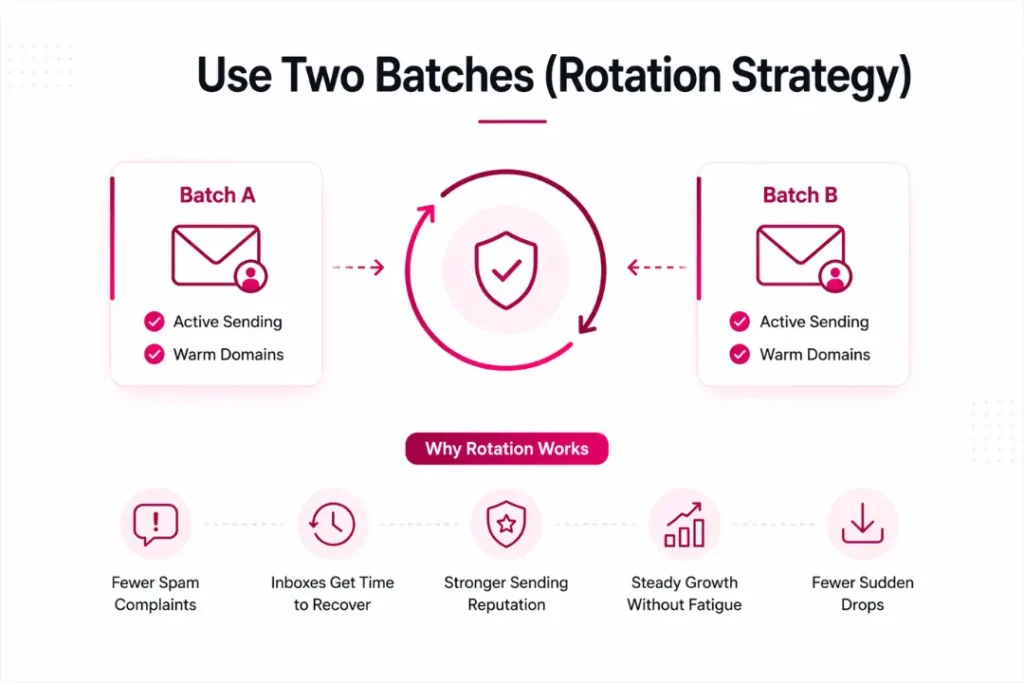
Scaling outreach without protection burns domains and damages reputation. A rotation system adds structure and keeps growth controlled.
I create two batches with equal setup quality so neither becomes weaker over time. Each batch includes warmed domains and fully configured inboxes before any campaign goes live.
Batch A runs for one month while Batch B continues warming in the background to build trust with providers. The following month, I switched roles to avoid fatigue and maintain balance.
This rotation creates real operational advantages and:
- Reduces spam complaints per batch.
- Gives inboxes time to recover.
- Protects overall sending reputation.
- Prevents sudden inbox placement drops.
Note that volume can increase without sacrificing domain health or stability.
Isolation keeps the entire outreach system stable while scaling continues. Each batch stays fully separated to prevent cross contamination. That’s why I suggest to:
- Use separate domains.
- Maintain separate tracking systems.
- Protect separate sending IP reputation.
3. Differentiate Your Offer From Competitors
Most cold emails fail for one simple reason. They sound exactly like everyone else in the inbox.
Generic lines such as “We can help you rank your website” create zero interest because they lack focus and proof. Prospects ignore vague claims that apply to any business in any industry.
I discovered that real differentiation starts with three elements:
- Solving one specific pain point.
- Targeting a defined niche or audience.
- Using a clear mechanism that others do not mention.
Strong examples look like this:
- “We help auto repair shops optimize ‘near me’ and voice search since more customers use Siri, Alexa, and Google Assistant.”
- “We optimize your Google Business Profile so your shop appears in the Map Pack at no charge.”
- “Get your business found in ChatGPT and Google.”
You must ask three hard questions before launching any campaign:
- What do you exclude?
- What do you do differently?
- What proof supports your claim?
If a competitor can copy your offer word for word, the message lacks distinction.
4. Personalize Lightly, Not Deeply
Personalization should feel natural and respectful, not invasive. Too much detail makes prospects uncomfortable.
The best performing campaigns rely on simple elements:
- First name.
- Company name.
- One relevant line tied to their role, industry trend, or recent trigger.
That single line shows relevance without crossing boundaries.
Avoid fake personalization that inserts generic tokens without context. Skip long introductions or copied LinkedIn summaries that feel scripted.
The objective stays clear. Make the message feel written for that person while keeping the focus on the problem you solve.
Light personalization supports clarity and speed. I noticed that deep research rarely improves reply rates and often slows execution. So, my rule is – “Keep it human, keep it brief, keep it relevant”.
5. Keep Emails Short and Skimmable
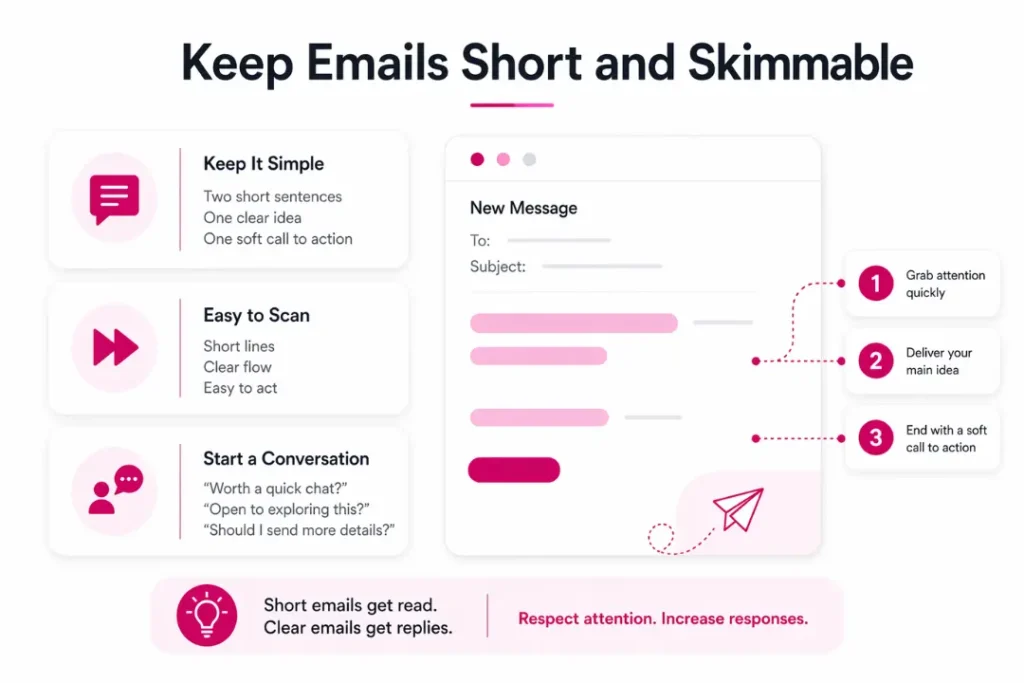
Cold emails compete with dozens of other messages. So, long paragraphs lose attention immediately.
I prefer the structure to remain simple:
- Two to four short sentences.
- One clear idea.
- One soft call to action.
Each sentence should move the reader forward without extra explanation because dense blocks create friction and reduce replies.
My experience says that soft CTAs lower resistance and invite conversation:
- “Worth a quick chat?”
- “Open to exploring this?”
- “Should I send more details?”
Never request thirty minutes in the first message. Early emails aim to start dialogue, not close deals.
Short and scannable content respects attention span and increases response rates across industries.
6. Focus on One Clear Pain Point
Confusion kills replies faster than bad copy. When an email tries to solve everything, it solves nothing.
Every campaign should center around one clear issue that the prospect already feels. Clarity drives action, while mixed messaging creates hesitation.
Therefore, choose only one direction:
- One problem.
- One outcome.
- One reason to care.
Early on, I made the mistake of listing multiple services in a single message. Reply rates dropped because the offer felt scattered and unfocused.
Remember, prospects scan quickly and they need to understand the value in seconds, not analyze options.
When one pain point leads the conversation, the message feels sharp and intentional. It becomes easier for the reader to say yes to a simple discussion.
Tight focus improves positioning and builds authority. So, spread attention across too many angles, and interest fades immediately.
7. Follow Up (Most Replies Come Here)
Most responses do not arrive after the first email. Follow ups drive the majority of real conversations.
Roughly 80 percent of replies show up later in the sequence. That reality changed how I structure campaigns.
My observation is that best practice looks like this:
- Send 4 to 6 follow ups in total.
- Space them 2 to 4 days apart.
- Add new context in every message.
I discourage never sending empty nudges like “just checking in.” Each follow up must provide value or a fresh angle.
Effective approaches include:
- Share a new insight.
- Mention a case result.
- Clarify the original offer.
- Address a common objection.
Consistency shows professionalism and silence after one email signals low conviction. Structured follow ups turn cold outreach into real dialogue.
8. Track the Right Metrics
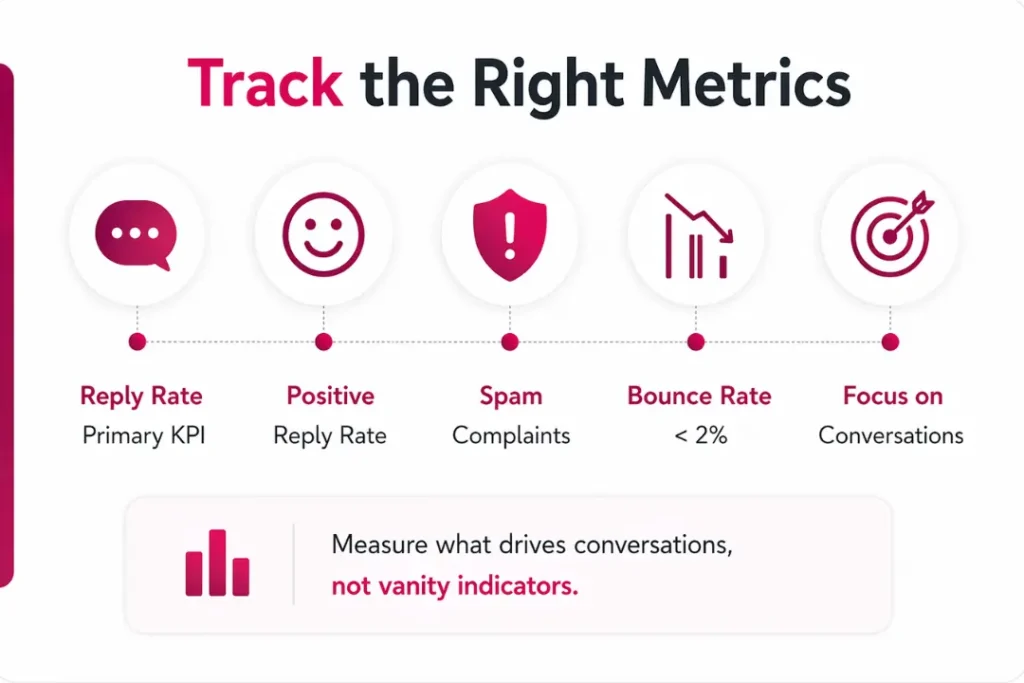
Open rates look impressive but rarely tell the full story. Replies reveal real performance.
So, focus on metrics that connect to conversations:
- Reply rate as the primary KPI.
- Positive reply rate.
- Spam complaints.
- Bounce rate below 2 percent.
High opens with low replies signal weak positioning. Low spam and low bounce protect reputation and future placement.
When the reply rate drops below 3 percent, something needs adjustment. As I see it:
- The offer may lack focus.
- Targeting may miss the right audience.
- Differentiation may feel generic.
Tracking the right numbers prevents guesswork. Data guides decisions and keeps outreach predictable. Therefore, measure what drives conversations, not vanity indicators.
9. Stop Campaigns Early When Signals Go Bad
Powering through a failing campaign wastes time and damages reputation. Deliverability issues escalate quickly if ignored.
So, pause immediately when warning signs appear:
- Open rates suddenly drop.
- Spam complaints rise.
- Multiple inboxes get flagged.
Continuing under these conditions often hurts both current and future campaigns. It’s better to stop, analyze, and fix the root problems.
The process I follow is simple: identify the issue, warm domains and inboxes again, then relaunch carefully. Recovery is faster and safer than trying to push through a failing sequence.
Proactive intervention protects sender reputation and prevents long term damage. Early action keeps campaigns sustainable and results consistent.
10. Think Like a Conversation, Not a Pitch
Cold email rarely sells on first contact. The objective is to spark a dialogue, not close a deal.
I suggest to focus on:
- Starting a conversation.
- Earning permission to continue.
- Creating genuine curiosity.
If a message reads like a marketing copy, it will get ignored. Prospects respond to authenticity, not over-polished messaging.
I rewrite any email that feels like a brochure. Simple, human language works best. Therefore, ask one question, share one insight, and leave space for the prospect to reply.
When emails sound like conversation, replies come naturally. Treat every first message as an introduction, not a sales pitch.
The Role of a B2B Cold Email Deliverability Service in a Successful Campaign
Deliverability determines whether cold emails ever reach the inbox. Even the most compelling message fails if it lands in spam. Many B2B teams struggle with authentication, spam triggers, and domain reputation without realizing how much it affects campaign performance.
A specialized deliverability service ensures technical details are flawless. It configures SPF, DKIM, and DMARC correctly, monitors sending reputation across multiple domains, and maintains controlled daily sending volumes. Clean B2B email lists prevent bouncebacks and reduce spam complaints.
These services also provide early warning signals. Sudden drops in opens or rising complaints trigger immediate corrective action, protecting both current and future campaigns.
Professional support frees teams to focus on messaging, follow-ups, and strategy instead of firefighting technical issues.
ProspectOut helps companies maximize inbox placement, optimize outreach, and boost reply rates. Reach out to us today to secure your cold email success.
Final Words
Cold email campaigns succeed when strategy meets execution. Deliverability, clarity, and relevance matter more than clever copy alone. Focusing on one pain point, differentiating your offer, and maintaining human, scannable messages dramatically improves reply rates.
Follow-ups, rotation strategies, and careful monitoring protect sending reputation and keep campaigns sustainable. Tracking the right metrics helps identify issues quickly, while stopping campaigns early prevents long-term damage. Personalization, when done lightly, creates connection without overcomplicating outreach.
Overall, consistency, patience, and attention to deliverability turn cold outreach into meaningful conversations.
Frequently Asked Questions
Why do my cold emails get ignored?
Most cold emails fail because they sound generic or try to cover too many points. Focusing on one clear pain point and differentiating your offer increases the chance of a reply.
How important is deliverability?
Deliverability is everything. Even the best email copy fails if it lands in spam. Warming domains, proper authentication, and clean lists protect inbox placement and future campaigns.
What kind of personalization works best?
Light personalization performs better than deep research. Use first name, company name, and one relevant line tied to role, industry, or recent trigger. Keep it human and concise.
When should I stop a campaign?
Pause immediately if opens drop sharply, spam complaints rise, or multiple inboxes get flagged. Fix issues, warm domains again, then relaunch. Powering through can damage your reputation.