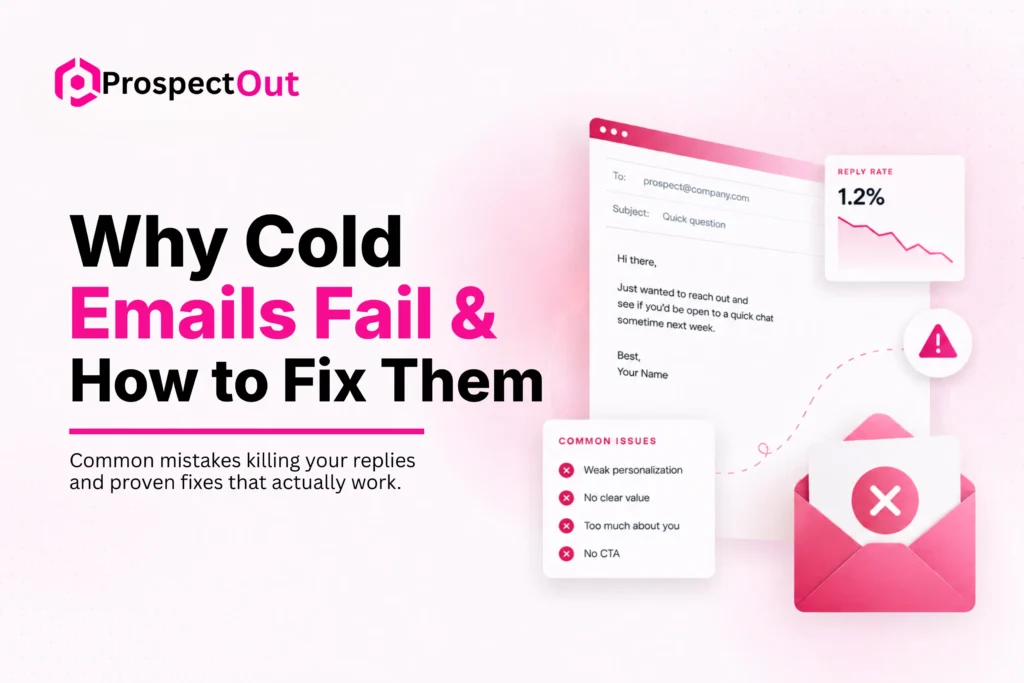
After reviewing cold email campaigns across different B2B industries, one of my most valuable realizations is that most failed campaigns don’t fail for unique reasons. They follow the same patterns over and over again.
Yet many businesses spend their time fixing the wrong things because they don’t know where the real problem is. They rewrite emails, buy new prospect lists, or switch outreach tools without seeing better results. In reality, the obstacles are often much simpler than they appear.
In this article, I’ll explain the two most common reasons cold emails fail, why they’re often overlooked, and how my team approaches fixing them before looking for the less obvious issues.
Most Cold Email Problems Come Down to Two Root Causes
Most failed cold email campaigns look different on the surface, but in my experience, they usually come back to two core issues.
Either the offer doesn’t give prospects a compelling reason to respond, or the emails never make it to the inbox consistently. Let me explain:
Low-Value Offer
I often see businesses focus on writing better emails when the real issue is the offer itself. If your message doesn’t solve a meaningful problem or present clear value, even a perfect email copy won’t generate qualified meetings.
Email Deliverability Fails
Strong offers can’t produce results if your emails land in spam. I’ve seen campaigns transform simply by fixing deliverability issues, improving inbox placement, and building the right sending reputation before scaling outreach.
Reason #1: Your Offer Isn’t Good Enough
Prospects decide within seconds whether your email deserves attention. If they don’t immediately see a meaningful benefit, they’ll move on without a second thought.
Why Prospects Ignore Weak Offers
Over the years, my team and I have reviewed countless cold email campaigns, and the same patterns appear again and again. Prospects usually ignore offers for these reasons:
- Generic services don’t stand out: Promising “better marketing” or “more leads” is too broad. Buyers have seen these claims countless times and quickly tune them out.
- There’s no clear business outcome: If prospects can’t immediately understand what measurable result they’ll get, they have little reason to reply.
- The offer doesn’t solve an urgent problem: Businesses respond when you address a challenge they’re actively trying to fix, not a nice-to-have improvement.
- It sounds like every other agency: Generic messaging and recycled promises make your email blend into a crowded inbox instead of giving prospects a reason to engage.
What Makes an Offer Difficult to Ignore
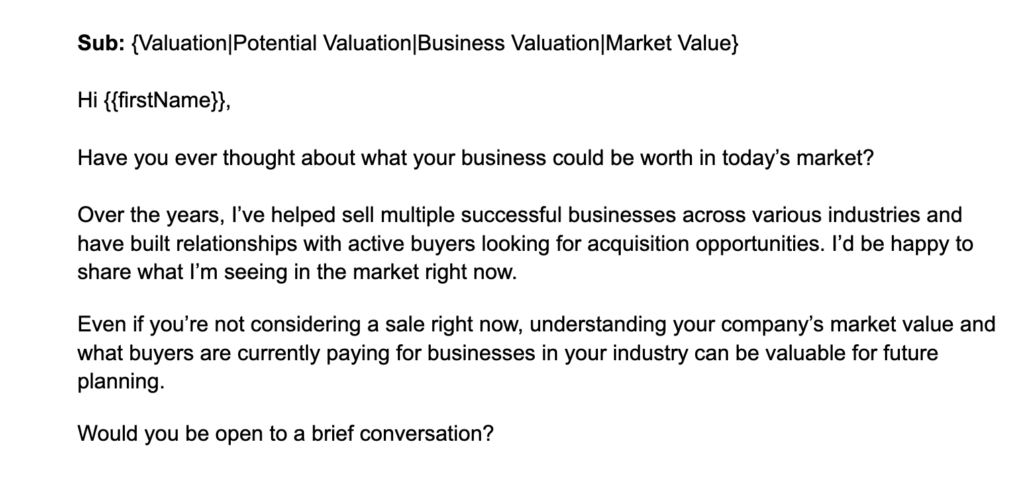
Screenshot Idea: A real cold email from one of your successful campaigns
The strongest cold email offers don’t rely on clever copy. They clearly communicate value, reduce uncertainty, and feel relevant to the person receiving them. When we build campaigns for clients, these are the qualities we focus on:
- Solve a real business problem the prospect already cares about.
- Explain the value in simple, easy-to-understand language.
- Promise a specific, realistic business outcome instead of vague improvements.
- Reduce perceived risk by making the next step feel easy and low commitment.
- Match the prospect’s industry, goals, or current challenges instead of using a one-size-fits-all message.
How to Build a Stronger Cold Email Offer
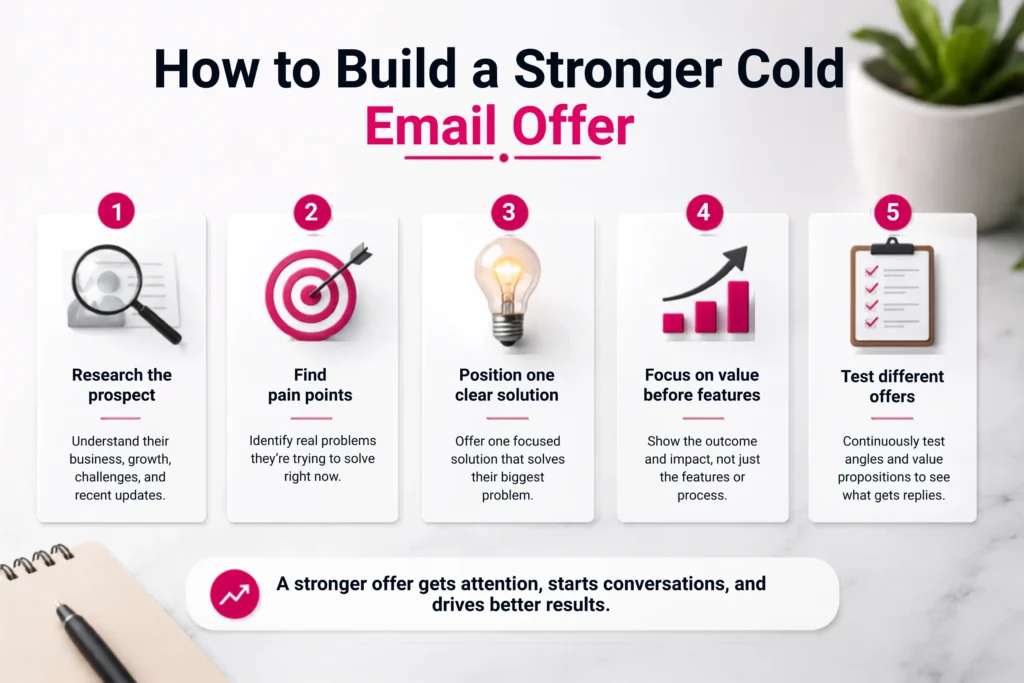
Before my team starts writing email copy, we first make sure the offer is strong enough to earn attention. Here are the steps we follow.
1. Research the prospect
Spend time understanding the company’s business, recent growth, market position, and potential challenges. Even a few minutes of research can reveal opportunities to make your offer far more relevant than a generic pitch, increasing the chances that your email earns genuine attention.
2. Find pain points
Look for problems the prospect is likely trying to solve today rather than making assumptions about what they might need. We’ve found that industry trends, hiring activity, customer reviews, and company updates often reveal valuable insights that lead to stronger conversations.
3. Position one clear solution
Don’t overwhelm prospects with multiple services or long lists of capabilities. Present one solution that directly addresses the biggest problem you’ve identified. In my experience, a focused offer is easier to understand, easier to remember, and far more persuasive than several competing messages.
4. Focus on value before features
Prospects care less about your process and more about the business results they can achieve. Instead of leading with tools, strategies, or technical details, explain how your solution can save time, increase revenue, reduce costs, or solve a meaningful business challenge.
5. Test different offers
Even after years of running cold email campaigns, we never assume the first offer is the best one. My team continuously tests different value propositions, positioning angles, and outcomes to learn what resonates with a specific audience, then scales the offers that consistently generate qualified replies.
Reason #2: Your Emails Never Reach the Inbox
Even the strongest offer can’t generate replies if your emails consistently land in spam, promotions, or never get delivered at all.
Common Deliverability Problems
When my team audits underperforming campaigns, these are the deliverability issues we encounter most often:
- Poor domain reputation. A damaged sender reputation makes email providers less likely to trust your messages, reducing inbox placement even when your offer and copy are excellent.
- Missing authentication. Without properly configured SPF, DKIM, and DMARC records, mailbox providers have fewer signals to verify your emails, increasing the likelihood of spam filtering.
- Sending volume too quickly. Launching large campaigns from a new or inactive domain without warming it up often triggers spam filters and hurts long-term sender reputation.
- Low engagement. When recipients rarely open, reply to, or interact with your emails, providers may interpret those signals as low-quality content and reduce inbox placement.
- Spam-triggering practices. Excessive links, poor list quality, misleading subject lines, or aggressive sending behavior can all increase the chances of your emails being filtered.
Why Deliverability Matters More Than Copy
Deliverability should always be the first thing you evaluate when a cold email campaign underperforms. I’ve seen businesses rewrite their copy multiple times when the real issue was that hardly anyone was seeing their emails.
Prospects can’t reply to messages that never reach their inbox. That’s why my team checks inbox placement before making copy changes.
Once emails consistently reach the primary inbox, it becomes much easier to evaluate subject lines, messaging, and offers based on real prospect behavior rather than misleading campaign data.
Our Rotation Strategy to Maintain High Deliverability
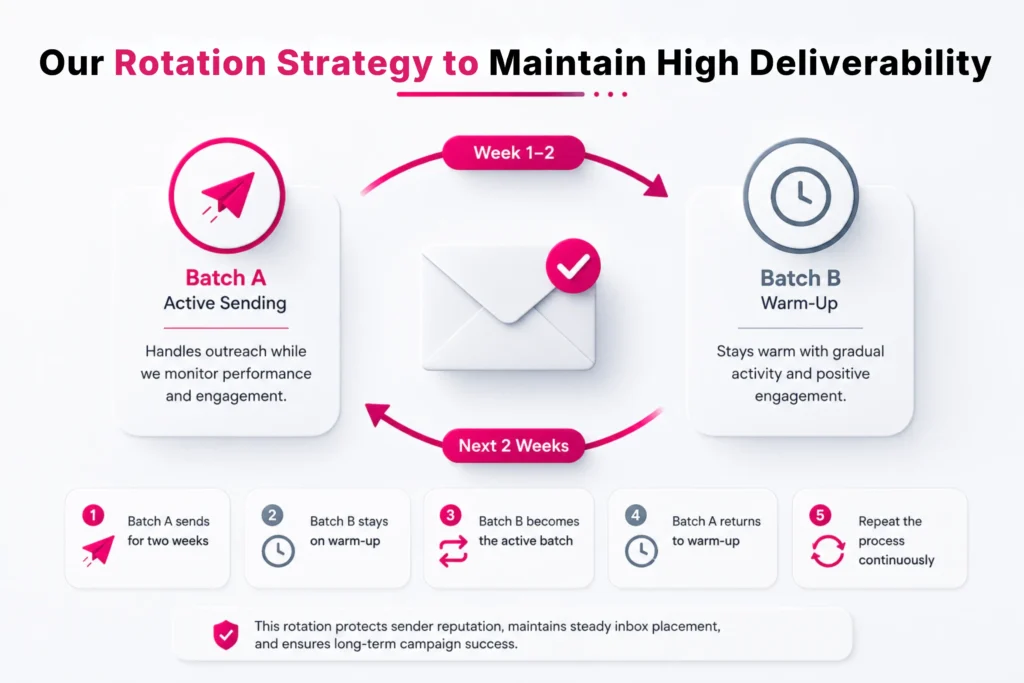
Instead of sending from the same accounts indefinitely, my team follows a structured rotation system that helps protect sender reputation and maintain stable inbox placement over the long term.
How the Two-Batch Rotation Works
This is the framework my team has refined after managing ongoing cold email campaigns for B2B clients.
1. Batch A sends outreach for two weeks
During this period, Batch A handles the active outbound campaigns while following controlled sending limits and engagement best practices. We closely monitor inbox placement, reply rates, and domain health to ensure performance remains stable throughout the sending cycle.
2. Batch B stays on warm-up
While Batch A is actively sending, Batch B isn’t left idle. We continue warming these accounts with gradual sending activity and positive engagement signals so they maintain a healthy sender reputation and remain ready for the next campaign cycle.
3. Then Batch B becomes the active sending batch
After two weeks, we shift outreach to Batch B. Since these accounts have been continuously warmed, they can begin sending without the sudden spikes that often damage deliverability or trigger spam filters.
4. Batch A returns to warm-up
Once its sending cycle ends, Batch A moves back into the warm-up process instead of continuing high-volume outreach. This gives the domains time to recover while maintaining healthy engagement signals that support future campaigns.
5. Repeat the process continuously
We repeat this rotation throughout long-term campaigns. Rather than pushing the same accounts indefinitely, this approach distributes sending activity more naturally and helps maintain consistent performance across multiple domains.
Why This Rotation Strategy Works
This approach minimizes the gradual decline that often happens when the same accounts send continuously for long periods. It also keeps backup accounts healthy and ready whenever they’re needed.
My experience says, consistent rotation leads to more reliable inbox placement, steadier campaign performance, and a stronger foundation for scaling cold email outreach over time.
There May Be More Than One Problem
While a weak offer and poor deliverability are the two most common reasons cold email campaigns fail, they aren’t the only ones. Businesses sometimes fix both issues and still struggle to generate qualified meetings.
That’s usually a sign that other underlying problems are limiting campaign performance.
This is the same process we follow at ProspectOut when reviewing client campaigns. My team evaluates the entire outreach system, including audience targeting, list quality, email sequencing, personalization, sending patterns, inbox placement, and reply management.
Rather than making random changes, we identify the biggest bottleneck first and fix it before optimizing the remaining parts of the campaign. I’ve found that this methodical approach leads to more consistent inbox placement, better reply quality, and a cold email system that continues to perform as campaigns scale.
Wrapping up
One of my biggest observations after working on hundreds of cold email campaigns is that they rarely fail because of the email itself. They usually fail days or even weeks before the first message is sent.
Poor prospect selection, weak positioning, rushed domain setup, and unrealistic expectations quietly create problems that no subject line or AI-generated copy can fix later.
That’s why we spend so much time preparing campaigns before launch. Businesses that treat cold email as a strategic process consistently outperform those that only focus on writing better emails.
Frequently Asked Questions
Can a good cold email still fail if the offer is strong?
A strong offer alone doesn’t guarantee results. If your emails land in spam, target the wrong audience, or come from domains with poor sender reputation, prospects may never see your message.
How many cold emails should you send per day from one email account?
A good starting point is 15–20 cold emails per day per email account, especially if the account has been properly warmed up. Rather than pushing accounts to their limits, gradually increase volume and monitor inbox placement to maintain healthy deliverability.
Why do cold email results decline over time?
Performance can drop due to list fatigue, declining sender reputation, outdated messaging, or changing market conditions. Regular optimization helps maintain consistent results.