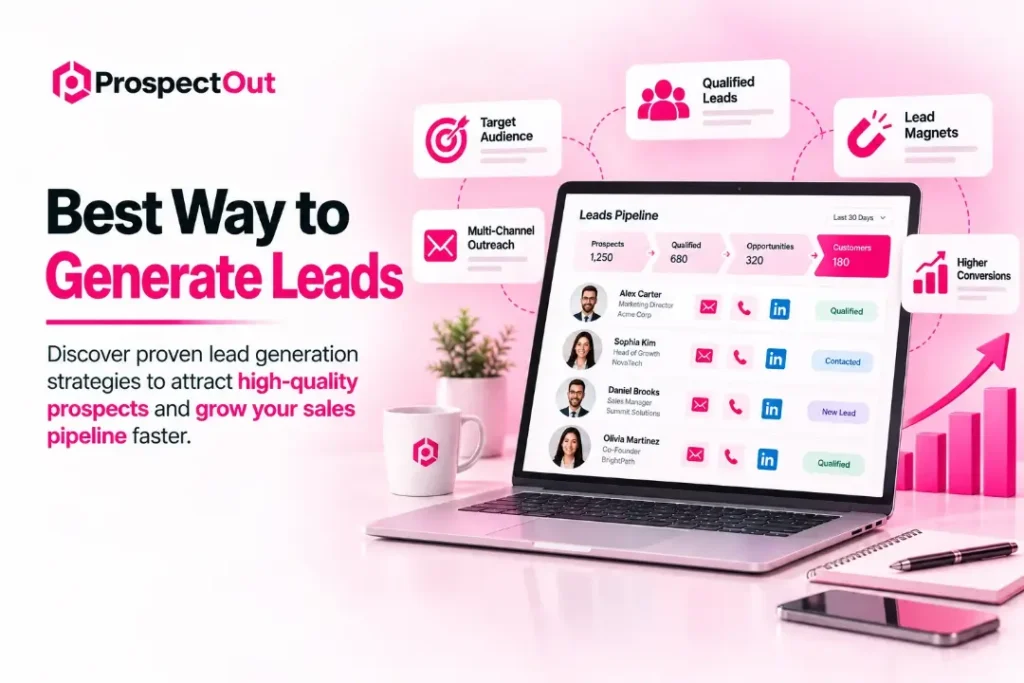
When I think about the biggest challenges staffing and recruitment agencies face, generating a consistent flow of qualified leads comes to mind first. Finding companies that need hiring support, reaching the right decision-makers, and turning conversations into business opportunities can be time-consuming. I saw the real challenge is not simply finding prospects but identifying businesses that genuinely need recruitment services.
The most effective way is to combine job board research, personalized cold emails, LinkedIn outreach, and strategic follow-up calls.
Let me discuss how recruitment agencies can identify companies that are actively hiring, reach the right decision-makers, and turn those hiring needs into new clients.
1. Identify Companies Actively Hiring
My first step would be to identify companies actively hiring for roles that match my agency’s expertise, using job boards to find potential clients instead of contacting businesses randomly.
Use Job Boards to Find Prospects
Start by searching LinkedIn Jobs and Indeed for relevant job openings. Look for companies advertising multiple positions, repeatedly posting similar vacancies, or recruiting for specialized roles that match your agency’s capabilities.
For example, if your agency specializes in IT recruitment, search for companies hiring software developers, cybersecurity specialists, data analysts, or IT project managers. If you focus on healthcare staffing, look for hospitals, clinics, and healthcare organizations advertising nursing or allied health positions.
I recommend to pay attention to the following signals:
- Multiple open positions: Companies hiring for several roles may need additional recruitment support.
- Specialized vacancies: Difficult-to-fill positions can create opportunities for agencies with access to qualified candidates.
- Repeated job postings: A vacancy advertised repeatedly may indicate an ongoing hiring challenge, although it does not necessarily mean the company needs external recruiters.
- Urgent hiring requirements: Job descriptions emphasizing immediate availability or quick hiring may indicate a time-sensitive need.
Find the Right Decision-Makers
Once you identify a potential client, determine who is responsible for recruitment decisions. Depending on the company’s size and hiring structure, this could be an HR manager, talent acquisition specialist, recruitment manager, department head, or hiring manager.
Use LinkedIn and the company’s official website to research relevant contacts. Record their names, job titles, company information, professional contact details, and the positions their organizations are hiring for.
Organize these details in a spreadsheet or customer relationship management (CRM) system. Include the source of each lead, the date you identified the opportunity, and any relevant notes.
A well-organized prospect list makes it easier to personalize outreach, track responses, and prioritize companies with the strongest potential.
2. Send Personalized Cold Emails
I always recommend personalized cold emails to connect with companies that have active hiring needs. Rather than sending generic messages, focus on relevant offers that show how my recruitment services can help them find suitable candidates.
Personalize Emails Around Current Job Openings
A strong recruitment cold email should demonstrate that you understand the company’s hiring requirements. Mention a specific job opening, the relevant department, or the location where the company is recruiting.
Then explain how your agency could help address that requirement.
For example, if a company is hiring several software engineers, your message could briefly introduce your agency’s technical recruitment expertise and explain that you may be able to connect the company with suitable candidates.
If you already have qualified candidates whose experience aligns with the advertised role, mention that fact accurately. Avoid claiming that you have suitable candidates available unless you can substantiate it.
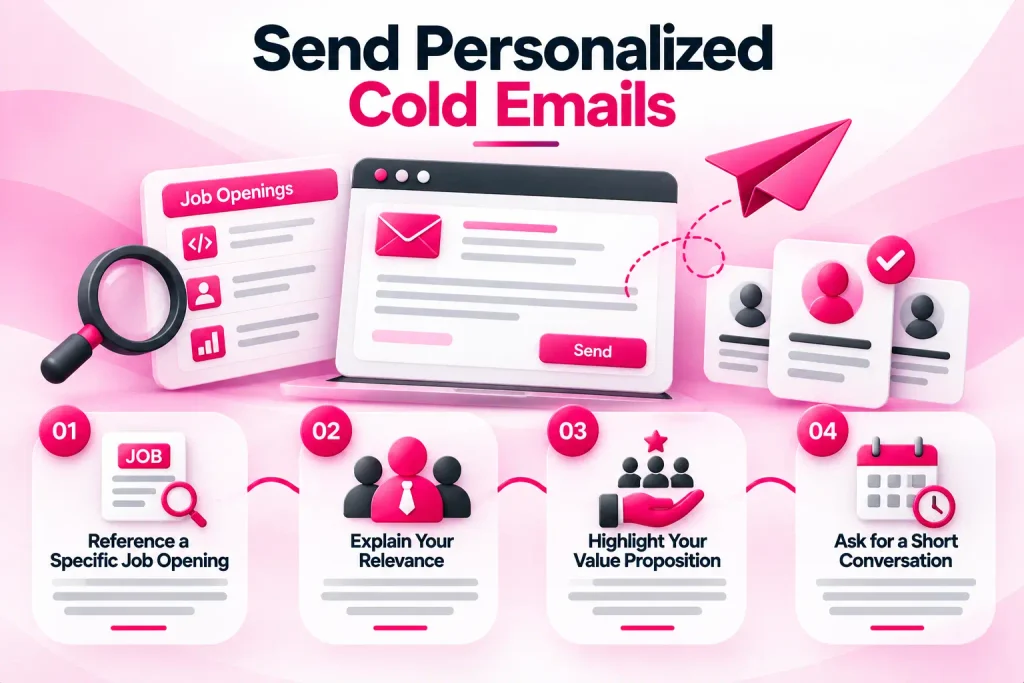
A simple email structure includes:
- Opening: Reference a specific job opening or hiring requirement.
- Relevance: Explain how your agency supports companies with similar recruitment needs.
- Value proposition: Briefly describe your expertise, candidate network, or ability to support the hiring process.
- Call to action: Ask whether the recipient would be open to a short conversation or reviewing relevant candidate profiles.
Keep the message concise and focused on the prospect’s needs rather than providing a lengthy description of your agency.
Example Cold Email for Recruitment Agencies
This template provides a starting point, but the best results come from adapting the message to each prospect’s role, hiring requirements, and likely challenges.
Subject: Support with your [Job Title] hiring
Hi [First Name],
I noticed that [Company Name] is hiring for a [Job Title] position in [Location].
We help companies recruit qualified professionals for [relevant industry or role type]. If you’re still looking for suitable candidates, I’d be happy to discuss how we might support your hiring process.
Would you be open to a brief conversation this week?
Best regards,
[Your Name]
[Agency Name]
Follow Up Without Being Intrusive
Many prospects will not respond to the first email, even if your services are relevant. A thoughtful follow-up can bring your message back to their attention.
Send a small number of follow-ups spaced over several business days. Each message should be brief and, where possible, offer additional context rather than simply repeating the original email.
If someone declines, asks not to be contacted, or indicates that they do not need support, respect that preference. Follow applicable email marketing and privacy laws, including relevant requirements for business-to-business outreach.
3. Use LinkedIn Outreach to Build Relationships
My priority is to use LinkedIn alongside cold email to identify recruitment decision-makers, understand their hiring responsibilities, and build professional relationships through relevant, personalized outreach.
Connect With Relevant Decision-Makers
Start by searching LinkedIn for people who hold relevant positions at the companies you identified through job boards.
Review their profiles and confirm that they are likely to influence hiring decisions. A talent acquisition manager may oversee recruitment across multiple departments, while a department head may be responsible for filling specialized roles within a particular team.
Send a short connection request that explains the professional reason for connecting. Avoid lengthy sales pitches or generic messages that could be sent to anyone.
After the person accepts your request, begin with a relevant, conversational message. You can reference the company’s hiring activity and briefly explain how your agency supports similar recruitment requirements.
LinkedIn InMail may also be an option when you need to contact people outside your existing network, depending on your account and available features.
Combine LinkedIn With Email Outreach
Using LinkedIn and email together can help you reach prospects through more than one professional channel. You might send a personalized email first, connect with the relevant decision-maker on LinkedIn, and then continue the conversation through whichever channel is most appropriate.
The objective is not to overwhelm prospects with repeated messages. Instead, use each interaction to establish credibility, demonstrate relevance, and make it easier for the recipient to understand how your agency could help.
Share useful recruitment insights when appropriate, such as observations about candidate availability, hiring challenges, or trends in a particular industry. This can help position your agency as a knowledgeable recruitment partner rather than simply another service provider seeking a meeting.
4. Follow Up With Cold Calls
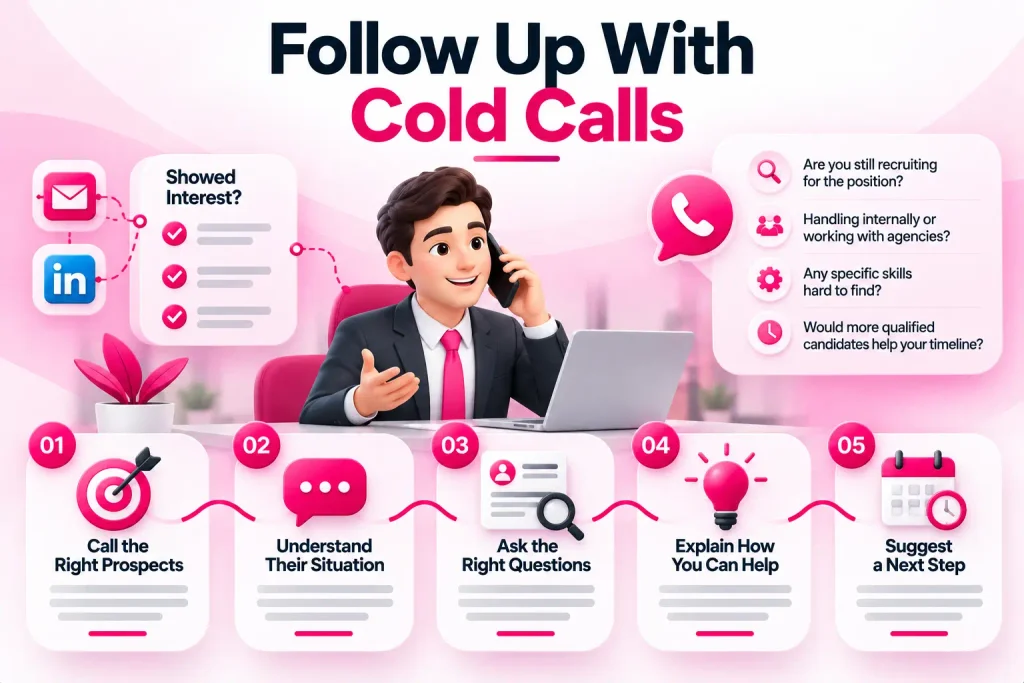
Cold calls can complement email and LinkedIn outreach when used strategically. However, calling every prospect immediately after sending an email may be inefficient. Prioritize companies that have shown interest, responded to an earlier message, requested more information, or appear to have a relevant and time-sensitive hiring requirement.
Suppose an HR manager replies to your email asking about your recruitment services but does not schedule a meeting. A short follow-up call may help move the conversation forward.
During the conversation, focus on understanding the prospect’s situation. Useful questions might include:
- Are you still recruiting for the advertised position?
- Are you handling the hiring process internally, or working with external recruitment agencies?
- Are there any particular skills or qualifications that have been difficult to find?
- Would additional qualified candidates help you meet your hiring timeline?
Listen carefully to the answers rather than immediately launching into a sales pitch. If the company has a genuine need that aligns with your agency’s expertise, explain how you could help and suggest an appropriate next step.
If the prospect is not interested or asks you not to call again, respect that request and update your records accordingly.
5. Track Results and Improve Your Lead Generation Process
Generating leads is not simply about collecting contact details or sending more messages. Recruitment agencies also need to understand which activities produce qualified conversations and paying clients.
Track your outreach efforts in a CRM system or spreadsheet. Record the number of companies contacted, emails delivered, replies received, meetings booked, qualified opportunities created, and clients acquired.
Review these metrics regularly to identify weaknesses in your process.
If your emails receive few replies, your targeting, subject lines, message relevance, or offer may need improvement. If prospects respond but rarely book meetings, consider whether your call to action is clear and whether your value proposition addresses their needs.
You should also evaluate lead quality. A company with several relevant vacancies and a clear need for external recruitment support may be more valuable than a company with numerous job postings but no intention of working with an agency.
Test different approaches with small, well-defined prospect groups. I suggest refining your messaging based on actual results rather than assuming that higher outreach volume will automatically produce more clients.
Wrapping up
The best way to generate leads for staffing and recruitment agencies is to focus on companies with active hiring needs rather than reaching out to random businesses. I see this makes outreach more relevant and gives agencies a clearer reason to start conversations with potential clients.
ProspectOut can simplify this process through recruitment-focused lead generation, personalized cold email and LinkedIn outreach, and appointment setting. For agencies that want to spend less time prospecting and more time placing candidates, this approach can make client acquisition more structured and manageable.