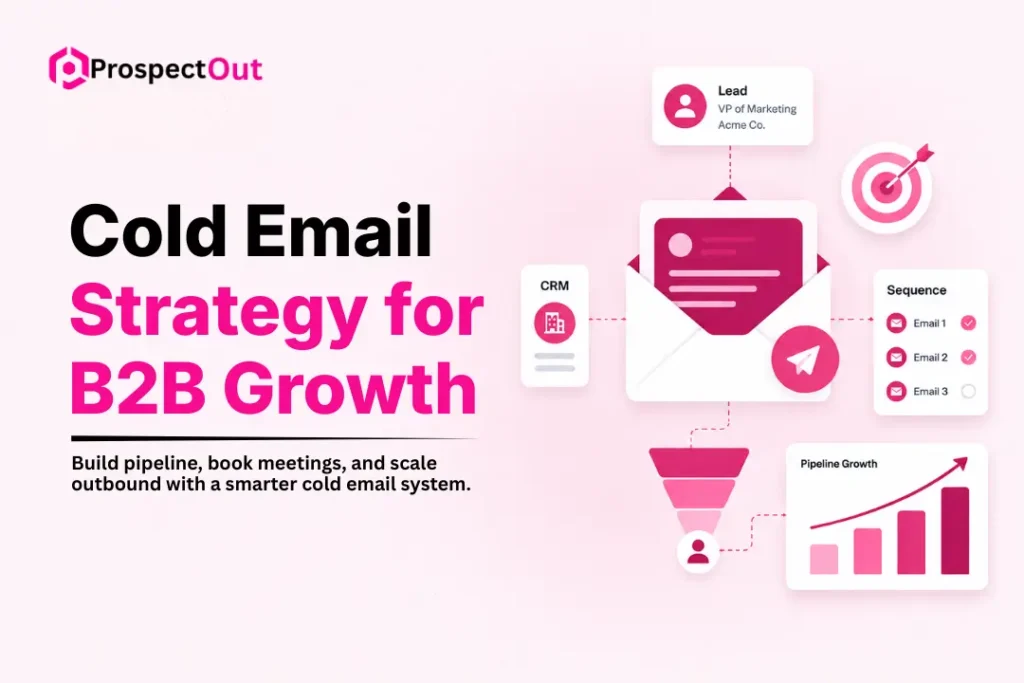
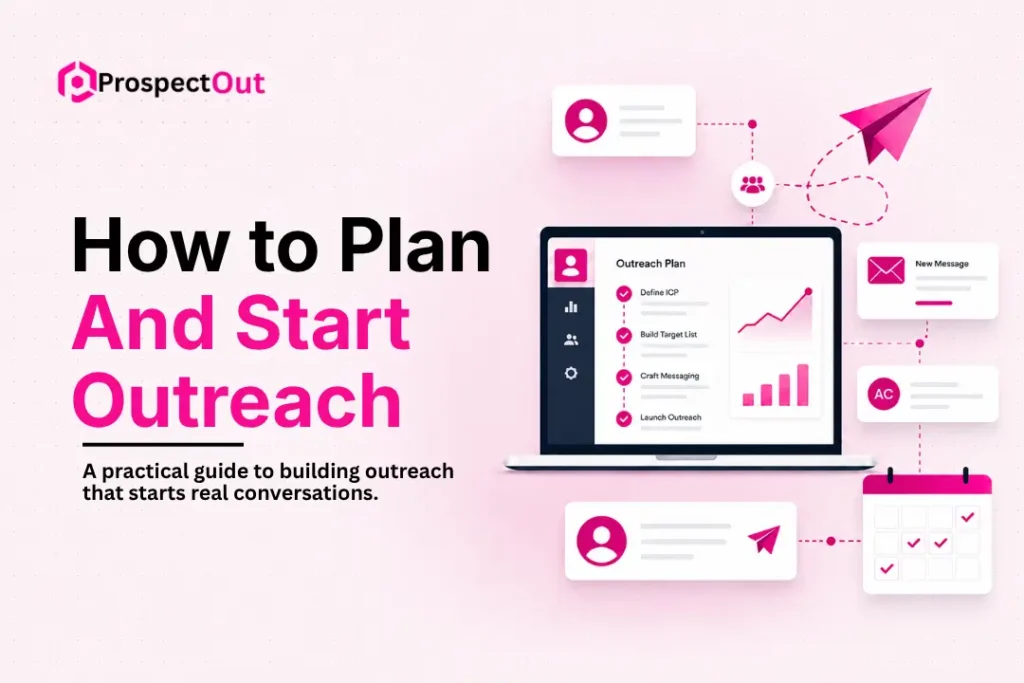
A cold email campaign helps you reach new prospects, start conversations, and generate leads without relying on ads or inbound traffic. It works when you target the right people, send relevant messages, and follow a clear process from setup to follow-ups. Many businesses struggle with low replies because they skip steps like proper targeting, domain setup, or message clarity.
In this blog, we explain how to plan, build, and improve a campaign that gets consistent results. If you want a simple approach to doing it right, keep reading the rest of this guide.
What Is a Cold Email Campaign?
A cold email campaign is a structured effort where you send emails to people who have not interacted with your brand before. The goal is to start a conversation, build interest, and guide them toward a clear action like replying or booking a call.
The main points that define cold email:
- Targets new prospects with no prior contact.
- Uses relevance and personalization for outreach.
- Focuses on clear intent and message value.
- Builds trust through direct one-to-one communication.
Cold email still works because it creates direct contact with decision-makers without relying on ads or social platforms. A clear and relevant message can feel useful and human, which increases reply rates. It also supports steady lead generation at a low cost, making it a strong outreach method.
Cold Email Campaign Strategy: How to Plan Outreach That Gets Replies
A strong cold email campaign strategy sets clear direction for who you contact, what you say, and what outcome you want.
Define Your Goal
Set one clear outcome before sending any email. A focused goal keeps your messaging consistent and improves response quality. It also helps you measure success more accurately.
Common goals include:
- Book sales meetings
- Generate qualified leads
- Promote a specific service
- Test new market interest
A single campaign should focus on one main goal. Mixing multiple goals often reduces clarity and lowers reply rates. Once the goal is set, every email element should support it, including subject line, message flow, and call to action.
Define Your Ideal Customer Profile (ICP)
Your ICP describes the exact type of person or business most likely to respond and benefit from your offer. Strong ICP definition improves targeting and reduces wasted outreach. You should think beyond job titles and focus on real buyer fit.
Ask these questions to define ICP:
- Who feels the strongest need for this solution?
- What industry faces this problem most often?
- What company size matches your offer best?
- Who has decision-making power in the process?
- What pain point drives them to act quickly?
Clear answers help you filter prospects and improve message relevance. This step directly impacts reply rates and campaign efficiency.
Align Your Offer With Your Audience
Your offer must match the real problems and priorities of your ICP. If the offer feels unrelated or unclear, prospects will ignore the email. Focus on one simple value point that connects directly to their needs.
Keep your offer specific and easy to understand. Highlight a clear benefit that solves a real pain point instead of listing features. Adjust your wording so it speaks in the language your audience already uses in their industry or daily work.
Cold Email Infrastructure Setup (Domains, ESP and Deliverability)
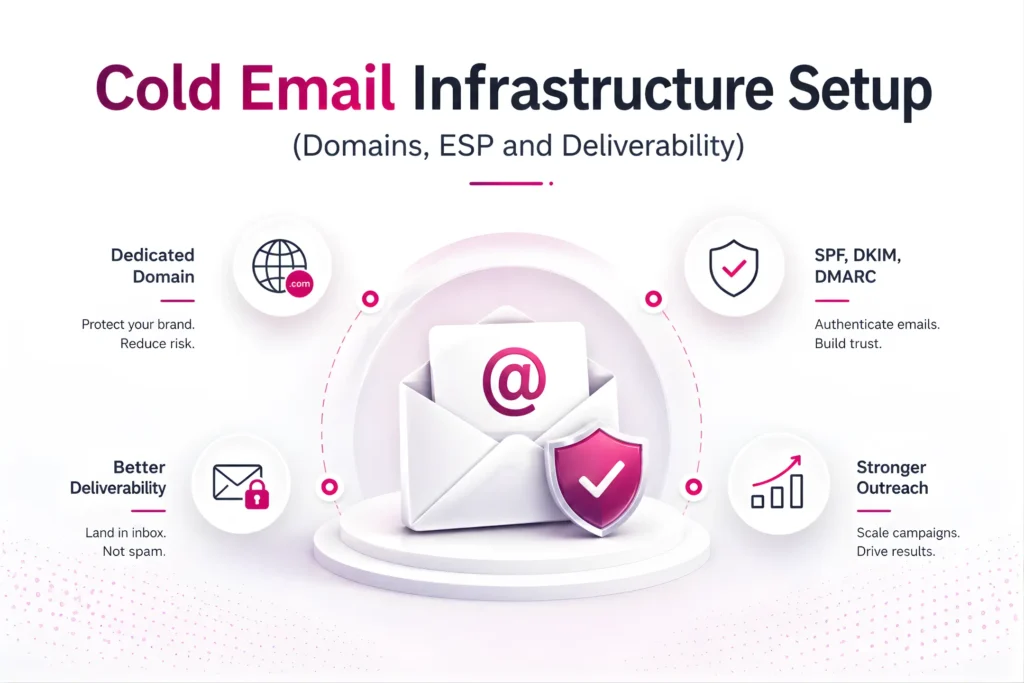
A reliable setup protects your sender reputation, improves inbox placement, and ensures your cold emails reach prospects without technical issues.
Why You Need a Separate Domain
A separate domain protects your main business domain from risk during outreach. Cold email campaigns can face spam complaints or low engagement at times. A dedicated domain keeps your primary brand safe while you test campaigns, scale outreach, and improve performance without harming core communication channels. For example: awesome-team.com / awesome-co.com.
Setting Up SPF, DKIM, and DMARC
Email authentication builds trust with inbox providers and improves deliverability. These records confirm that your emails come from a verified source and not a malicious sender.
- SPF lists the servers allowed to send emails on your behalf.
- DKIM adds a digital signature to each email, which verifies message integrity.
- DMARC connects SPF and DKIM, giving instructions to email providers on how to handle failed checks.
A proper setup reduces spam placement and protects your domain reputation.
Warming Up Your Domain and Email Accounts
New domains and inboxes need gradual activity before large campaigns. Warm-up builds trust with email providers and improves inbox placement over time. Plan a ramp-up period of 2–3 weeks with tools like Instantly, Warmup Inbox, and Lemwarm. These tools simulate real conversations and increase sending volume safely.
Choosing the Right Email Sending Platform
The right platform helps manage outreach, automate follow-ups, and track performance. It should support personalization, scheduling, and deliverability control while staying easy to use. The top ones are:
- Instantly – supports large-scale outreach with smart automation and built-in warm-up features. It suits users who want fast setup and strong deliverability support.
- Woodpecker – focuses on simple campaign management and reply tracking. It works well for teams that want clear workflows and steady outreach performance.
- GMass – integrates with Gmail and allows quick campaign launches. It fits users who prefer a familiar interface with flexible sending options.
- Outreach.io – offers advanced sales engagement features with deep analytics. It suits teams that need detailed tracking and structured outreach processes.
How to Build a High-Quality Prospect List
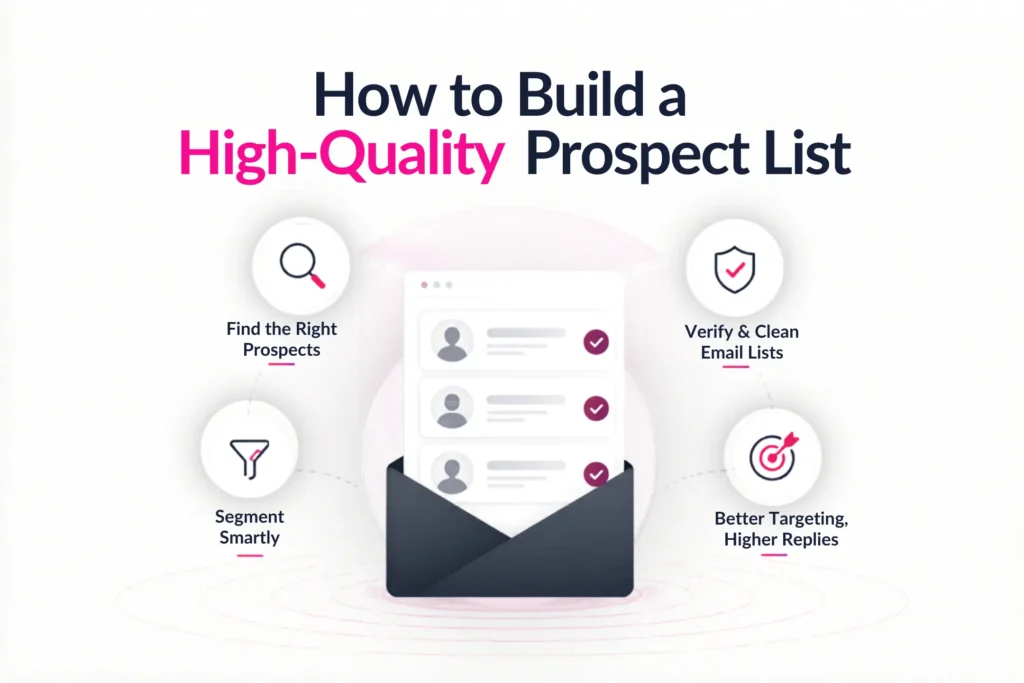
A high-quality prospect list improves targeting, increases reply rates, and ensures your outreach reaches people who actually need your offer.
Where to Find Prospects
You need reliable sources to find accurate and relevant contacts. Strong platforms and research methods help you identify decision-makers, gather verified data, and build a list that matches your campaign goals. Here are the major sources you can use:
- LinkedIn Sales Navigator – it helps you filter prospects using job title, industry, and company size. It gives access to decision-makers and updated professional data.
- Apollo.io – this provides a large contact database with emails and company details. It also supports outreach, which helps combine prospecting and campaign execution in one place.
- Crunchbase – it focuses on companies, funding data, and growth signals. It helps you target businesses that show expansion, hiring activity, or market traction.
- Manual research – the process involves checking company websites, directories, and social profiles. It takes more time but often delivers accurate and highly relevant prospect data.
Segmenting Your Prospect List
Segmentation improves message relevance and response rates. Group your prospects based on shared traits so each email feels more personal and specific. You can segment using industry, company size, job role, or problem type.
Clear segments allow you to adjust your message for each group. A startup founder may respond to a different language than a corporate manager. This approach reduces generic messaging and helps you connect with real needs, which leads to better engagement.
Verifying and Cleaning Email Lists
A clean email list protects your sender reputation and improves deliverability. Invalid or outdated emails can cause high bounce rates, which harms campaign performance. You should always verify emails before sending any campaign.
Use tools like NeverBounce, ZeroBounce, and Bouncer to check email validity and remove risky addresses. These tools identify invalid, duplicate, or temporary emails. Regular cleaning keeps your list accurate and helps maintain strong inbox placement and consistent outreach results.
How to Write Cold Emails That Get Replies
Strong cold emails grab attention, build interest fast, and guide prospects toward a simple action that increases response rates consistently.
Writing Effective Subject Lines
Subject lines decide if your email gets opened or ignored. Keep them short, clear, and relevant to the reader’s situation. Use simple language and avoid hype or clickbait. Personalization, such as a name or company detail, can increase open rates.
Focus on one idea that sparks curiosity or shows value. Questions, specific outcomes, or quick insights often perform well. Avoid spam triggers like all caps, too many symbols, or vague promises. Test different versions to see what works best for your audience and refine based on results.
Some quick examples are:
- Quick question, Sarah
- Loved your article on remote teams
- Idea for {CompanyName}
Crafting Personalized Opening Lines
Opening lines set the tone and show if your message is worth reading. A good opening feels relevant and specific to the person. It shows that you did some research and understand their context.
Mentioning recent activity, company updates, or a clear pain point works well. In contrast, generic greetings or copy‑pasted lines with no relevance are often ignored.
| Good opening lines:Saw your team recently expanded into new markets.Noticed your company hiring for sales roles. | Bad opening lines:Hope you are doing well today.I came across your profile online. |
Structuring Your Cold Email
A clear structure helps your message stay focused and easy to read. Each part should guide the reader toward the next step without confusion or extra effort.
Here is a simple structure to follow:
- Personal opener
- Pain point they care about
- How have you’ve helped similar people
- Clear, low-friction CTA
Cold Email Example
Want to see how everything comes together in a real message? Check the sample below to understand structure, tone, and flow in action.
Subject: Quick idea for {CompanyName}
Hi {FirstName},
Noticed {CompanyName} recently [specific event/news]. Congrats on that — big move.
I work with [similar companies] to help them [main benefit], without [main pain]. For example, we helped [ClientName] boost [metric] by [result] in just [timeframe].
Would it make sense to share a 2 minute overview next week? If not, no worries. Just thought it might be useful.
Best,
[Your Name]
Cold Email Sequence Strategy and Follow-Ups
A structured follow-up sequence keeps your outreach consistent, improves reply rates, and helps you stay visible without overwhelming your prospects.
- Ideal number of follow-ups: Send 4 to 6 follow-ups after the first email. This range keeps your outreach persistent while avoiding fatigue or negative reactions from prospects.
- Timing between emails: Space emails 2 to 4 days apart to maintain visibility. Short gaps feel pushy, while long delays reduce momentum and lower chances of getting replies.
- When to stop following up: Stop after 6 to 7 total touches if no response comes. Continuing beyond this point may harm your reputation and reduce future engagement chances.
- Adding multi-channel touchpoints: Combine email with LinkedIn messages or connection requests. This approach increases visibility and builds familiarity, which can improve response rates across your outreach sequence.
Cold Email Legal and Compliance
Cold email must follow legal rules to protect recipients, maintain trust, and ensure your outreach stays compliant across different regions and markets. Let’s explain GDPR, CAN-SPAM rules, and differences between B2B and B2C outreach.
GDPR basics
GDPR regulates how you collect and use personal data for outreach in the European Union. It focuses on transparency, lawful processing, and protecting individual rights during communication. It requires you to:
- Use a valid legal basis for contact.
- Show clear identity of the sender.
- Explain why you are reaching out.
- Offer an easy opt-out option.
- Avoid misleading or unclear messaging.
CAN-SPAM basics
CAN-SPAM sets rules for commercial emails in the United States. It focuses on honest communication, sender identification, and giving recipients control over future messages. It leads you to:
- Use accurate sender and domain information.
- Avoid deceptive subject lines.
- Clearly state the message is promotional.
- Include a valid physical business address.
- Provide a clear unsubscribe option.
B2B vs B2C differences
B2B and B2C cold emails follow different expectations and legal standards. B2B outreach often allows more flexibility, especially in regions where legitimate interest applies. You can contact professionals if the message relates to their role and offers clear value.
B2C outreach usually requires stronger consent rules. Many regions expect prior permission before sending promotional emails to individuals. Personal data protection is stricter, and messages must show clear intent and transparency.
Always review local regulations before starting a campaign. Laws can vary across countries, so compliance depends on your target audience and location.
A Cold Email Campaign Checklist
Here is a complete checklist that breaks down cold email setup, execution, and tracking into simple steps from start to finish:
- Strategy defined
- ICP created
- Domain set up
- DNS configured
- Inbox warmed
- List verified
- Email sequence written
- Campaign launched
- Performance tracked
- Follow-up plan set
- Tools selected
- Compliance checked
Advanced Cold Email Strategies to Increase Reply Rates
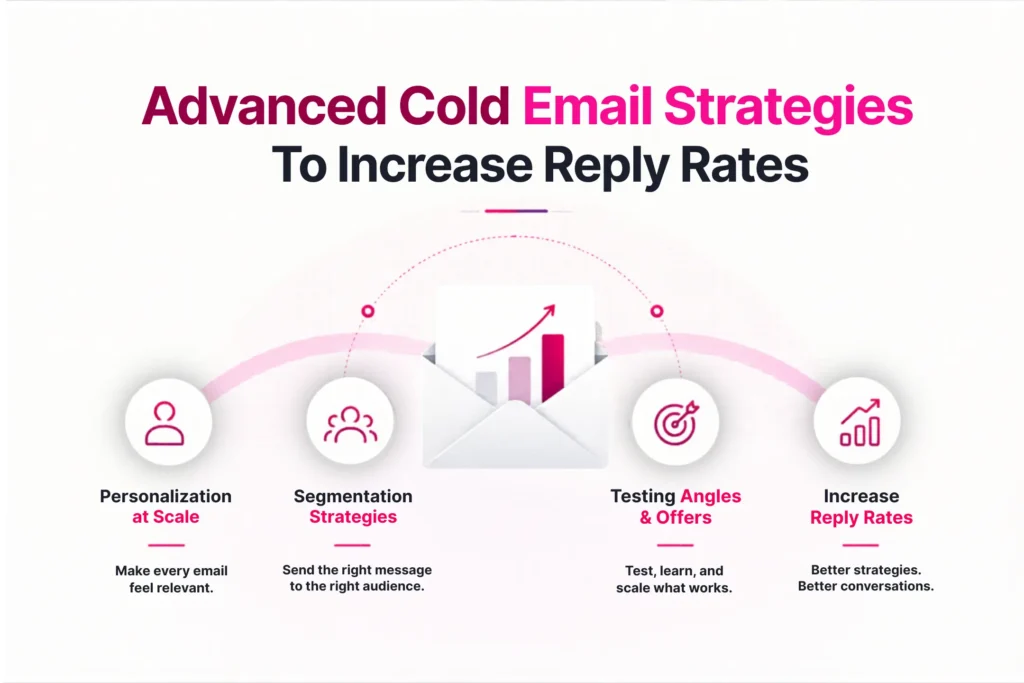
Below are some advanced cold email strategies that improve replies:
Personalization at scale
It means adding relevant details to many emails without writing each one manually. This improves connection while keeping outreach efficient. You can use data like job roles, company news, or recent activity to adjust your message dynamically. The goal is to make each email feel specific without slowing down your workflow.
Example: “Saw your team expanded into Europe recently. Many companies at that stage struggle with lead flow, so I wanted to reach out.”
Segmentation strategies
They involve dividing your prospect list into smaller groups based on shared traits. This helps you send more relevant messages instead of one generic email to everyone. You can segment by industry, company size, job role, or pain point. Each group receives messaging that matches their situation, which increases engagement and reply rates.
Example: SaaS founders get messaging about scaling demos, while agency owners get outreach focused on client acquisition and retention.
Testing angles and offers
It means experimenting with different messages, value points, and calls to actions to see what drives more replies. Small changes in wording or positioning can significantly affect performance. You should test one variable at a time so you can clearly identify what works best.
Example: One version focuses on saving time in outreach, while another highlights increasing booked meetings within 7 days.
Final Thoughts
Cold email still works when you treat it as a focused communication channel, not a volume game. Strong results come from clear targeting, simple messaging, and consistent testing over time. Many campaigns fail because they rush setup or ignore relevance, not because the channel is outdated. A structured approach can turn cold outreach into a steady source of qualified conversations and real business growth.
If you want to skip trial and error and scale faster, our B2B cold email outreach service can help you plan, launch, and improve campaigns that deliver measurable results. Let’s talk and build your next campaign.
Frequently Asked Questions
Is cold emailing legal?
Yes, cold emailing is legal in many regions if you follow rules like GDPR and CAN-SPAM. You must provide a clear identity, valid reason for contact, and an easy opt-out option.
How many emails should I send in a campaign?
Most campaigns include 4 to 7 emails, including follow-ups. This range keeps your outreach consistent without overwhelming prospects or damaging your sender reputation.
How long should a cold email be?
A cold email should stay between 50 to 125 words. Short emails work better because they respect the reader’s time and keep the message clear.
What is a good reply rate for cold emails?
A good reply rate usually falls between 5% and 10%. Results depend on targeting, message quality, and how well your offer matches the prospect’s needs.