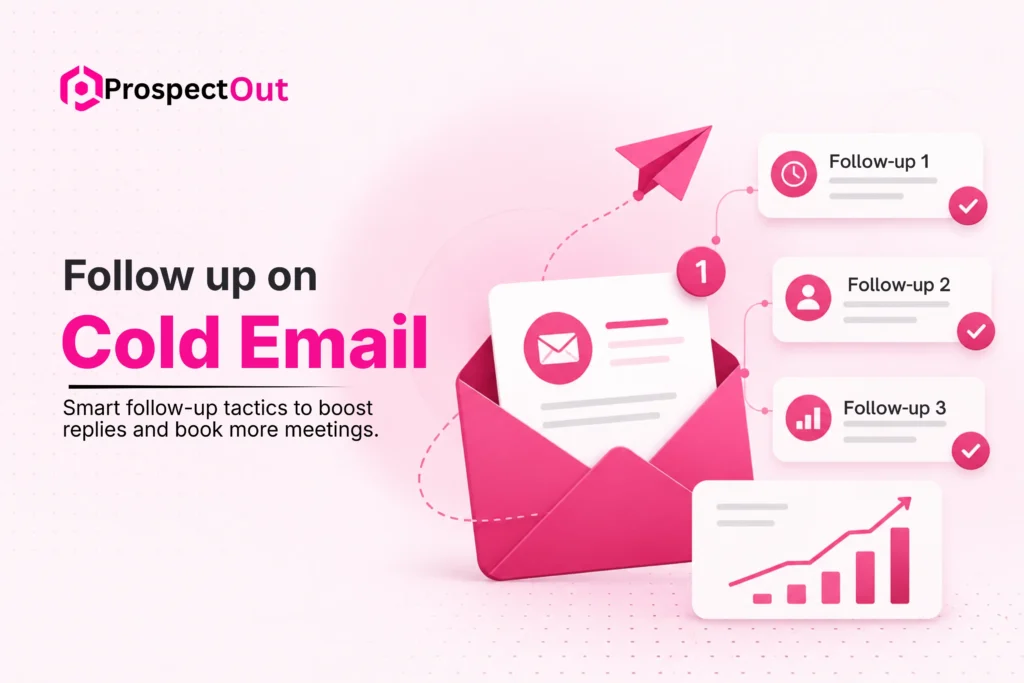
Cold email still works when it is done with care, patience, and a clear plan that respects how busy people actually read their inbox. Many teams send one message, wait a few days, and then give up when no reply comes.
This approach wastes strong leads and reduces the return on your outreach effort. People check emails between meetings, during short breaks, and at times when focus is limited, so your first message often arrives at the wrong moment.
In our work with B2B outreach and appointment setting, we have seen that most deals do not happen after a single email, but after a sequence of thoughtful follow-ups that feel natural and helpful.
We will show how to plan and write follow-ups that increase replies while keeping your brand image strong.
Why Most Cold Emails Fail Without Follow-Ups
A single email rarely gets a reply, even if the offer is strong and relevant to the reader’s role or goals. Common reasons include:
- Prospects read quickly and forget your message within minutes.
- Your email arrives when their schedule is already overloaded.
- They plan to reply later but never return again.
- Your value is not clear enough at first glance.
- They are unsure how your offer applies to them.
- The message feels low priority compared to urgent tasks.
- They need more exposure before trusting your brand.
- One email is not enough to build real interest.
Also read: Is it illegal to send emails without permission?
How Long Should You Wait Before Sending a Follow-Up?
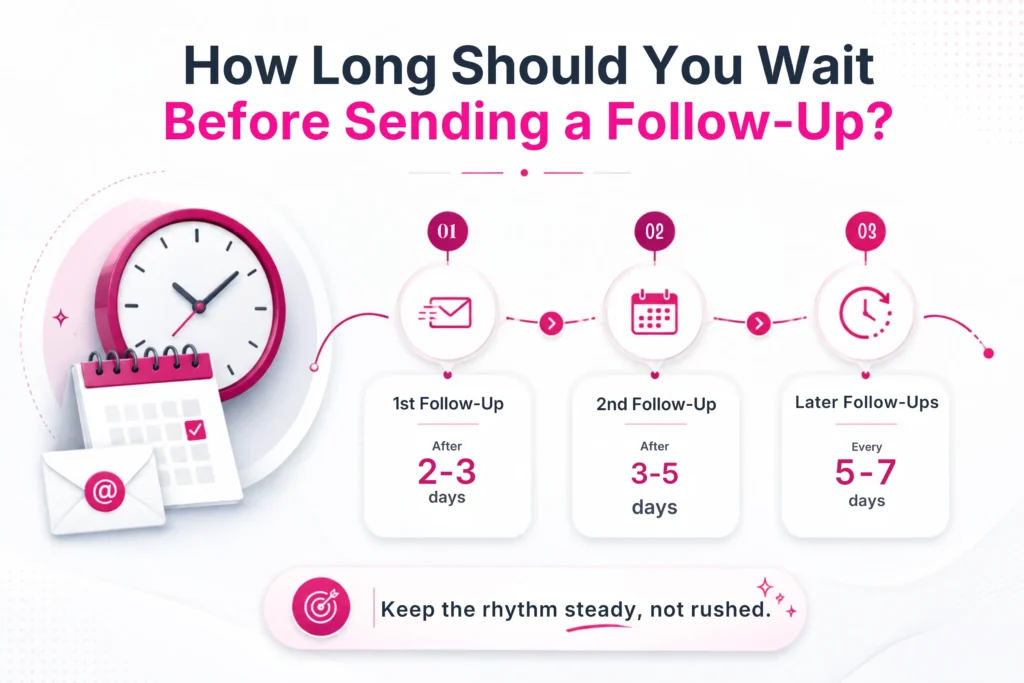
Timing shapes how your follow-up is received, so spacing your emails in a thoughtful way can improve both open rates and replies. The first follow-up should usually be sent after 2 to 3 days, which keeps your message fresh while still giving the reader enough time to notice and process your initial email. This short gap works well because your name and offer are still recent in their inbox.
The second follow-up can be sent after 3 to 5 days, which maintains a steady rhythm without making your outreach feel rushed or repetitive. After that, later follow-ups should have a wider gap of around 5 to 7 days, allowing you to stay visible while avoiding any sense of pressure. This gradual spacing shows respect for the reader’s time and creates a more natural flow.
It is also important to consider time zones and user behavior when planning your schedule. Sending emails during working hours increases visibility, while tracking signals like multiple opens can guide your timing, helping you adjust your pace based on real engagement.
How Many Follow-Ups Should You Send?
There is no fixed number that works for every campaign, but experience and data suggest a balanced range. Sending 4 to 6 follow-ups after your first email often brings the best results, as many replies arrive after the 3rd or 4th touchpoint. This range gives enough chances to stay visible without overwhelming the prospect, while maintaining a steady and professional presence.
When it becomes too much is just as important to note. Sending more than 7 or 8 emails can hurt your reputation and make your outreach feel intrusive. Each follow-up should add a new idea or benefit, rather than repeat the same message. If there is still no response after several attempts, it is often better to stop and shift your focus to stronger prospects.
Also read: How many cold emails to get a client?
What Is the Best Time to Send Follow-Up Emails?
The time you send your email can affect how likely it is to be opened and read with attention. We notice that even small changes in timing can lead to better response rates:
- Weekdays Work Best: Emails sent between Tuesday and Thursday tend to perform well because Monday is often filled with planning and Friday has lower focus.
- Morning Hours: Sending emails between 8:30 AM and 11:00 AM in the prospect’s time zone works well, as many people check their inbox early in the day.
- Early Afternoon: Another effective window is between 1:00 PM and 3:00 PM, when people return to work after lunch and review pending messages.
Note: Each audience behaves differently, so tracking your results and adjusting your timing based on real data will help you improve performance over time.
How to Write Follow-Up Emails That Get Responses
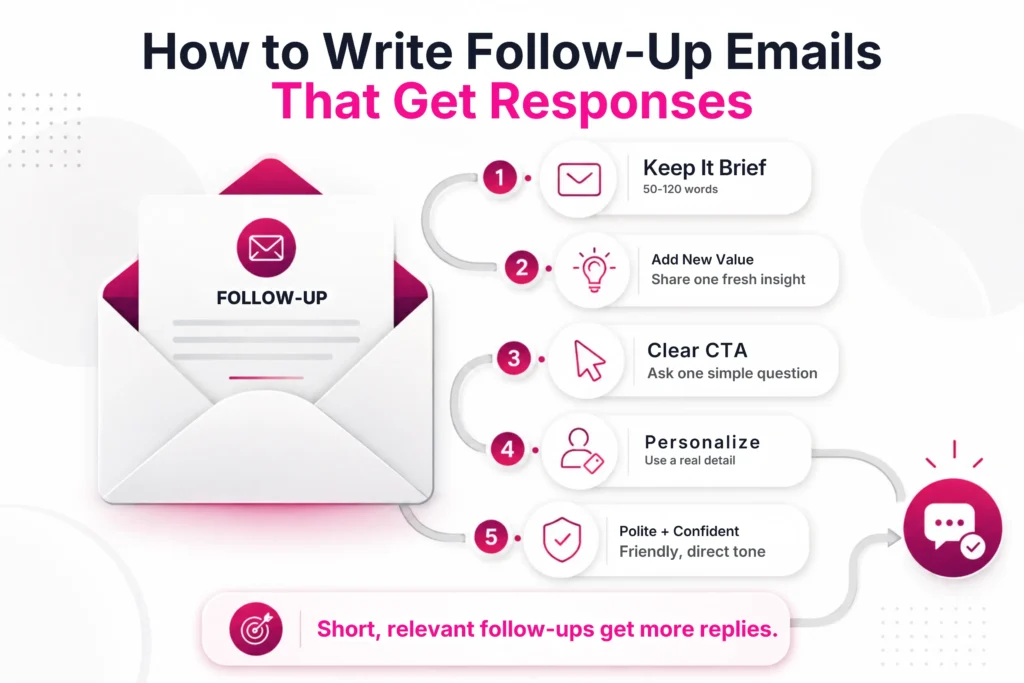
A strong follow-up email should feel easy to read, helpful, and respectful of the reader’s limited time. Our experts suggest using these tricks to get more responses:
1. Keep It Brief but Meaningful
A follow-up email should stay short enough to be read in one quick scan, usually within 50 to 120 words, while still making each sentence useful and easy to follow. Long blocks of text reduce attention, especially when the reader is moving fast between tasks and only giving emails a few seconds of focus.
Shorter messages perform better because they respect time and reduce effort for the reader. Instead of repeating the full pitch, it works better to guide the conversation forward with one idea at a time. When every line has intent, the message feels easier to process and more worth replying to.
2. Add New Value
Each follow-up should introduce something fresh so the reader has a reason to re-engage instead of ignoring repeated messages. This could be a small insight about their industry, a short example of results seen in similar companies, or a practical idea connected to their situation.
Response rates improve when each email adds a new angle instead of repeating the original pitch in different wording. New value does not need to be long or complex; even a simple observation can shift attention back to the message and encourage a reply when it feels relevant and useful.
Here are some simple ways to add new value in follow-up emails:
- Share a quick industry insight or trend.
- Mention a short, relevant case result.
- Point out a common problem and simple fix.
- Offer a small actionable tip they can use.
- Highlight a recent change in their space.
- Connect your solution to a specific use case.
- Provide a brief data point or stat.
- Suggest a new angle they may not have considered, etc.
3. Use a Clear Call to Action
A follow-up works best when the reader knows exactly what action is expected without needing to think too much. A single, simple question often performs better than multiple options or vague requests that create hesitation.
Asking if they are open to a short call or if the topic is relevant right now keeps the decision easy and direct. Unclear calls to action often slow down replies because prospects are unsure how to respond or what is being asked. A clear direction removes friction and makes it easier for them to reply quickly.
4. Personalize with Care
Personalization should feel natural and grounded in real details, not forced or copied from templates. Mentioning something specific about the company, recent activity, or the person’s role shows attention and makes the message feel intentional.
Even small details, like a recent business update or a hiring move, can improve engagement when used correctly. The goal is not to overload the message with information but to show relevance.
Some ways to personalize follow-up emails include:
- Mention a recent company announcement or update.
- Reference the recipient’s role or responsibility.
- Highlight a recent product or service launch.
- Note a hiring change or team growth.
- Connect to their industry challenges.
- Refer to a shared connection or network.
- Mention content they recently shared or published, etc.
5. Stay Polite and Confident
A strong follow-up balances respect and confidence without leaning too far in either direction. If the tone feels too aggressive, it can push people away, while a hesitant tone can reduce trust in the offer.
The most effective approach is to show belief in the value being offered while still giving the reader full freedom to decide. When done well, the reader understands that the offer is serious but there is no pressure to respond immediately.
6. Use a Natural Tone
A natural tone makes the email feel like a real conversation instead of a scripted sales message. Overly formal language or heavy sales wording can create distance and reduce engagement, especially in cold outreach where trust is still being built.
Messages that sound human and simple tend to receive more replies because they are easier to read and relate to. Writing in a clear, conversational way keeps attention on the message instead of the style. When the tone feels natural, the reader is more likely to respond without overthinking the reply.
Cold Email Follow-Up Sequence: Goals and Content Focus
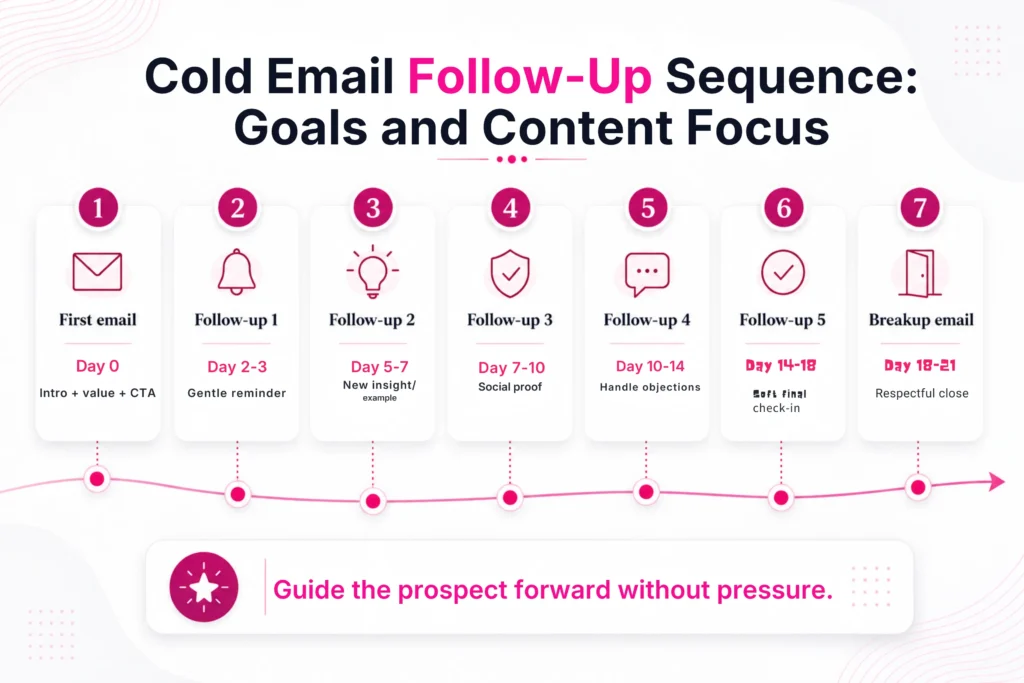
A structured follow-up sequence helps maintain steady communication with prospects by spacing messages. Each step should guide the reader forward without pressure, while still keeping your message visible in a busy inbox:
| Follow ups | Timing | Goal and content focus |
| First email | Day 0 | Introduce offer, explain value, and create initial interest with a clear call to action. |
| Follow-up 1 | Day 2–3 | Gentle reminder, restate value briefly, and prompt easy engagement. |
| Follow-up 2 | Day 5–7 | Add new insight or example to build credibility and relevance. |
| Follow-up 3 | Day 7–10 | Share social proof such as results, outcomes, or brief success examples. |
| Follow-up 4 | Day 10–14 | Address possible objections and clarify doubts about the offer. |
| Follow-up 5 | Day 14–18 | Final check-in with a softer tone and open question for response. |
| Breakup email | Day 18–21 | Close loop respectfully, leave door open for future contact. |
Small Strategies for Successful Cold Email Follow-Ups
Successful follow-ups rely on small improvements that work together to increase engagement. We suggest to try these:
- Change the Subject Line: Using a new subject line can improve open rates, especially if your previous email was not opened.
- Reply in the Same Thread: Keeping your follow-ups in the same thread makes it easier for the reader to recall your earlier message and understand the context.
- Use Light Humor: A small, polite touch of humor can make your email stand out and feel more human, as long as it stays professional.
- Ask Micro-Questions: Simple questions are easier to answer and lower the effort needed to reply, which can increase your response rate.
- Include a Soft Offer: Offering a quick audit, a short idea, or a simple suggestion can make your outreach feel helpful instead of sales-driven.
- Track and Learn: Reviewing your performance data helps you improve your approach and focus on what works best for your audience.
What to Do If You Get No Response After Multiple Follow-Ups
No reply does not always mean a lack of interest, but it does mean you should review and improve your approach. Here’s what you can do:
- Look at the email subject lines, structure, and clarity to see if your message is easy to read and relevant.
- Make sure you are reaching people who actually need your service and have the authority to respond.
- Focus on outcomes and benefits instead of features, which makes your offer more appealing.
- Reaching out on LinkedIn with a short and polite message can create another touchpoint.
- Waiting a few months before reaching out again with a new idea can sometimes lead to better results.
The Breakup Email: Your Final Follow-Up
A breakup email allows you to end your sequence in a way that feels respectful and professional, while still giving the prospect a chance to respond. We show a demo template of the breakup email below:
Subject: Should I close your file?
Hi [First Name],
I have tried reaching out a few times about [specific value or offer], but I have not heard back from you. I will assume it is not a priority right now and close this thread.
If that changes in the future, feel free to reach out anytime. Happy to share ideas or revisit this when it makes more sense for you.
Wishing you continued success,
[Your Name]
Final words
Follow-ups are not an annoyance when done with care and purpose, but rather a helpful reminder that keeps your offer visible in a busy inbox. With the right timing, clear value, and a respectful tone, your outreach can turn into real conversations that lead to meetings and deals.
Our experience with B2B cold email outreach shows that consistent follow-ups, combined with thoughtful messaging, can transform cold leads into strong opportunities over time. If you want help building a follow-up system that actually gets replies, feel free to reach out to discuss your outreach goals.
Frequently Asked Questions
Should I use the same message each time?
Each follow-up should include a new idea or angle, as repetition reduces interest and engagement.
Is it okay to follow up if the email was opened but not answered?
An opening often shows curiosity, so a follow-up can help move the conversation forward.
What if my emails go to spam?
Check your domain setup, sending habits, and content quality to improve deliverability and reach.
Can I automate follow-ups?
Automation can save time, but reviewing and refining your messages keeps them human and effective.
What is a good reply rate for cold email follow-ups?
A reply rate between five and fifteen percent is common when your targeting and message are well aligned.