
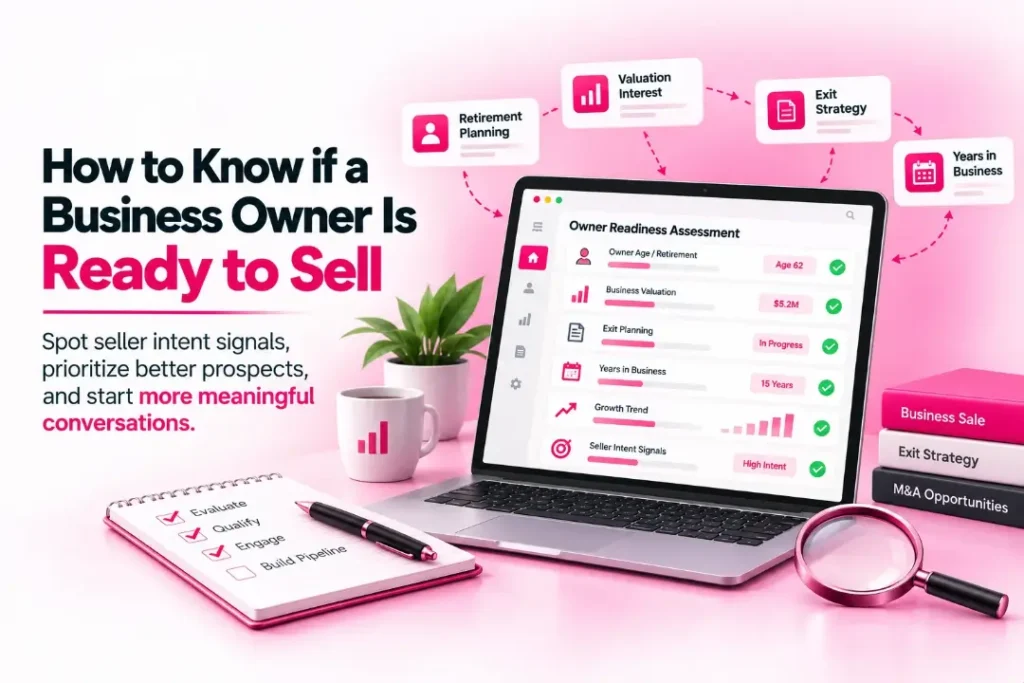
For a broker, finding business owners who are ready to sell can be challenging. I often see brokers waste time contacting owners who have no plans to sell.
The key is to look for seller intent signals, such as the owner’s age, business history, interest in business valuation, and exit planning.
By using these signals, accurate contact data, and personalized outreach, you can find better prospects, start meaningful conversations, and build a stronger pipeline of potential sellers.
In this guide, you will learn how business brokers can identify business owners who may be ready to sell and use those insights to build a more targeted prospecting strategy.
1. Look at the Business Owner’s Age and Career Stage
An owner’s age can provide useful context when evaluating potential seller intent. In the United States, retirement planning and workforce transitions often occur between ages 60 and 72, although the timing varies based on financial circumstances, personal goals, and business responsibilities.
Business owners approaching this stage may begin considering succession, financial security, and their company’s future. After years of building a business, some may want to step away from daily operations and explore new priorities.
For business brokers, age can be a helpful starting point for identifying potential sellers. However, it does not guarantee selling intent. Some owners continue operating well into retirement, while younger entrepreneurs may seek an exit to pursue new opportunities. Combine age with business maturity, ownership history, and succession planning signals.
2. Consider How Long the Business Has Been Operating
A business’s operating history can provide valuable clues about its potential readiness for sale. Owners who have spent years building a company may consider realizing their investment, reducing management responsibilities, or pursuing new opportunities.
Established businesses may also attract buyers through their recognizable brands, loyal customer bases, recurring revenue, experienced employees, and efficient operations. For business brokers, company age is a useful prospecting filter, but it should be combined with other seller intent signals.
How to use this signal:
- Identify businesses that have operated for 15-30 year and appear to have an established market position.
- Review available information about company growth, leadership changes, and expansion plans.
- Look for businesses whose owners may benefit from exploring their current market value.
- Combine business age with other signals, such as retirement considerations, valuation interest, or succession planning.
3. Identify Owners Showing Interest in Business Valuation
Interest in business valuation can be a particularly useful seller intent signal. When an owner starts exploring what their company is worth, they may be evaluating their financial position, considering an eventual exit, or preparing for a potential transaction.
For example, an owner researching valuation methods, comparable business sales, or the factors that influence company value may be trying to understand the options available to them.
However, valuation interest can also arise for other reasons, including refinancing, estate planning, partnership changes, or raising investment. Brokers should therefore treat this activity as a reason to investigate further, not as proof that a sale is imminent.
How to use this signal:
- Pay attention to publicly available business content related to valuation and exit planning.
- Identify owners who voluntarily express interest in understanding their company’s market value.
- Use relevant industry and business information to determine whether a valuation conversation may be appropriate.
- Offer useful guidance about valuation factors and the selling process without immediately pushing for a listing agreement.
A personalized message can open the door to a meaningful discussion. A broker might explain how factors such as profitability, customer concentration, recurring revenue, and market conditions can influence a business’s potential sale value.
4. Look for Signs of Business Exit Planning
Exit planning can indicate that a business owner is considering a future ownership transition. Owners may begin months or years ahead by improving profitability, strengthening management, organizing financial records, and reducing dependence on their daily involvement.
These activities suggest preparation for a potential change in ownership, but they do not guarantee an imminent sale. Some owners may instead plan to transfer the business to family members, sell to employees, or pursue other succession options.
Business brokers can use these signals to identify opportunities for early engagement.
Look for indicators such as:
- Public discussions about succession planning or retirement.
- Leadership changes that reduce the owner’s day-to-day involvement.
- Efforts to professionalize business operations or strengthen management.
- Interest in preparing financial records and improving business performance before a sale.
- Announced plans for ownership changes, where publicly available.
When these indicators appear, brokers can introduce their services as a resource for understanding exit options, preparing a business for market, and identifying potential buyers.
5. Combine Multiple Seller Intent Signals
One signal rarely tells the complete story. A business owner may be approaching retirement but have no plans to sell. Another may be researching valuation simply to understand the company’s financial position.
The most promising prospects are often those for whom several relevant indicators appear together.
Consider an owner who has operated a company for 20-30 years, has recently appointed a general manager, and has publicly discussed succession planning. These factors may justify further research because they suggest the owner could be preparing for a change in responsibilities or ownership.
Another owner might run a mature business, have expressed interest in valuation, and be exploring options for reducing their involvement. This combination could indicate a stronger reason to initiate a conversation than any single factor alone.
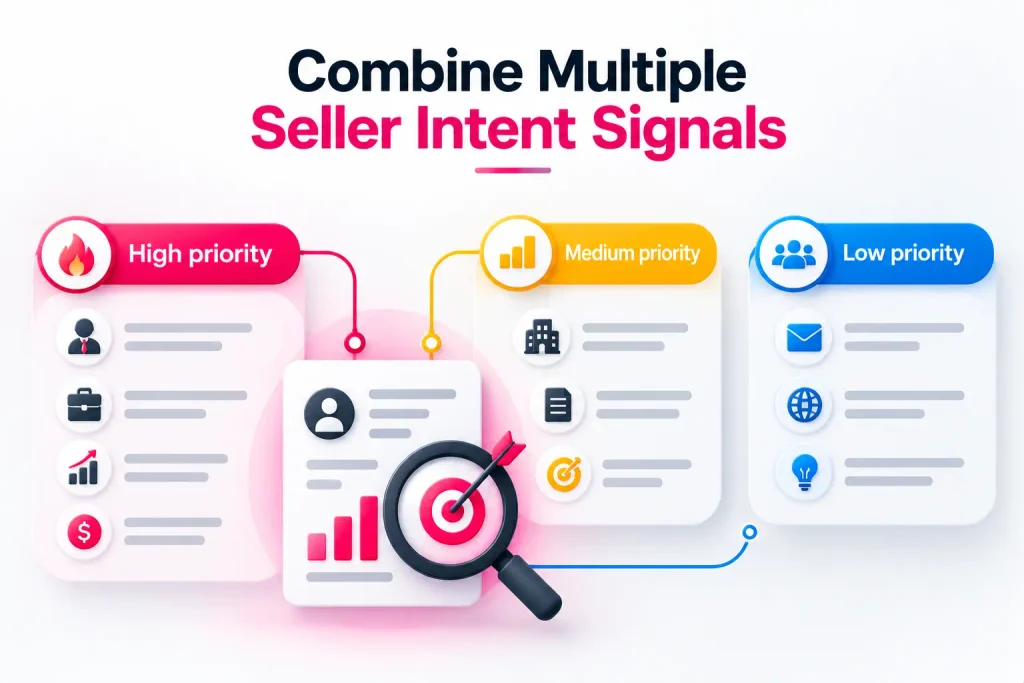
To make prospecting more systematic, business brokers can assign prospects to simple priority categories:
- High priority: Multiple relevant signals suggest a possible ownership transition, and the available information supports timely, personalized outreach.
- Medium priority: One or two indicators suggest potential interest, but the owner’s plans remain unclear.
- Low priority: Little evidence of a possible transition is available, making immediate outreach less compelling.
These categories are working guidelines, not guarantees of seller intent. Update them as new information becomes available and as owners respond to outreach.
6. Build an Accurate List of Potential Business Sellers
Once you identify promising seller intent signals, build a targeted prospect list to connect with potential sellers more efficiently. Start by defining your ideal businesses based on industry, location, company size, estimated revenue, ownership structure, and buyer demand.
Research businesses that match your criteria and collect relevant owner information, including names, job titles, company websites, LinkedIn profiles, and verified business email addresses. Ensure your contact data is accurate to avoid wasted outreach efforts.
Record the signals that make each prospect relevant, such as business longevity, leadership changes, valuation interest, or succession planning. This information helps you personalize cold emails, prioritize follow-ups, and focus on owners who may be considering a sale. Segment prospects by intent level to distinguish immediate opportunities from longer-term leads.
7. Reach Potential Sellers Through Personalized Cold Outreach
Identifying seller intent is only the first step. Business brokers need effective ways to connect with owners who may be considering a sale. Cold email and LinkedIn outreach provide opportunities to reach relevant prospects when campaigns use accurate contact data and credible intent signals.
Focus your messages on the owner’s circumstances rather than immediately pitching a sale.
For example, mention succession planning or explain how a valuation discussion gives an owner insight into their company’s potential market value.
I also advise you to keep your messages concise, relevant, and professional.
Avoid assuming an owner is ready to sell. Instead, highlight how your expertise supports their future plans and invite them to discuss their goals.
A simple cold email example:
Subject: Exploring future options for [Company Name]
Hi [First Name],
I’ve been researching established businesses in [Industry] and came across [Company Name]. Given your experience building the business, I thought it might be worth connecting.
I work with business owners who want to understand their company’s potential market value, explore succession options, or plan for a future sale.
Would you be open to a brief conversation about your long-term plans for the business?
Best,
[Your Name]
This message is designed to start a conversation rather than assume the recipient is ready to sell. Customize it using relevant, accurate information about the owner and their business.
LinkedIn can complement email outreach by providing another professional channel for making connections and sharing relevant insights. If you use both channels, coordinate your messaging and follow-ups so that each interaction adds value instead of repeating the same pitch.
8. Follow Up and Qualify Seller Intent Through Conversations
An owner who does not respond to your first message may still be a relevant prospect. Selling a business is a significant decision, and owners often need time to explore their options. An effective follow-up process keeps your services visible without overwhelming recipients. Send personalized messages at reasonable intervals and stop contacting anyone who declines.
When an owner responds, ask about their future plans, preferred timeline, reasons for considering a sale, and valuation expectations. Their answers help you determine whether they are ready to sell, exploring future opportunities, or not currently interested.
Use a customer relationship management (CRM) system to track conversations, seller intent, follow-up preferences, and next steps. Regularly review this information to refine your prospecting strategy and maintain a stronger pipeline of potential sellers.
Final Words
My opinion on identifying potential business sellers is that timing, accurate data, and relevant outreach make the difference. Brokers who recognize seller intent signals can prioritize prospects and start meaningful conversations before competitors do.
ProspectOut assists brokers with targeted lead generation, verified contact data, and personalized cold email outreach. Contact us to discuss your goals and uncover a more effective strategy for connecting with potential sellers.