Cold email still drives a predictable B2B pipeline when the delivery system is built with discipline. Inbox providers now evaluate every sender through technical trust signals and behavior patterns that reflect real usage, not claims.
Strong results come from a mix of proper authentication setup, controlled sending volume, clean data, and consistent engagement signals. We see most breakdowns not in message quality, but in weak setup and inconsistent sending habits.
Deliverability is no longer a one-time setup step. It operates as a live system that needs constant attention, adjustments, and control to stay stable across inbox providers and changing rules.
Let’s explore how this system works in practice.
Why Email Provider Rules Define Deliverability Success Today
Google, Yahoo, and Microsoft enforce strict bulk sender rules that directly impact inbox placement across industries. These systems now evaluate technical setup before reading email content. SPF, DKIM, and DMARC must be correctly configured and fully aligned, since missing or broken records reduce trust instantly.
RFC 8058 one-click unsubscribe is now required for marketing emails and helps lower friction while keeping compliance in place. Sender reputation also depends on behavior metrics. Spam complaints must stay below 0.3%, while bounce rates must remain under 2%. Going beyond these limits leads to filtering, reduced inbox reach, and weaker campaign performance across major providers.
Core Authentication Systems That Protect Sender Reputation
Authentication confirms sender identity and builds trust with inbox providers. It acts as the first checkpoint before any email is judged on content or intent. Without it, even well-written cold emails can fail to reach the inbox.
SPF defines which servers are allowed to send emails for a domain. DKIM adds a cryptographic signature to each message to confirm it was not altered. DMARC connects both systems and sets rules for handling failed authentication checks.
When these records are misconfigured, delivery drops immediately, even if the message content is clean. Many outreach campaigns fail before the first send because DNS settings are incomplete or inconsistent.
We validate authentication before any outreach begins. No domain enters production without full alignment across all records.
Controlled Sending Infrastructure and Domain Warmup Strategy
Check a stable sending system that protects reputation while scaling cold email outreach across multiple domains and inboxes:
- Multi-domain sending setup: Cold outreach should never rely on a single domain. Using multiple domains and inboxes spreads sending volume, reduces risk, and prevents reputation damage from concentrated activity. It also helps isolate performance issues without affecting the full system.
- Gradual warmup process: Warmup starts at low volume, usually 5 to 10 emails per day per inbox. This phase runs over 2 to 3 weeks with steady increases. Sudden jumps in volume are avoided because they trigger spam filters and reduce trust signals.
- Engagement-based warmup signals: Warmup tools generate opens, replies, and interactions that simulate real conversations. These signals help inbox providers view the sender as legitimate rather than automated or aggressive.
- Stable sending rhythm control: Consistent daily volume matters more than rapid scaling. Sudden spikes or irregular patterns often trigger filtering systems and lower inbox placement across providers.
Data Quality and List Hygiene for Clean Outreach Performance
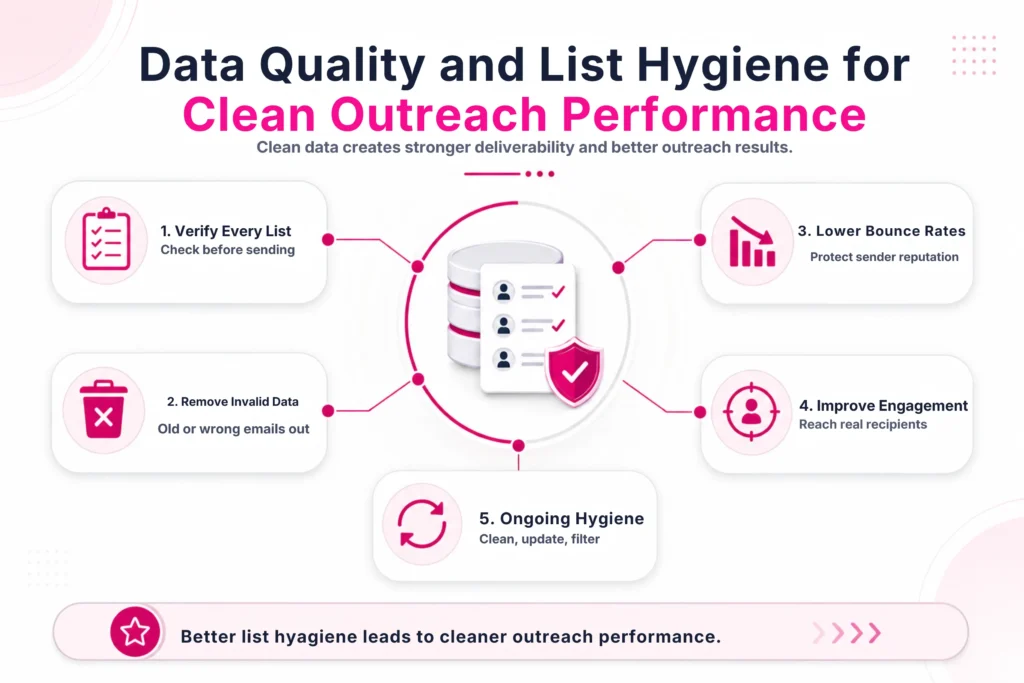
List quality directly shapes inbox placement and sender reputation in cold email outreach. Poor data creates hidden risks that build up quickly and damage long-term deliverability. Clean, verified data gives every campaign a stable starting point and reduces avoidable failures.
Every contact list must be verified before sending. Invalid or outdated email addresses increase hard bounce rates and signal low trust to inbox providers. Even a small amount of bad data can affect overall domain performance and reduce future inbox reach.
Clean data improves engagement rates because messages reach real, active recipients. Strong targeting also reduces wasted sends and increases reply rates, which supports better sender reputation signals across providers. Higher relevance always leads to stronger deliverability outcomes.
We treat list hygiene as an ongoing process across every campaign. Data must be continuously checked, updated, and filtered instead of handled as a one-time cleanup task before launch.
Writing Cold Emails That Avoid Spam Filtering Systems
We focus on writing cold emails that pass inbox filters while staying natural, relevant, and easy for recipients to read and respond to:
Keep it short
Short emails perform better because they reduce cognitive load and improve engagement speed. Inbox providers also favor messages that resemble normal communication. Long pitches with multiple ideas often reduce clarity and increase spam signals across automated filtering systems, lowering overall inbox placement and reply rates over time.
Clear subject lines
Email subject lines must match the email content and stay simple. Overly promotional or vague phrasing increases spam risk and lowers open rates. We use direct language that reflects real business intent. This helps improve trust with both recipients and inbox providers while keeping engagement consistent across campaigns.
Natural personalization
Personalization works best when it feels real and context-driven. Over-structured inserts or repeated templates make emails look automated. We keep personalization light, relevant, and tied to the recipient’s role or activity. This improves engagement while supporting stronger deliverability signals across major inbox systems and providers.
Conversational tone
We use a conversational writing style that mirrors how professionals actually communicate by email. This avoids marketing-heavy language and reduces spam filtering risk. Simple, direct wording improves readability and increases reply likelihood, which strengthens sender reputation and supports better inbox placement over time.
How to Achieve 90% Cold Email Deliverability
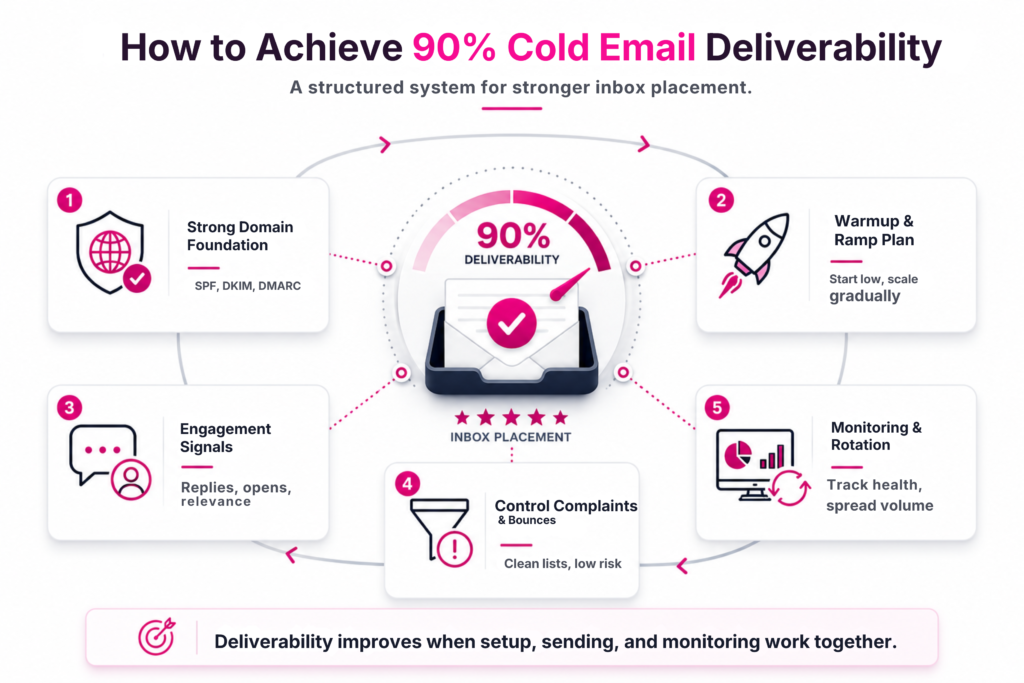
High inbox placement depends on coordination between setup, sending behavior, and monitoring. No single fix delivers consistent results alone. Here we share a structured approach:
1. Build Strong Domain Foundation
Clean domain setup reduces risk and protects primary business domains from reputation damage. We always separate cold email domains from core company domains to avoid cross-impact during outreach campaigns.
Each sending domain must include properly aligned SPF, DKIM, and DMARC records before any emails are sent. These authentication layers confirm sender identity and improve trust with inbox providers.
Domain history also matters because older domains with clean usage patterns often perform better than newly created aggressive sending setups that lack trust signals.
2. Warmup and Sending Ramp Plan
Warmup and sending ramp structure control how inbox providers evaluate new sending activity. Reputation builds through gradual engagement rather than sudden volume. We start with low daily sending limits to avoid triggering early filtering systems.
Over several weeks, volume increases in a controlled way until stable sending capacity is reached. Sudden spikes often cause trust loss and reduce inbox placement.
Warmup activity includes opens, replies, and natural interaction patterns that simulate real conversations. During scaling phases, we keep sending volume steady because consistency signals stronger legitimacy than rapid growth across inbox systems.
3. Maintain Engagement Signals
Engagement signals determine how inbox providers classify sender behavior over time. Replies, opens, and meaningful interactions improve sender reputation and increase inbox placement. Ignored or deleted emails reduce trust signals and weaken long-term deliverability.
We focus targeting on relevant contacts to improve response likelihood and strengthen engagement metrics. Better relevance always leads to higher reply rates and more stable inbox performance.
Email structure also matters because short and clear messages improve readability and encourage responses. Every campaign is built around conversation-driven outreach rather than high-volume sending strategies.
4. Control Complaints and Bounce Rates
Complaint and bounce control directly protect domain reputation in cold email systems. Spam complaints must stay below 0.3% to avoid filtering penalties across major inbox providers. Bounce rates must remain under 2% because high bounce levels signal poor data quality and damage trust.
You can use email verification tools to remove invalid addresses before sending, which reduces avoidable risk. Clean data improves deliverability stability and protects sender domains from long-term damage.
Unsubscribe handling must stay simple and compliant. RFC 8058 one-click unsubscribe reduces friction and helps prevent unnecessary spam complaints from recipients.
5. Use Monitoring Systems and Rotation
Monitoring systems ensure deliverability issues are detected early before they escalate. Real-time tracking of domain health helps maintain consistent inbox performance across campaigns.
Inbox placement testing shows how emails perform across Gmail, Outlook, and Yahoo, allowing adjustments in sending behavior or content when needed. Domain rotation spreads sending volume across multiple assets, reducing pressure on any single domain.
This protects overall system health and prevents overload. When performance declines, affected accounts must be paused quickly to stop reputation damage from spreading to other domains or inboxes in the outreach system.
Scaling Cold Email Volume Without Damaging Sender Reputation Systems
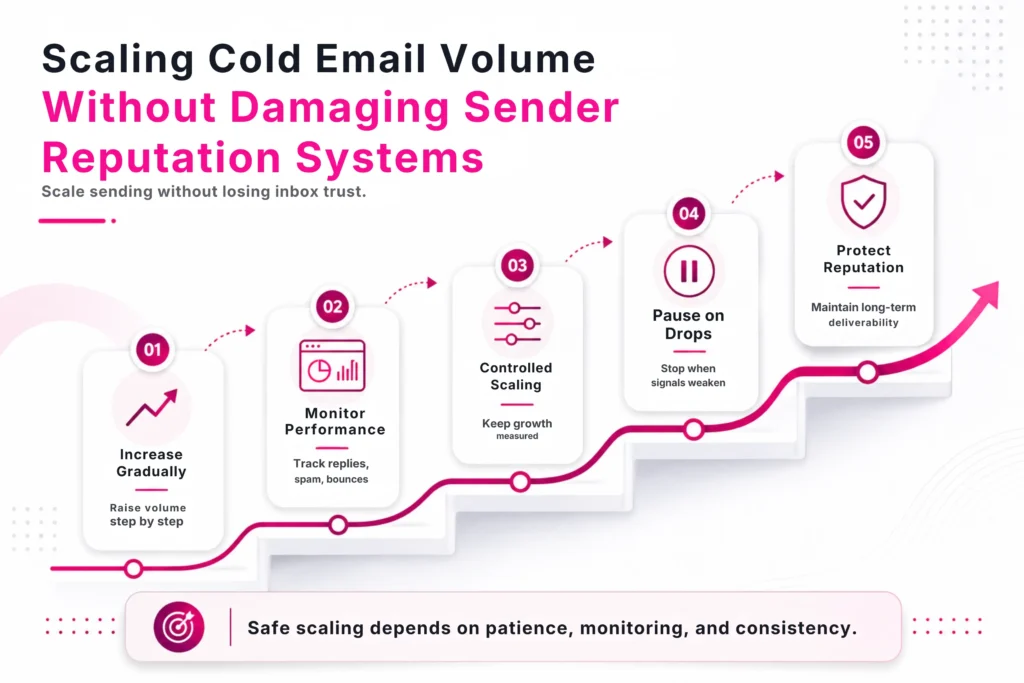
We scale cold email systems through controlled growth patterns. You must:
- Increase volume gradually: Sending volume should rise only after stable inbox placement and healthy engagement signals are maintained. Rapid scaling creates trust issues and increases filtering risk across major inbox providers.
- Monitor performance continuously: Every scaling phase requires close tracking of reply rates, spam complaints, bounce levels, and inbox placement. Weak performance signals must be corrected before additional volume is introduced.
- Keep scaling controlled: Each growth step should remain small and measured instead of aggressive. Stable sending patterns build stronger trust signals than sudden volume spikes or irregular activity across domains.
- Pause during performance drops: If engagement declines or inbox placement weakens, scaling should stop immediately until performance stabilizes again. This protects sender reputation and supports long-term outreach growth.
Maintaining Long-Term Deliverability Through Ongoing System Optimization
Deliverability is not static because inbox providers constantly adjust filtering systems based on sender behavior, engagement signals, and spam trends. A setup that performs well today can weaken later if monitoring stops or sending behavior changes. Long-term performance depends on continuous system optimization rather than one-time technical configuration.
We continuously test inbox placement across Gmail, Outlook, and Yahoo to detect early performance shifts. These tests help identify filtering issues before they damage broader campaign performance. Underperforming inboxes are paused quickly to protect overall domain reputation and maintain system stability across outreach operations.
Content quality, targeting accuracy, and sending patterns are reviewed regularly to maintain healthy engagement signals. Small adjustments made over time often prevent larger deliverability problems later. Strong outreach systems improve gradually through active monitoring, controlled optimization, and consistent performance analysis across every stage of the sending process.
Final Perspective
Cold email performance in 2026 depends on structured systems, not isolated tactics. Authentication, warmup, data quality, messaging, and monitoring must work together. Most failures come from missing structure rather than weak outreach skills. Stable systems create predictable inbox placement and consistent pipeline output.
We manage cold email outreach for B2B companies focused on appointment setting. Our focus stays on deliverability because inbox placement defines every downstream result. Consistent systems outperform short-term tactics and create scalable outreach performance over time.
Frequently Asked Questions
Why are SPF, DKIM, and DMARC important for deliverability?
These authentication records confirm sender identity and help inbox providers trust incoming emails. Missing or broken records often reduce inbox placement.
What is a safe bounce rate for cold email campaigns?
Bounce rates should stay below 2%. Higher bounce levels damage sender reputation and increase the risk of spam filtering across providers.
How many cold emails should a new inbox send daily?
A new inbox should usually begin with 5 to 10 emails per day during the early warmup stage. Volume should increase gradually over time.
Why do cold emails land in spam folders?
Cold emails often land in spam due to poor authentication, weak domain reputation, bad list quality, aggressive sending patterns, or low engagement signals.