Core Idea: Effective cold email personalization begins with research, not writing. Analyze company websites, LinkedIn profiles, and AI-assisted insights to understand each prospect, identify their pain points, and write emails that align with their business.
Many people think personalization starts and ends with writing, “Hi {{FirstName}}” or mentioning a recent LinkedIn post. My observation is that those details rarely make an email feel personal.
I’ll walk you through the exact framework my team uses to research prospects, personalize emails, and create outreach that feels relevant from the first line.
What Personalization Actually Means in B2B Outreach
When people talk about personalizing cold emails, I think many misunderstand what it actually means. Personalization has very little to do with mentioning someone’s first name, company, or a recent LinkedIn post.
We focus on understanding what the prospect actually sells, who their ideal clients are, and where they are likely losing opportunities. That’s the information to position an offer that feels relevant instead of random.
Real personalization is aligning the message with the prospect’s business rather than adding surface-level details. Before writing a single email, my team identifies their services, the audience they want to attract, and the challenges they may be facing.
Once those pieces are clear, we can explain how our solution fits their situation. That’s the kind of personalization that generates replies because it shows we understand the business, not just the person.
Also read: B2B cold email best practices
Our 4-Step Personalization Framework
Personalization becomes much easier when you follow a structured process. These are the four steps my team follows before writing cold emails.
Step 1: Understand the Prospect’s Business
Instead of jumping straight into email writing, my team gathers information about the company’s services, products, ideal customers, market positioning, and messaging.
This creates a solid foundation because every personalization decision should reflect how the business actually presents itself, not assumptions made about it.
Step 2: Identify Relevant Pain Points
The next step is identifying the prospect’s possible challenges. Rather than guessing internal issues, the focus is on problems businesses in similar industries commonly face based on their audience, positioning, and business model.
Some common examples include:
- Difficulty generating qualified leads.
- Strong competition in a crowded market.
- Low conversion rates.
- High customer acquisition costs.
- Weak online visibility.
- Difficulty differentiating from competitors.
These insights aren’t copied into the email. They provide the context needed to make the outreach feel relevant and well researched.
Step 3: Connect Their Challenges to Your Offer
This is where personalization becomes meaningful. After identifying the prospect’s challenges, our next objective is finding the strongest connection between those challenges and the solution being offered.
If there isn’t a clear fit, it’s better not to force one. Instead of mentioning every feature or capability, we focus on one meaningful problem and explain how our offer addresses it. I’ve noticed over the years that this creates a much stronger reason for the prospect to continue reading.
Step 4: Write the Personalized Opening Line
By this stage, we already have a clear understanding of the prospect’s business, audience, positioning, and the challenge our offer can address. My team crafts the opening to briefly connect those insights in a way that feels natural and specific rather than overly promotional.
A concise, research-backed first line is far more effective than a generic compliment or a superficial reference because it demonstrates genuine relevance from the very beginning.
Ready to turn research into replies? Let ProspectOut build personalized cold email campaigns that start more conversations and generate more qualified meetings.
How We Use AI to Personalize Cold Emails
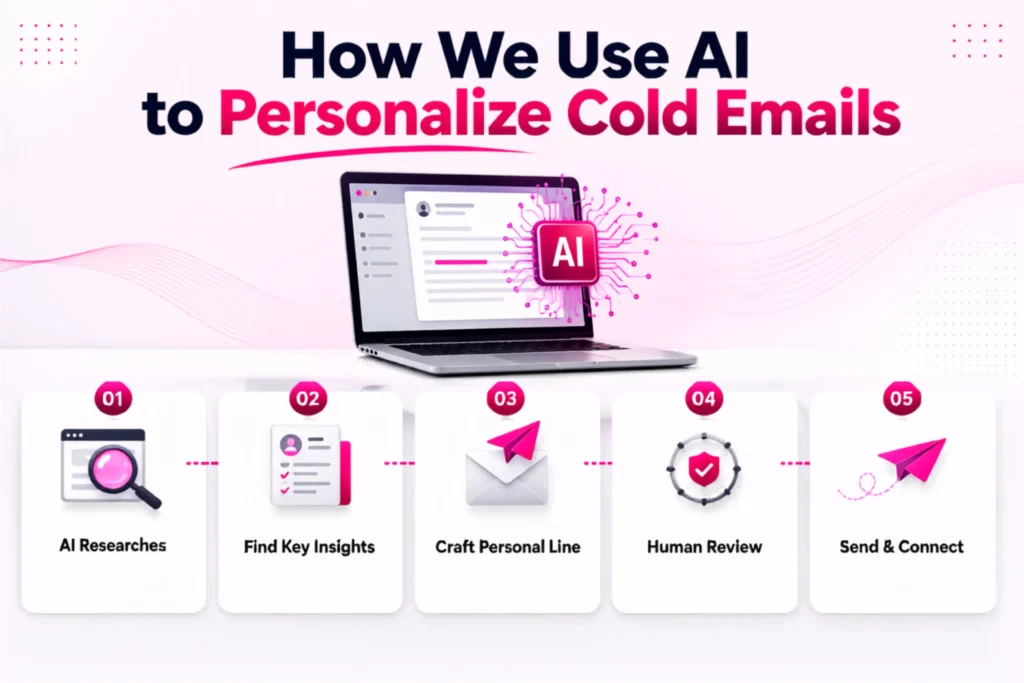
AI becomes much more effective when it’s used to analyze businesses before writing emails. My team uses Claude AI for research and reasoning, while Clay automates that process across larger prospect lists.
Claude for Prospect Research
It serves as the research assistant in our workflow. After providing the right context, it analyzes the prospect’s business and turns that information into insights. Here is how it makes personalization more relevant:
- We provide the prospect’s website to Claude so it can understand the company’s services, products, and overall business model.
- Claude analyzes the business to identify its ideal customers, target industries, positioning, and unique selling points.
- Based on that analysis, it identifies the challenges the company is most likely facing according to its industry, audience, and messaging.
- Those pain points are then compared with our offer to find the strongest point of relevance.
- Finally, Claude generates one concise personalized line based on those insights, which my team reviews before using it in a campaign.
Clay for Personalized Outreach at Scale
Clay allows the similar personalization process to run across hundreds or even thousands of prospects. Instead of researching every lead manually, it automates data collection and passes that information through AI workflows like following:
- A prospect list is imported into Clay, which enriches each lead with company websites, LinkedIn profiles, and other business information.
- Clay organizes those data points into structured fields that AI can analyze consistently.
- The enriched information is processed through AI prompts to identify each prospect’s likely pain points and business opportunities.
- AI then compares those insights with our solution and generates a personalized line for every prospect.
- The final output is reviewed and refined before it becomes part of the outreach campaign.
How LinkedIn Data Adds an Extra Layer of Personalization
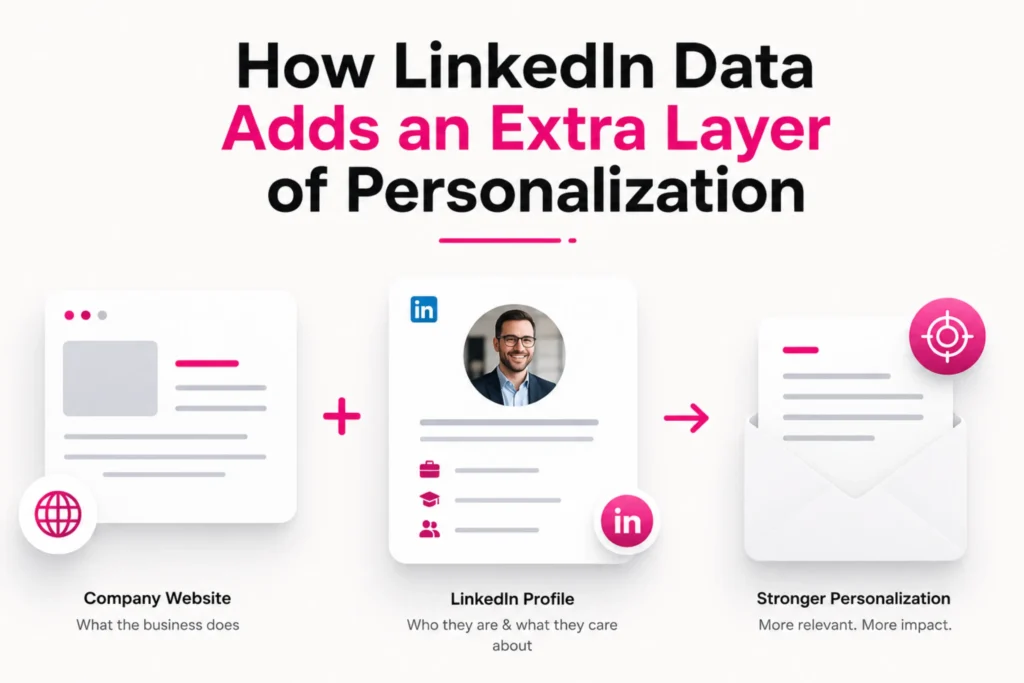
A website tells us about the business, but LinkedIn often tells us about the person behind the role. It gives us a clearer understanding of their responsibilities, career background, recent activities, and the topics they care about.
This additional context makes it easier to write emails that feel relevant without relying on generic compliments or obvious observations.
We don’t use LinkedIn just to mention a recent post or congratulate someone on a work anniversary. Instead, we use the information to better understand their priorities and decision-making role within the company.
When AI combines insights from both the company’s website and the prospect’s LinkedIn profile, it can produce much stronger personalization. My observation is that combining these insights creates outreach that feels informed, purposeful, and relevant to the prospect’s business objectives.
This is the same research-first personalization process my team follows for every client campaign. Let’s discuss today if you’d like us to apply it to your outreach.
What a Super-Personalized Cold Email Looks Like
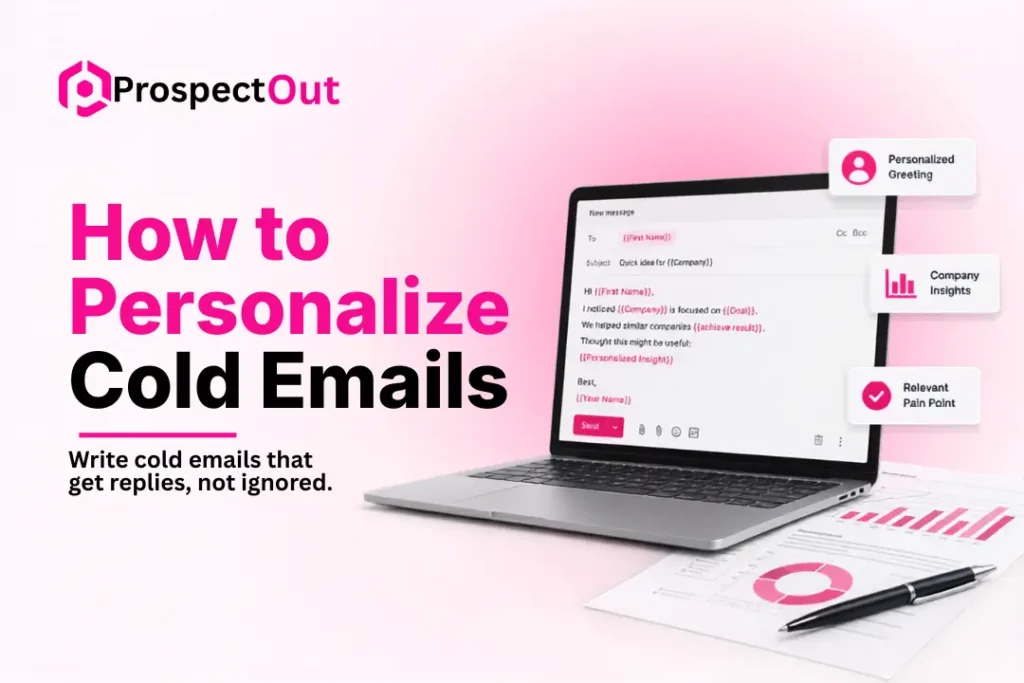
After all the research is complete, the final email should feel like it was written specifically for that prospect. Below is a simple example of how my team structures a highly personalized cold email:
Subject: Quick idea for {{Company}}
Hi {{First Name}},
I was looking through {{Company}}’s website and noticed you’re focused on enabling {{target audience}} to achieve {{specific outcome}}. Given how competitive this space has become, I imagine generating qualified opportunities while standing out from similar providers is a growing challenge.
My team works with B2B companies facing similar situations by building predictable cold email systems that generate qualified meetings without relying on paid ads or inbound marketing.
If you’re interested, I’d be happy to share a few ideas that could fit your current outreach strategy.
Worth a quick conversation?
Best,
{{Your Name}}
This email stands out because every sentence is based on research instead of assumptions. Rather than relying on generic personalization, it connects the prospect’s business, target audience, and likely challenges with a relevant solution. The message stays focused, concise, and specific, making it feel like a genuine business conversation instead of a mass email.
Final Takeaways
Personalization starts with research, not writing. My observation is that the strongest cold emails come from understanding a prospect’s business, identifying their likely challenges, and aligning your offer with a problem they want to solve.
AI can speed up this process, but the quality of your research and prompts still determines the final result. I recommend treating every personalized line as the outcome of a structured workflow rather than a quick edit.
If your goal is better email outreach and appointment setting, focus on relevance, clarity, and genuine business context instead of surface-level personalization.
Frequently Asked Questions
How much personalization should a cold email include?
A cold email should include enough personalization to feel relevant without becoming overly detailed. Usually, one strong personalized opening and a relevant business connection work well.
Are short cold emails better than long emails?
In many cases, yes. Busy professionals prefer concise emails that quickly explain the reason for contact and the next step.
What is the biggest mistake in cold email personalization?
The biggest mistake is using fake or irrelevant personalization. Prospects notice generic compliments and forced references very quickly.
Does personalization improve reply rates?
Yes. Relevant personalization often increases engagement because recipients feel the message connects to their business needs and interests.