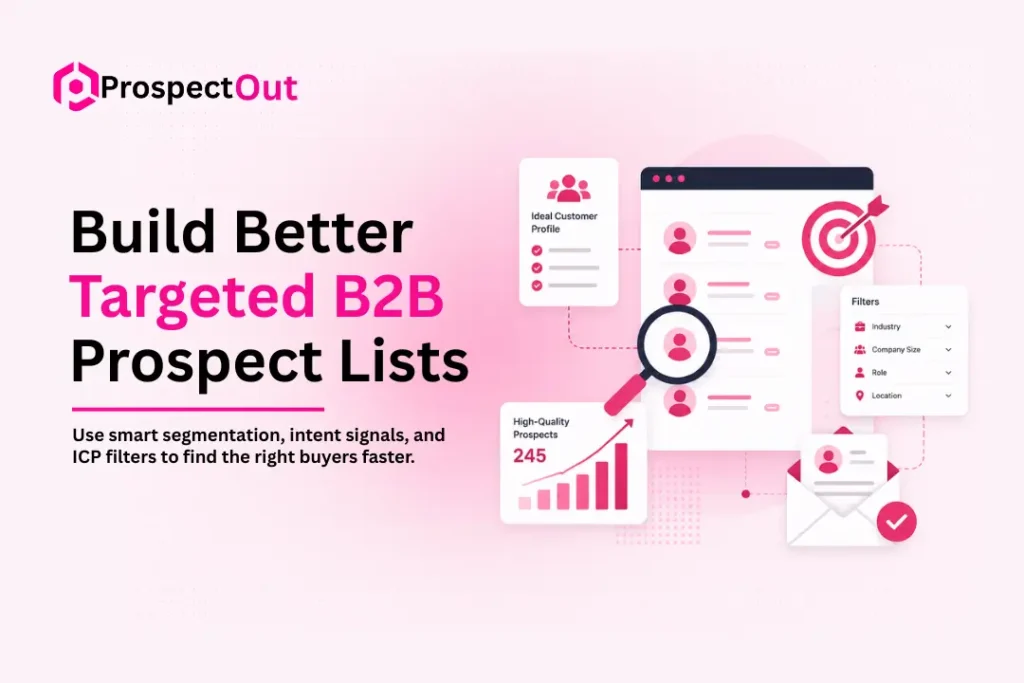
Efficient B2B outreach begins with a precise prospect list, targeting contacts most likely to respond positively. A well-structured list reduces wasted effort and increases the impact of every campaign.
The process includes defining your ideal customer profile, gathering prospects with LinkedIn, Google Maps, Apollo, and ZoomInfo, and verifying all contact information. Segmentation and list cleaning further enhance relevance and engagement.
Do you want to build a targeted B2B prospect list? Read and explore how each step ensures your list is accurate, actionable, and ready to deliver results.
Why Targeted Prospect Lists Matter for Cold Email Success
Picking the right contacts makes every outreach attempt stronger and more efficient. Emails sent to relevant prospects can increase reply rates beyond generic blasts.
Segmented email lists significantly improve engagement compared to broad, untargeted lists. Research from Mailchimp shows that segmented campaigns achieve around 14 % higher open rates and more than double the click rates of non-segmented campaigns.
Targeting improves relevance and keeps your messages from ending up in spam folders.
Reaching the specific people who match your offer boosts credibility with audiences. It is often noticed that sales teams that define their list before outreach see a higher cold email response rate and more qualified replies compared to using random lists. Sending emails that resonate builds trust and starts conversations faster.
When you aim only at contacts who fit your goals, you use resources more wisely. Teams that invest in clean, focused lists save time and money over campaigns that spray and pray. Strong lists also help you test messaging more accurately and refine your process to get more positive results.
Strategies for Defining Your Ideal Customer Profile (ICP) First
The first step in successful B2B prospecting is defining your ideal customer profile. So, consider these characteristics when creating your ICP:
▪ Industry and niche: Focus on specific sectors and subcategories where your solution addresses clear challenges. Narrowing industries ensures messaging is relevant and resonates with decision makers.
▪ Company size: Identify firms by employee count or team scale to match the complexity and pricing of your solution. This ensures campaigns target organizations capable of adoption.
▪ Revenue range: Set revenue brackets to prioritize companies that can afford your solution while demonstrating growth potential. This filters out prospects unlikely to convert.
▪ Location: Choose countries, regions, or cities where demand exists and regulations allow your solution. Geographic targeting increases relevance and operational feasibility of outreach efforts.
▪ Tech stack: Determine which tools and platforms prospects already use to ensure compatibility. Targeting companies with relevant systems streamlines adoption and improves perceived value.
▪ Pain points: Identify common struggles your product resolves and craft messaging that speaks directly to these issues. Addressing pain points builds trust and engagement.
▪ Buying signals: Observe events like funding, new hires, or technology adoption that indicate readiness to explore solutions. These behaviors highlight companies more likely to respond positively.
How to Build Targeted B2B Prospect Lists
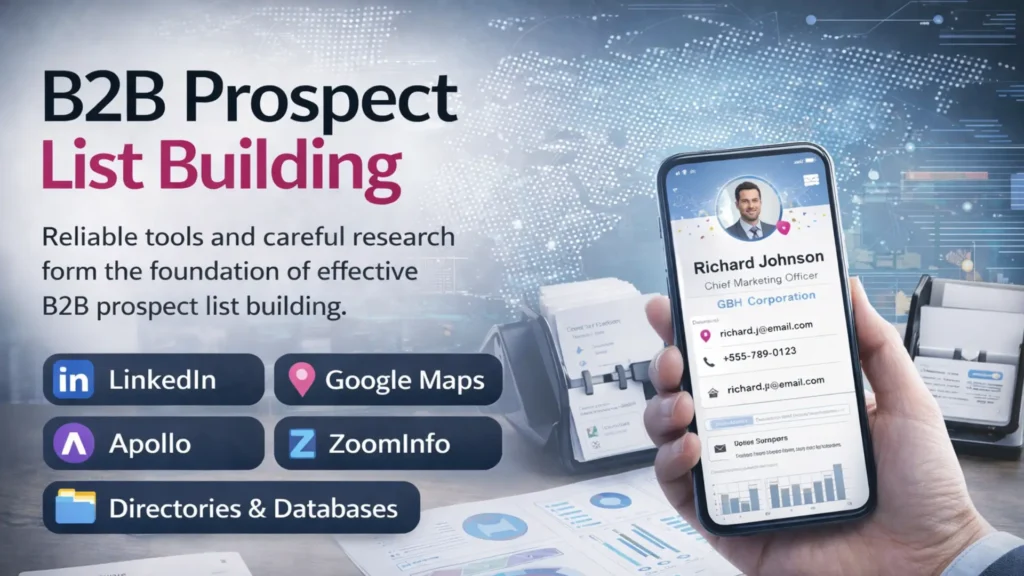
Reliable tools and careful research form the foundation of effective B2B prospect list building. These are the tools and approaches we use to build verified and targeted prospect lists efficiently:
1. LinkedIn for Decision-Maker Prospecting
LinkedIn provides access to high-value contacts. Advanced search filters allow narrowing by industry, location, company size, and role, making lists more relevant. Title targeting ensures outreach reaches directors, managers, or executives responsible for purchasing decisions.
Company filtering refines results further, aligning prospects with service offerings. Profiles are reviewed individually to confirm role accuracy, activity status, and company legitimacy. This step prevents wasted efforts on outdated or incorrect contacts.
Using LinkedIn in this structured way increases engagement and improves the quality of connections. It also helps maintain a clean database, supporting testing of messaging and follow-ups with confidence. Overall, the platform provides both depth and control for targeted B2B outreach.
2. Google Maps for Local B2B Prospecting
Google Maps uncovers active, service-oriented businesses in specific locations. Searching niche terms such as “law firm,” “marketing agency,” or “HVAC contractor” helps locate clusters of potential clients in targeted areas.
Extracting business data, including website links, phone numbers, and addresses, provides a solid foundation for outreach. Websites are checked to identify decision makers and confirm operational activity, improving list accuracy.
This method also highlights smaller, overlooked niche markets that broader databases might miss. Targeting local businesses increases relevance, often resulting in higher response rates and more meaningful interactions with nearby companies.
3. Apollo for Scalable Prospect Data
Apollo allows filtering companies by revenue, employee count, and funding stage to focus on organizations that align with cold email campaign objectives. Verified email addresses reduce bounce rates and maintain sending credibility.
The platform also tracks intent signals, such as technology adoption or recent hires. These signals indicate potential readiness to consider new solutions. Combining financial criteria with behavioral insights ensures outreach is both precise and data-driven.
Using Apollo in this way makes scaling lists easier while maintaining accuracy. High-quality prospects enable more efficient campaigns and better tracking of response metrics.
4. ZoomInfo for Enterprise-Level Prospecting
ZoomInfo offers access to large company databases and detailed firmographic information. Filters allow targeting by revenue, sector, and employee distribution, ensuring campaigns reach organizations that match strategic goals.
Contact-level intelligence provides direct emails, phone numbers, and role verification. This enables outreach to senior managers and department heads, improving connection and conversion potential.
The platform’s depth supports enterprise-scale campaigns while keeping lists precise. Combining firmographic filtering with direct contact insights allows focused engagement and stronger campaign results.
5. Other Directories and Industry Databases
Clutch highlights service providers with verified client reviews, while Crunchbase tracks startup funding and growth activity. These sources give additional context when evaluating prospects.
Industry association directories list active members, often providing verified company information. Niche directories serve highly specific sectors, ensuring outreach reaches highly relevant targets.
Cross-referencing multiple sources strengthens overall list quality. It expands reach without sacrificing accuracy, providing a comprehensive view of the market for targeted campaigns.
Filtering Prospects for Maximum Relevance
Refining prospect lists improves outreach efficiency and boosts response rates. Focus on these attributes that indicate genuine potential and engagement:
i) Growth signals: Look for companies experiencing expansion, new hires, or product launches, indicating readiness to adopt solutions and invest in services.
ii) Technology compatibility: Identify businesses using tools and systems that integrate well with your product, ensuring smoother adoption and higher success rates.
iii) Budget alignment: Prioritize prospects within revenue ranges that match your pricing, improving campaign efficiency and reducing wasted outreach efforts.
iv) Decision-maker validation: Confirm contacts hold positions with purchasing authority or influence to ensure outreach reaches individuals who can take action.
v) Exclusion filters: Remove irrelevant industries, outdated contacts, competitors, or regions outside focus areas to keep lists precise and actionable.
Ways to Verify and Clean Your Prospect List
Accurate, up-to-date contact information improves outreach performance and reduces wasted effort across campaigns. We recommend the following:
- Use email verification tools like NeverBounce, ZeroBounce, MillionVerifier, or Bouncer to confirm email addresses are valid and reduce bounce rates.
- Find verified business emails and enrich contact data using LinkedIn prospecting tools such as Apollo.io, Prospeo, Kaspr, Lusha, Clay, or Wiza.
- Scrape local business information from Google Maps with tools like Outscraper, Phantombuster, Apify, or Maps Scraper AI to build targeted local prospect lists.
- Identify and remove catch-all email addresses, as they accept all incoming mail but often provide lower response quality and increase deliverability uncertainty.
- Eliminate generic inboxes such as info@, support@, sales@, and contact@ to reach decision-makers directly.
- Enrich your prospect data by adding missing phone numbers, job titles, LinkedIn profiles, company size, industry, and website information.
- Monitor and clean bounced, invalid, duplicate, and inactive contacts on a regular basis to maintain a healthy list and improve overall email deliverability.
Segmentation of Your B2B Prospect Lists
Segmenting prospects into specific groups increases relevance, boosts engagement, and drives higher conversions. Consider these effective ways to organize your lists:
▪ By industry: Segmenting by sector or market vertical ensures messaging speaks directly to challenges and trends affecting each industry, making outreach more relatable and increasing response potential.
▪ By company size: Grouping prospects by employee count or organizational scale helps align your solutions with their operational capacity, ensuring recommendations are practical and appropriate for each business.
▪ By pain point: Identifying shared challenges among prospects allows campaigns to highlight solutions that address real problems, making communication more persuasive and resonant with decision makers.
▪ By outreach angle: Tailoring messaging approaches based on prospect profiles emphasizes benefits that appeal most to each group, enhancing relevance, interest, and the likelihood of engagement.
▪ By buying stage: Separating prospects according to purchase readiness enables focused outreach, from early research to immediate decision-making, which optimizes conversion rates and resource allocation.
How Many Prospects Do You Actually Need?
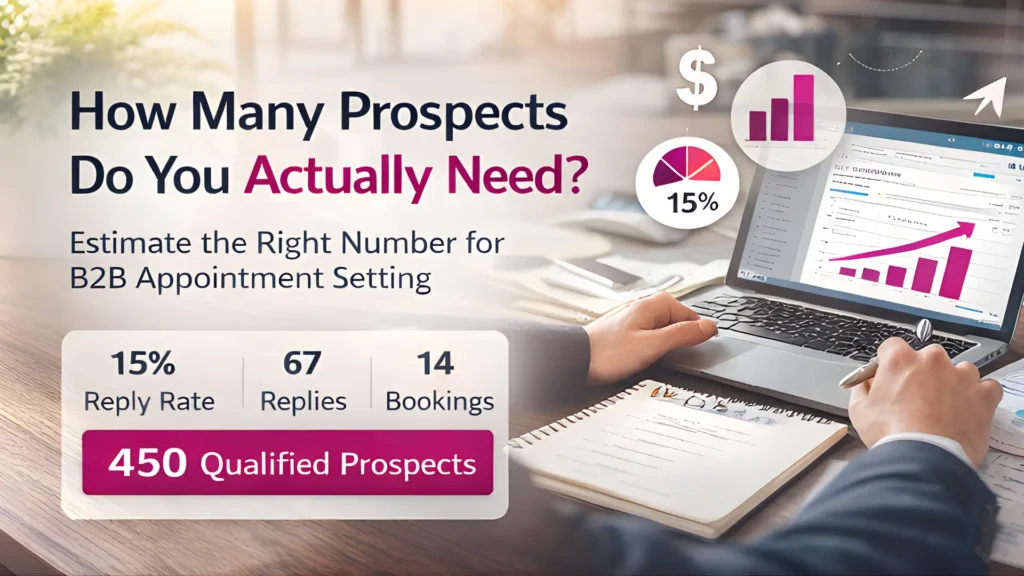
When planning campaigns focused on B2B appointment setting, calculating the right number of prospects starts with simple outreach math. Consider your target reply rate and booking assumptions to determine how many contacts you should include in a campaign.
For instance, if your average cold email reply rate is 15% and the booking rate from replies is 20%, you can estimate the total prospects needed like below:
Reply rate: 15% → 100 prospects × 0.15 = 15 replies
Booking rate: 20% → 15 replies × 0.20 = 3 bookings
So, 100 prospects ≈ 3 bookings.
Assumptions play a major role in planning. If response or booking rates drop, campaigns may require more prospects to maintain performance. Tracking historical campaign results helps refine these assumptions and creates more reliable projections.
Campaign volume planning ensures outreach remains consistent and achievable. Segmenting prospects into manageable batches allows teams to maintain quality follow-ups, test messaging variations, and optimize timing. This approach prevents overloading systems while maximizing the chance of converting leads into meaningful engagements.
Common Mistakes to Avoid When Building B2B Prospect Lists
Focusing on quality and strategy prevents wasted effort and improves campaign effectiveness. Avoid these pitfalls:
- Purchasing cheap bulk databases – often brings outdated contacts and low engagement rates, harming outreach results.
- Not defining your ideal customer profile – leads to random outreach and wasted resources.
- Targeting too broadly – spreads efforts thin and reduces meaningful interactions with qualified leads.
- Skipping verification – increases bounce rates and damages email deliverability and sender reputation.
- No segmentation – limits personalization, making messages less relevant and lowering conversions.
- Over-automation – creates impersonal communication, reducing engagement and weakening relationships with prospects.
Final Thoughts
Precision beats volume, and focusing on the right prospects drives higher engagement and better results than sending messages to large, random lists.
Sustainable pipeline building, maintaining and regularly refining prospect lists ensures campaigns remain effective over time without overloading resources or wasting effort.
Reputation protection, clean, verified data keeps emails deliverable, preserves credibility, and strengthens trust with potential clients.
For businesses looking to scale B2B prospecting with confidence, ProspectOut helps create high-quality, verified lists designed to reach the right decision makers while saving time and effort.
Frequently Asked Questions
How do you build a B2B prospect list from scratch?
Start by defining your ideal customer profile, research prospects using reliable platforms, and verify contacts before adding them to your list.
What is a good email bounce rate?
A bounce rate below five 5% is considered healthy, ensuring deliverability and protecting your sender reputation.
Should you buy B2B data lists?
Buying cheap bulk lists often brings outdated or irrelevant contacts, so it is usually better to build verified, high-quality lists.
How often should prospect lists be updated?
Lists should be reviewed and refreshed regularly, ideally every few months, to maintain accuracy and improve campaign performance.