
A high email bounce rate often comes from invalid or outdated addresses, making email verification essential for protecting deliverability and sender reputation.
I believe the best verification tool should do more than identify invalid emails. My focus is on tools that offer strong accuracy, useful features, and practical workflows. You can use them to clean prospect lists before sending, while you can also monitor bounce rates to catch problems early and protect long-term email deliverability.
Read on to explore the best email verification tools and see which option fits your outreach needs.
Cold Email Bounce Rate: What Is a Good Benchmark?
A good cold email bounce rate stays below 3%. A 2–3% rate is excellent, while anything above 5% signals serious list-quality or sender-reputation problems.
A low bounce rate shows that your email list contains valid, deliverable addresses. Cold email campaigns should aim for less than 3% bounces to protect sender reputation and maintain strong deliverability.
A 2–3% bounce rate is considered excellent for most campaigns. Rates above 5% deserve immediate attention because they may point to outdated contacts, poor list sources, or weak verification practices.
That’s why I regularly check email addresses before sending to remove invalid, risky, or inactive contacts and keep campaigns healthier, more reliable, and effective.
6 Top Email Verification Tools for Lower Bounce Rates
These are my preferred email verification tools for removing invalid addresses, protecting sender reputation, improving deliverability, and keeping cold email bounce rates low.
1. NeverBounce
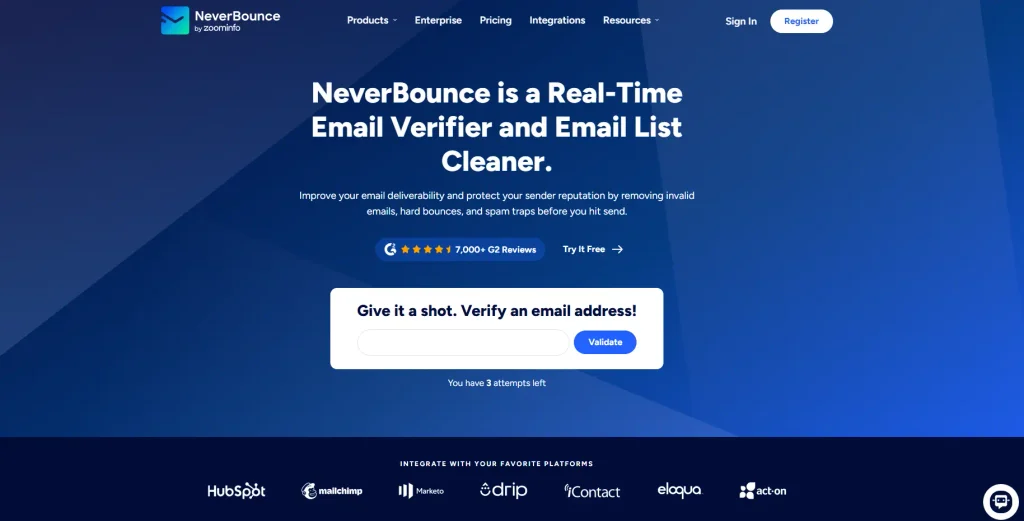
NeverBounce is an email verification platform designed for bulk list cleaning and CRM workflows. Each account supports up to 10 concurrent bulk jobs and 50 runs per day, making it suitable for regular list verification.
Accuracy: The tool checks email status and provides results such as valid, invalid, disposable, catch-all, and unknown. Its API also provides an estimated bounce rate through free list samples.
Notable Features:
- Bulk email verification
- CRM integrations
- Fast processing
- Bounce-rate estimation
- Real-time verification
- Detailed results
How it reduces bounce rate: NeverBounce identifies invalid and risky addresses before campaigns are sent. Cleaner lists reduce hard bounces and support better sender reputation.
Best use case: It suits businesses that regularly clean large contact databases or connect verification with CRM systems. Bulk verification is especially useful for marketers preparing large cold email campaigns.
2. Reoon
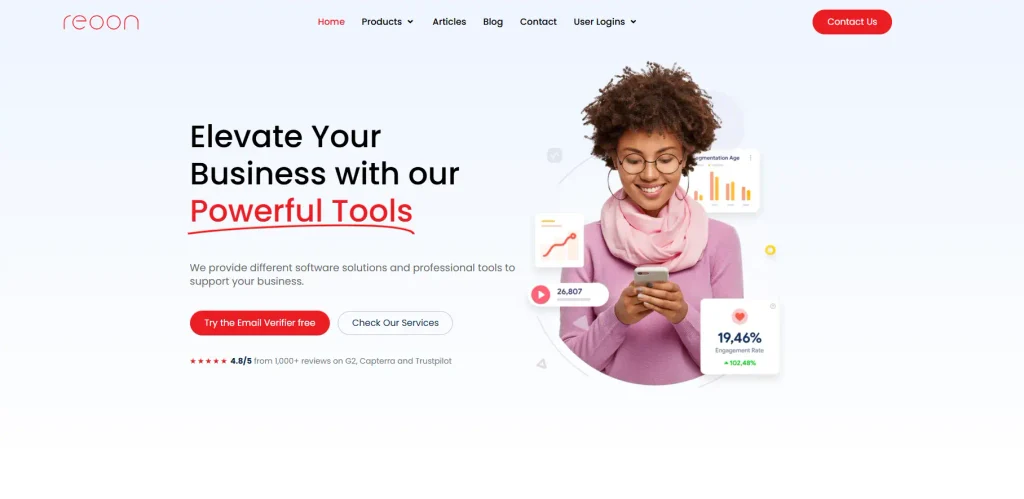
Reoon is a bulk email verification platform focused on list cleaning and deliverability. Its free plan includes up to 600 verification credits per month, with no credit card required.
Accuracy: Reoon states that its verification service delivers 99% accuracy on mixed-quality email lists. Deep SMTP validation checks whether mailboxes exist without sending an actual message.
Notable Features:
- 600 free monthly credits
- 99% stated accuracy
- Bulk verification
- 0.5-second quick API mode
- Disposable email detection
- Spam-trap and complaint detection
How it reduces bounce rate: Reoon identifies invalid, disposable, and risky addresses before campaigns are sent. Removing those contacts lowers hard bounces and protects sender reputation.
Best use case: Reoon suits marketers needing affordable bulk verification, especially teams testing large lists without committing to a monthly subscription.
3. ZeroBounce
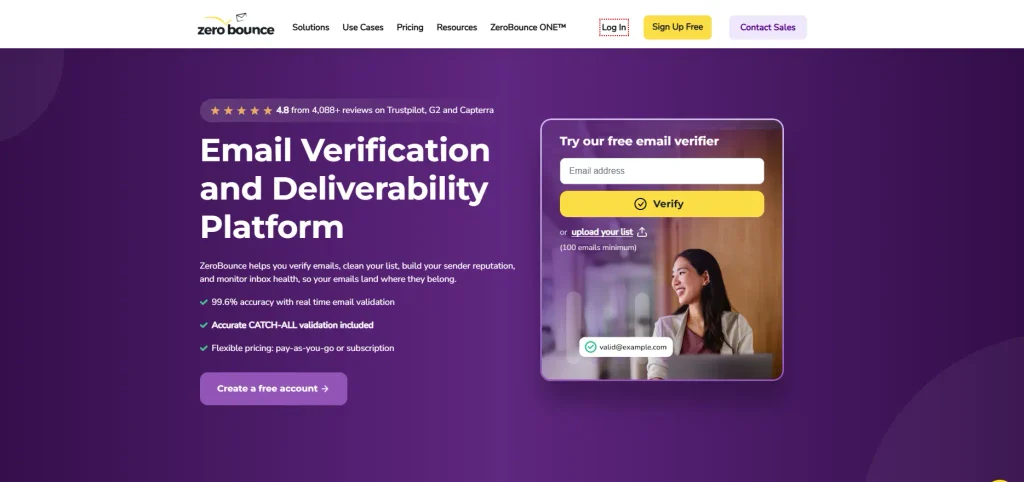
ZeroBounce supports both real-time and bulk email validation, making it useful for ongoing list hygiene and larger campaigns. Its platform supports 50+ integrations.
Accuracy: ZeroBounce guarantees 99.6% accuracy for most email addresses and reports 98.02% accuracy in its July 2026 benchmark. Its system also checks spam traps and more than 30 email statuses.
Notable Features:
- Real-time and bulk validation
- Spam-trap detection
- 30+ email statuses
- 50+ integrations
- API and signup-form validation
- Disposable and abuse email detection
How it reduces bounce rate: ZeroBounce filters invalid, spam-trap, disposable, and risky addresses before they enter or remain on your list.
Best use case: ZeroBounce is a strong fit for mid-market teams that need recurring list cleaning alongside real-time validation and broad marketing-platform integrations.
4. Bouncer
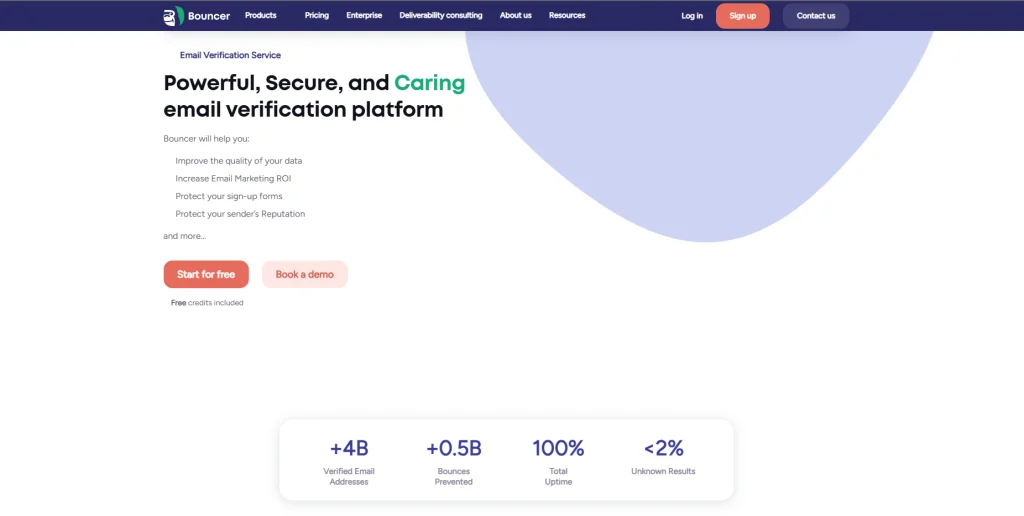
Bouncer is an email verification platform built for bulk list cleaning and deliverability. It offers pay-as-you-go pricing and free credits for testing bulk verification.
Accuracy: Bouncer reports fewer than 2% unknown results, while its system handles difficult catch-all domains on Google and Microsoft infrastructure.
Notable Features:
- Bulk email verification
- Catch-all detection
- Disposable email detection
- Toxic email identification
- Free verification credits
- Pay-as-you-go pricing
How it reduces bounce rate: Bouncer identifies invalid and risky addresses before your campaign reaches them. Its catch-all handling also provides more useful results for addresses that other verification services may classify as unknown.
Best use case: Bouncer is a strong choice for marketers needing high-accuracy bulk verification without committing to a large subscription. Its flexible pricing also suits teams cleaning lists periodically rather than every day.
5. Hunter.io
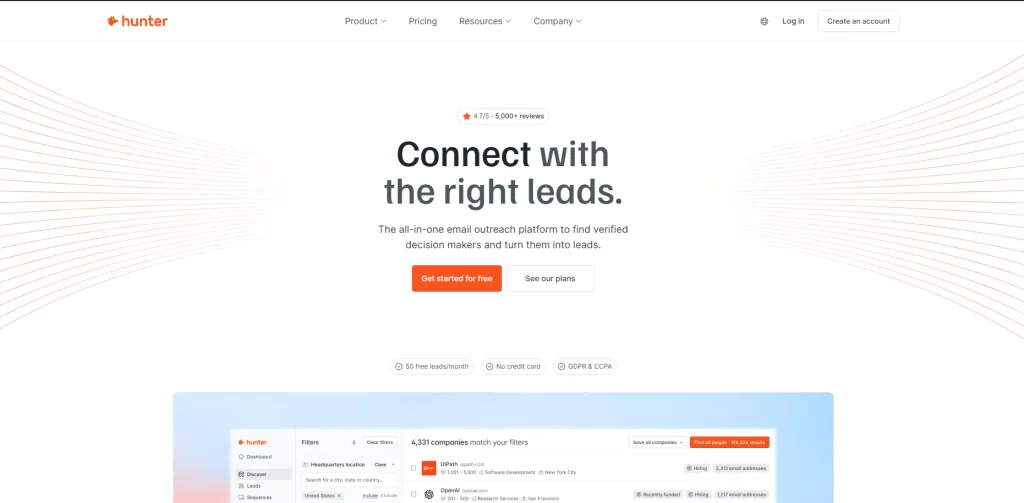
Hunter combines email discovery with verification, making it useful for finding prospect addresses and checking their deliverability before outreach. Emails found through its Email Finder and Bulk Email Finder are already verified.
Accuracy: Hunter does not claim 100% verification accuracy. Its verifier checks format, disposable status, MX records, SMTP servers, and mailbox availability.
Notable Features:
- Email Finder
- Bulk Email Finder
- Email Verifier
- Confidence scores
- Bulk list verification
- API access
How it reduces bounce rate: Hunter filters invalid and disposable addresses before outreach. Its verification statuses also flag accept-all addresses where delivery remains uncertain.
Best use case: Hunter fits sales teams that need to discover prospect emails and verify them within the same workflow. Its built-in verification makes prospecting more efficient.
6. Prospeo.io
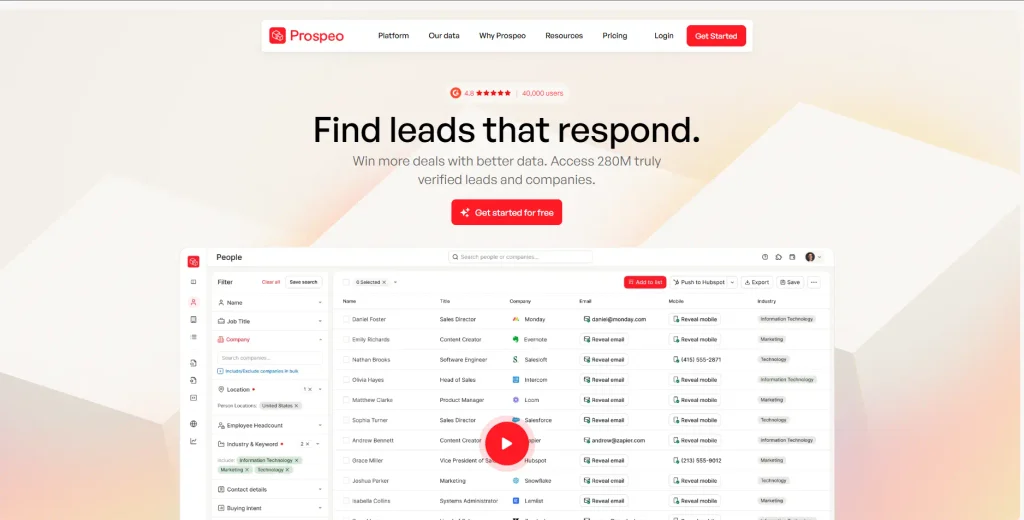
Prospeo is a B2B prospecting and data-enrichment platform with 300M+ professional profiles, 30M+ companies, and 143M+ verified emails. Its database refreshes every seven days.
Accuracy: Prospeo reports 98% email verification accuracy, based on a five-step validation process covering catch-all handling, spam-trap removal, and honeypot filtering.
Notable Features:
- Pre-verified prospect data
- 300M+ professional profiles
- 143M+ verified emails
- Seven-day data refresh cycle
- 30+ prospect filters
- Email verification
How it reduces bounce rate: Prospeo only returns verified contact data, and unavailable addresses are excluded. Its validation process also removes spam traps and filters risky contacts before outreach.
Best use case: Prospeo suits teams that need fresh prospect data alongside email verification. Regular refresh cycles are useful for maintaining accurate outbound lists over time.
Our Step-by-Step Workflow for Reducing Email Bounce Rates
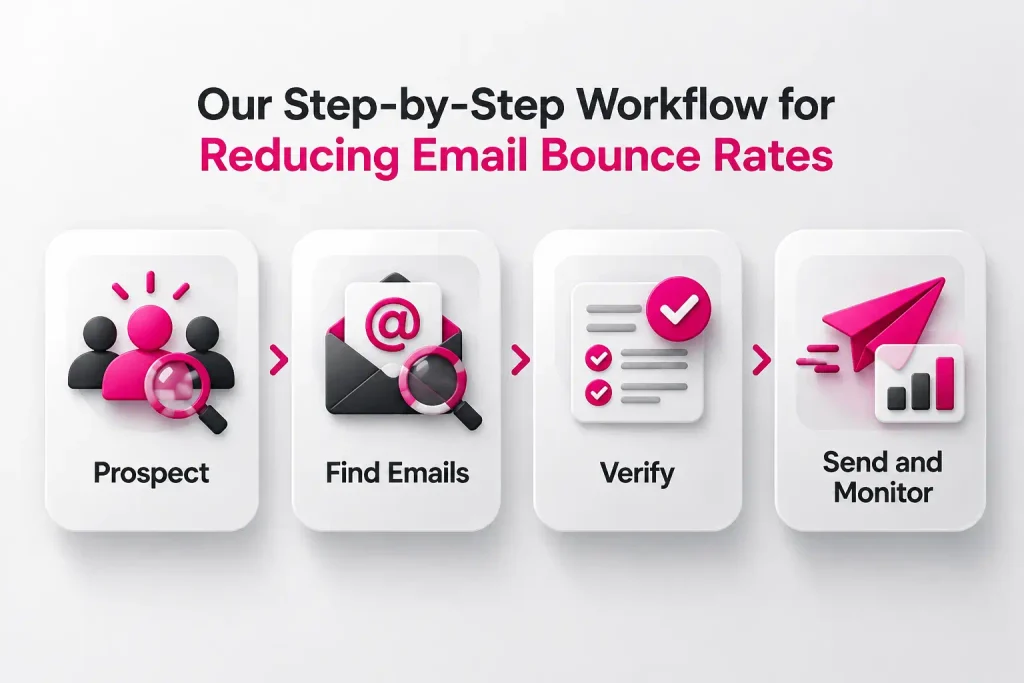
My team at ProspectOut follows a simple process to find relevant prospects, verify every address, send carefully, and monitor results so bounce rates stay under control.
Prospect
Build a targeted prospect list using tools such as Apollo or LinkedIn Sales Navigator. Focus on people who match your ideal customer profile, industry, company size, role, and location. A focused list improves outreach quality and reduces wasted sends. Keep prospect information organized so your team can easily track, update, and verify contacts before outreach.
Find Emails
Use Hunter, Snov.io, Apollo, or similar tools to find professional email addresses for your prospects. Match each address with the correct person and company before adding it to your campaign. Avoid guessing email formats whenever possible. Accurate contact information gives your verification tool better data and reduces the chance of sending messages to nonexistent addresses.
Verify
Run your complete list through NeverBounce, ZeroBounce, or Bouncer before sending your campaign. Hunter or Prospeo verification also works when those platforms are your primary data source. Remove invalid, disposable, risky, and undeliverable addresses. Review unknown or catch-all results separately instead of automatically sending to every address on your original list.
Send and Monitor
Send your verified list and track bounce rates by campaign and domain. Watch closely for unusual increases after each send. A bounce rate above roughly 3% deserves attention. Pause outreach when results cross that level, review affected domains, and re-verify or clean the list before sending again. Regular monitoring keeps list quality under control.
End Note
A low bounce rate reflects the quality of your data and the care behind your outreach strategy. I believe consistent verification should happen before every important campaign, not only after problems appear.
My approach is simple: build focused lists, verify addresses, remove risky contacts, and monitor results. You get better deliverability when you follow this process consistently.
You also protect sender reputation, improve engagement, and avoid wasting valuable outreach opportunities on addresses that were never safe to email. Ready to reduce bounce rates? Contact our professionals for expert email verification and bounce rate reduction solutions.