Cold emailing is legal for B2B companies when done under rules like CAN-SPAM and GDPR. It is not the same as spam because it focuses on targeted, relevant outreach instead of mass messaging.
Legal issues arise when emails use deception, skip opt out options, or ignore transparency requirements. Compliance depends on honest sender details, clear subject lines, proper targeting, and respect for unsubscribe requests.
When done correctly, B2B cold email builds real conversations, improves lead generation, and reduces legal risk while maintaining trust and long term outreach success.
Read the rest to learn more.
What Is an Unsolicited Email?
An unsolicited email is a message sent to someone without their prior request or consent. It often reaches people who have not shared their contact details for that purpose. Businesses use this approach to introduce services, promote offers, or start a conversation with potential clients.
Some unsolicited emails aim to provide value, such as sharing insights or solutions to common problems. Others focus on direct promotion, which can feel intrusive if done poorly. The main factor is that the recipient did not ask to receive the message.
Unsolicited email is common in cold outreach, especially in B2B sales. Companies use it to connect with decision makers and create new opportunities.
Are B2B Cold Emails and Spam the Same Thing?
B2B cold emails and spam are not the same. Cold emails aim to start real business talks with relevant contacts. Spam emails send mass messages with little care for relevance, value, or user consent.
B2B Cold Email: This one is a direct message sent to a business contact without prior interaction. It focuses on a clear offer, problem solving, or value that fits the recipient’s role. Senders research prospects before outreach and keep messages concise. A strong cold email respects timing, uses real personalization, and gives an easy way to opt out.
Spam Email: It refers to bulk messages sent to many recipients with no real targeting. These emails often push offers, links, or promotions with little relevance. They may use misleading subject lines or unclear intent. Spam usually ignores user interest and consent, which leads to low trust, poor response rates, and higher chances of being flagged or blocked.
See their quick comparison below:
| Aspect | B2B Cold Email | Spam Email |
| Targeting | Focused, researched contacts | Broad, random lists |
| Purpose | Start business conversations | Push promotions or links |
| Relevance | High relevance to role or need | Low or no relevance |
| Personalization | Uses basic personalization | Rarely personalized |
| Consent | No prior consent, but respectful | No consent, often intrusive |
| Tone | Clear and professional | Pushy or misleading |
| Response Rate | Higher when done right | Very low |
When Does an Unsolicited Email Become Illegal?
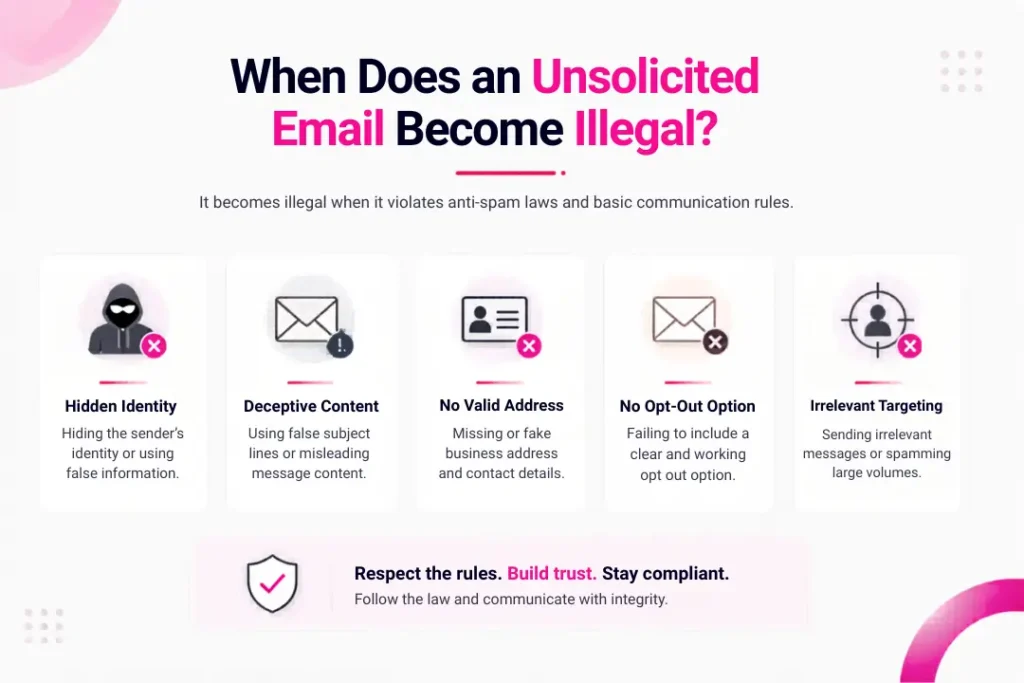
An unsolicited email becomes illegal when it breaks anti-spam laws set by different countries such as CAN-SPAM Act in the United States, General Data Protection Regulation in the European Union, and Privacy and Electronic Communications Regulations in the United Kingdom.
These rules do not ban every B2B email, but they control how messages are sent. Legal risk starts when a sender ignores basic requirements that protect the recipient and ensure honest communication.
Problems arise when emails hide the sender’s identity, use false subject lines, or fail to include a clear opt out option. Many laws also require a valid business address and honest intent in every message. A B2B email must stay transparent and relevant to avoid crossing legal limits.
Frequency and targeting also matter. Sending large volumes of irrelevant messages can trigger complaints and penalties. A sender should focus on accurate contact data, clear value, and respectful outreach. Following these practices keeps email campaigns within legal boundaries and helps build trust with potential clients.
Is Cold Emailing Legal for B2B Companies?
Cold emailing is legal for B2B companies in many countries when done in a compliant way. Laws such as the CAN-SPAM Act and the General Data Protection Regulation do not ban outreach. They allow B2B email if messages stay honest, relevant, and respectful. Companies can contact professionals when there is a clear business reason and a real connection to the offer.
Legal use depends on how the email is written and sent. A B2B email must identify the sender, avoid misleading subject lines, and include a simple opt out option. The message should relate to the recipient’s role and provide real value. Careful targeting and moderate volume help reduce complaints and protect sender reputation.
Also read: Best time to send an email
What Does the CAN-SPAM Act Say About Unsolicited Emails?
The CAN-SPAM Act sets rules for commercial email in the United States. It follows an opt out model, which means businesses can send unsolicited messages, including B2B email, as long as they follow clear guidelines. Recipients do not need to give prior consent, but they must have a simple way to stop future emails.
This law focuses on honesty, transparency, and user control. Senders must make sure every message reflects who they are and why they are reaching out. Misleading tactics can lead to penalties, even if the intent is to promote a legitimate service.
To stay compliant, businesses should follow these rules:
- Use accurate sender name and domain.
- Write subject lines that reflect the message.
- Identify the email as a commercial message.
- Include a valid physical business address.
- Provide a clear and working opt out option.
- Process opt out requests within ten days.
Does GDPR Allow B2B Cold Emailing in Europe?
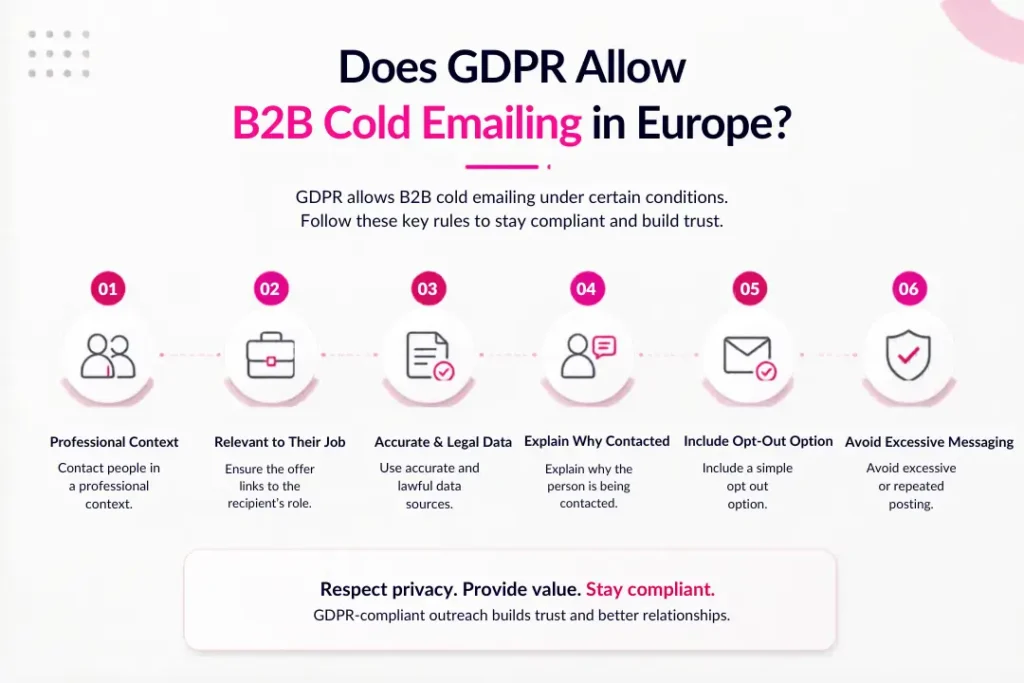
The General Data Protection Regulation allows B2B cold emailing in the European Union under certain conditions. It does not ban outreach, but it sets strict rules on how companies use personal data. Many businesses rely on the concept of legitimate interest to send relevant emails to professionals without prior consent.
Legitimate interest means a company has a valid business reason to contact someone, and that reason does not override the person’s privacy rights. The message must relate to the recipient’s role and offer clear value. A B2B email should stay respectful, targeted, and easy to refuse.
To stay compliant under this rule, companies should:
- Contact people in a professional context.
- Ensure the offer links to the recipient’s job.
- Use accurate and lawful data sources.
- Explain why the person is being contacted.
- Include a simple opt out option.
- Avoid excessive or repeated messaging.
What Are The Penalties Regarding Unsolicited Emails?
Violating email laws can lead to serious financial penalties. Under the CAN-SPAM Act in the United States, each non compliant email can result in fines of over $51,000. Authorities may treat every separate message as an individual violation, which can increase the total amount quickly for large campaigns.
Other regions also enforce strict penalties for misuse of email outreach. The General Data Protection Regulation allows regulators in the European Union to impose heavy fines based on company revenue. Repeated violations, deceptive practices, or failure to respect opt out requests can damage finances and brand trust.
What Makes a B2B Cold Email Legally Compliant?
Sending a compliant B2B email requires more than good intent. These are the best practices to follow:
1. Identification
A B2B email must clearly show who is sending the message. Use a real company name, valid domain, and accurate contact details. Laws such as the CAN-SPAM Act require honest sender information. Add a physical business address to build trust and meet legal standards. Avoid hiding identity or using misleading names.
2. Relevance
Relevance ensures the message connects to the recipient’s professional role. A B2B email should address real needs, not random offers. Research helps match the service to the contact’s industry or position. This approach supports legitimate interest under the General Data Protection Regulation and reduces the risk of complaints or spam reports.
3. Opt-out Link
Every email must include a clear and simple opt out option. This allows recipients to stop future messages without effort. The link should work properly and remain easy to find. Laws require senders to respect opt out requests within a set time. Ignoring this step can lead to penalties and damage the sender reputation.
4. Honest Messaging
Content must stay truthful and clear. Subject lines should reflect the actual message, not trick the reader into opening it. Avoid exaggerated claims or false urgency. Honest communication builds trust and aligns with legal standards. Clear intent also improves response quality and keeps outreach professional.
5. Data Accuracy
Use accurate and lawfully collected contact data. Sending emails to outdated or irrelevant contacts increases risk. Keep lists clean and updated to avoid repeated errors. Good data practices support compliance and improve deliverability. Careful handling of information shows respect for recipients and strengthens long term outreach success.
What Are the Legal Mistakes in B2B Cold Emailing?
Mistakes in B2B cold emailing often lead to legal issues and damaged sender reputation across different markets:
- No opt-out: Emails without a clear opt out option violate compliance rules and ignore recipient control over future communication.
- Misleading subject lines: Subject lines that deceive readers create trust issues and breach laws requiring honest representation of email content.
- Poor targeting: Sending irrelevant messages to random contacts increases complaints and shows lack of proper audience research or intent.
- Missing sender identity: Hiding company details or using fake names breaks transparency rules and reduces trust in B2B communication practices.
- Ignoring data protection rules: Using contact data without lawful basis can violate privacy regulations like the General Data Protection Regulation in Europe.
- Excessive sending volume: Sending too many emails in short time frames triggers spam filters and increases legal and deliverability risks.
The Role of Cold Email Agencies in B2B Compliance
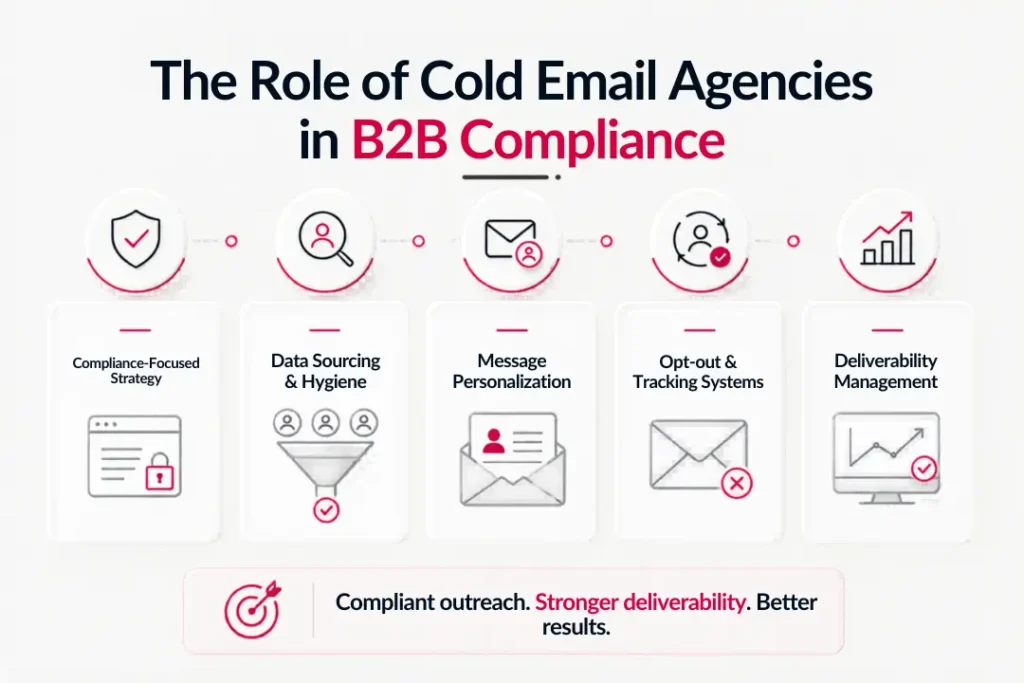
A cold email agency helps B2B companies run outreach that stays compliant while improving lead generation and maintaining strong deliverability. Here’s what ProspectOut helps with:
Compliance-focused strategy
Our B2B email systems are built to follow regulations like the CAN-SPAM Act and GDPR. Proper sender details, clear intent, and opt out options are included in every campaign. This reduces legal risk while keeping outreach structured and reliable for long-term use.
Data sourcing and hygiene
We work with verified contact data that matches ideal customer profiles. Outdated or irrelevant leads are filtered out before outreach begins. This supports legitimate interest under the General Data Protection Regulation and helps lower spam complaints while improving campaign efficiency.
Message personalization standards
Each B2B email is tailored to the recipient’s role, industry, and needs. Our approach avoids mass messaging and focuses on relevance. This improves engagement rates and keeps communication professional while reducing risks linked to generic or low-quality outreach.
Opt-out and tracking systems
Every campaign includes a clear opt out option that respects recipient choice. Our tracking tools monitor engagement and manage unsubscribe requests quickly. This ensures transparency, protects sender reputation, and keeps outreach aligned with legal expectations.
Deliverability management
We monitor domain health, sending patterns, and inbox placement for all campaigns. Strong deliverability practices reduce spam filtering and improve visibility. This helps B2B outreach stay consistent, compliant, and effective across long-term email operations.
Final Thoughts
Cold emailing remains a powerful tool for B2B growth when used with care and respect for legal rules. It is not about sending mass messages, but about starting relevant conversations with the right people. When companies focus on value, clarity, and proper targeting, outreach becomes more effective and less intrusive. Strong compliance habits also protect reputation and support long term success in competitive markets.
Rules like the CAN-SPAM Act and GDPR do not stop outreach, they guide it in a safer direction. A well structured B2B email strategy builds trust, improves response rates, and reduces legal risk. Companies that invest in quality messaging and ethical practices usually see better results than those relying on volume alone.
Frequently Asked Questions
How often should B2B cold emails be sent?
B2B cold emails should be sent at a controlled pace to avoid overwhelming recipients. A balanced frequency improves deliverability and reduces spam complaints while keeping outreach consistent and professional.
Can subject lines affect email legality?
Yes, subject lines must be truthful and reflect the actual message. Misleading or deceptive wording can violate regulations like the CAN-SPAM Act and harm sender credibility.
Is it safe to use purchased email lists?
Purchased lists are risky because they often contain outdated or unverified contacts. They can increase spam complaints and create compliance issues under GDPR due to unclear data sourcing.
What role does email content play in compliance?
Email content must stay clear, honest, and relevant. Overly promotional or unclear messaging can reduce trust and increase the chance of being flagged as spam.
How can businesses improve cold email performance legally?
Businesses improve results by focusing on targeted outreach, clean data, and value-driven messaging. Strong compliance practices help maintain trust and increase reply rates over time.