In brief: On average, it takes around 1,000 qualified prospects to win one client through B2B cold email.
My team and I continue to see is that cold email success rarely depends on volume alone. The gain comes from improving prospect quality, messaging, follow-up, and email deliverability throughout the campaign.
Let me break down each stage of the conversion journey and explain why these numbers make sense.
What Is the Average Cold Email Conversion Rate in 2026?
My observation from recent B2B cold email campaigns is that the average prospect-to-client conversion rate is around 0.1%.
The process starts with around 40 to 50 replies. From those responses, 5 to 10 prospects express genuine buying interest.
That leads to 3 to 5 meetings, and one of those opportunities becomes a client. These numbers come from years of campaign experience and reflect the pattern I continue to see across recent outreach campaigns.
What Is a Good Cold Email Response Rate Today?
From what I see in recent B2B cold email campaigns, a 4% to 5% response rate is a strong benchmark. In practical terms, that means receiving around 40 to 50 replies after contacting 1,000 qualified prospects.
A good response rate is only part of the picture. Not every reply turns into a sales opportunity. From those 40 to 50 responses, I often see 5 to 10 positive replies that lead to meaningful conversations.
Also read: B2B cold email best practices
Breaking Down a Real Cold Email Campaign
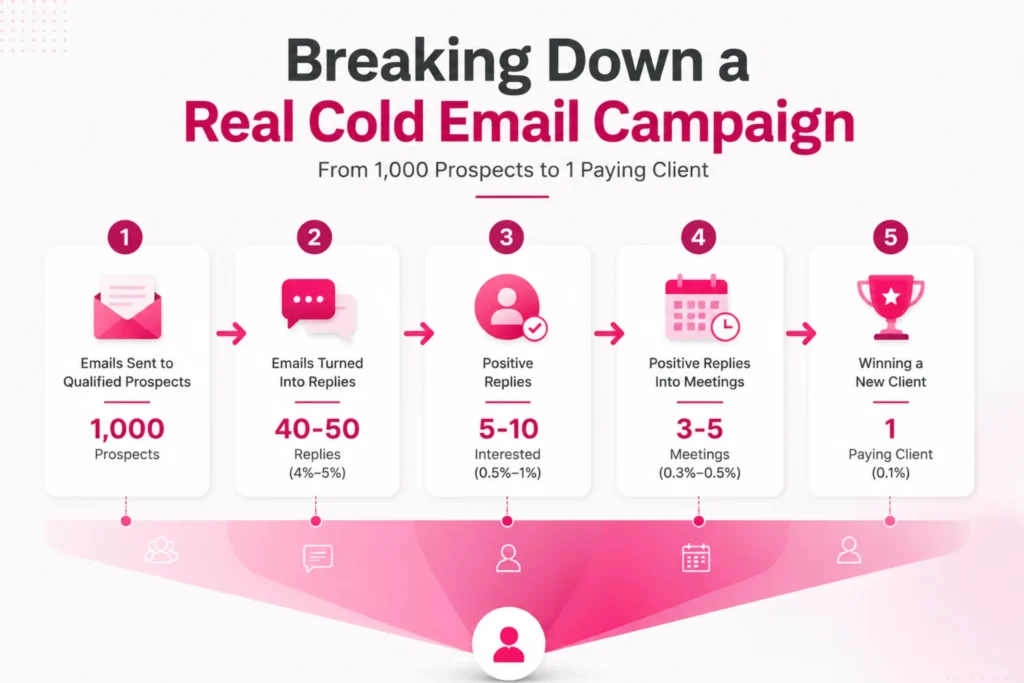
The numbers behind a successful cold email campaign tell a clear story. Based on campaign experience, this is the conversion journey I see across recent B2B outreach.
1. Sending Emails to Qualified Prospects
My team spends more time building targeted prospect lists than increasing email volume. We begin with 1,000 qualified prospects that match the ideal customer profile. Better targeting creates stronger results throughout the campaign. If the list is weak, every metric that follows begins to decline.
2. Turning Emails Into Replies
From those 1,000 prospects, we usually receive around 40 to 50 replies, which works out to a 4% to 5% response rate. A reply tells that the email reached the right person and generated enough interest to earn a response.
At this stage, we focus on engagement rather than sales because every reply does not represent a buying opportunity.
3. Identifying Positive Replies
Among those replies, around 5 to 10 prospects express genuine interest. That equals a 0.5% to 1% positive reply rate from the original outreach.
This is where my team starts qualifying opportunities and moving conversations toward a meeting. Positive replies carry far more value than the total reply count because they show real buying intent.
4. Converting Positive Replies Into Meetings
Our next objective is to book meetings. From the 1,000 prospects, we secure around 3 to 5 meetings, giving us a 0.3% to 0.5% meeting rate.
Good meetings come from relevant offers, proper follow-up, and strong qualifications. I don’t measure success by the number of emails sent. I measure it by the number of meaningful conversations that reach this stage.
5. Winning a New Client
After moving through every stage, the campaign usually produces 1 paying client from 1,000 qualified prospects, or a 0.1% prospect-to-client conversion rate.
My experience has shown that this outcome is built long before the first email is sent. It starts with prospect selection, a strong offer, and disciplined campaign management. Talk to our experts, get new clients, and grow faster.
Why It Takes 1,000 Emails to Close One Client
We understand why many people question those numbers. The reason becomes much clearer when you look at what happens throughout the campaign. Every stage filters out prospects for a different reason, and that is a normal part of B2B buying behavior.
- Some prospects never open the email or never see it in their inbox.
- Some open the email but have no need for the offer at that time.
- Some reply but have no intention of moving forward.
- Some interested prospects decide not to book a meeting.
- Some meetings end without a deal because of budget, timing, or internal priorities.
That is why my team focuses on improving every stage of the campaign instead of chasing unrealistic conversion rates. Better targeting, stronger messaging, and a clear follow-up process create more opportunities from the same outreach effort.
Targeting vs Volume: Which Matters More in Cold Email?
If I had to choose one, I would choose targeting every time. Volume matters, but only after you build a list of qualified prospects.
Sending more emails to the wrong audience does not create more opportunities. It only increases the number of people who ignore your message. Here is how I look at the difference:
| Factor | Generic Outreach | Targeted Outreach |
| Prospect list | Broad and unqualified | Qualified and relevant |
| Replies | More irrelevant replies | More meaningful replies |
| Meetings | Lower buying intent | Higher buying intent |
| Client potential | Fewer qualified opportunities | Stronger sales opportunities |
| Campaign performance | Inconsistent | More predictable |
My team starts with targeting before thinking about volume. Once we build a qualified prospect list, we scale the outreach. Let our team book qualified sales meetings for your business.
Do Some Industries Require More Cold Emails Than Others?
The number of prospects needed to win a client can vary from one industry to another. Some industries need a larger prospect pool before conversations begin, while others produce qualified opportunities from a smaller list.
| Industries That Often Need More Outreach | Industries That Often Need Less Outreach |
| SaaS startups | Luxury consulting |
| Digital marketing agencies | High-end legal services |
| IT services firms | Private wealth management |
| Lead generation companies | Enterprise law firms |
| Web development studios | Investment banking services |
| B2B software vendors | Executive coaching |
| Recruiting agencies | Boutique advisory firms |
| Cybersecurity providers | Real estate investment groups |
| E-commerce service providers | Corporate finance advisors |
| Outsourcing firms | High-ticket B2B partnerships |
How to Reduce the Number of Emails Needed Per Client
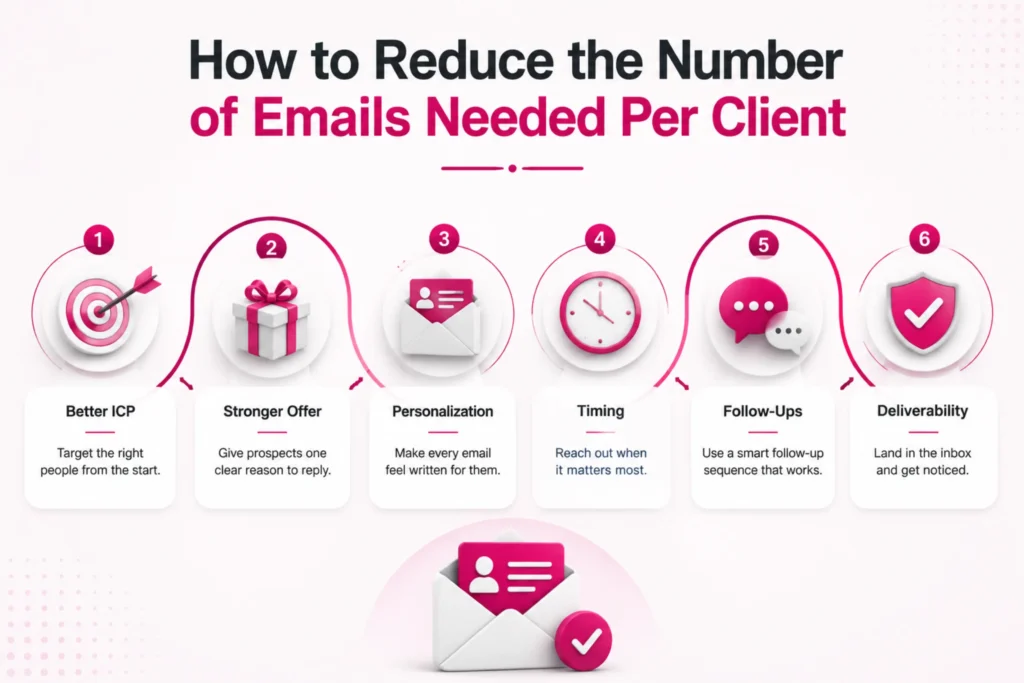
I notice that improving a few key parts of the campaign can increase replies, meetings, and client conversions from the same prospect list. They include:
1. Better ICP
A well-defined ideal customer profile improves prospect quality from the start. My team focuses on businesses that match the offer instead of chasing large prospect lists.
2. Stronger Offer
A compelling offer gives prospects a reason to respond. I focus on solving one clear business problem instead of promoting every service at once.
3. Personalization
Personalization shows prospects the email was written with their business in mind. Even small details can increase engagement and create more meaningful conversations.
4. Timing
The right outreach timing improves response rates. Reaching out when prospects are more likely to evaluate new solutions creates better opportunities for productive conversations.
5. Follow-Ups
Many opportunities come from follow-up emails, not the first message. My team follows a structured sequence that keeps the conversation moving without becoming intrusive.
6. Deliverability
Great copy cannot perform if emails miss the inbox. Professional email deliverability protects sender reputation and gives every campaign a better chance to generate qualified replies.
Final Opinion
Many businesses focus too much on the number of emails they send and not enough on the quality of the process behind them. Cold email success is built long before the first message reaches a prospect.
My team has seen that even small improvements at each stage can produce more replies, more meetings, and more clients from the same outreach. If you work with a reliable B2B cold email service agency, those improvements become part of a structured process instead of trial and error.
Frequently Asked Questions
How long does it take to get a client through B2B cold email?
The timeline depends on your industry, offer, and sales cycle. Some businesses close faster, while others require weeks or months of consistent outreach.
Is B2B cold email still effective?
Yes. When you target qualified prospects, maintain email deliverability, and present a relevant offer, B2B cold email continues to generate meetings and new clients.
Should I focus on more emails or better targeting?
Start with better targeting. A qualified prospect list produces stronger replies, better meetings, and more clients than sending larger volumes to the wrong audience.
How many follow-up emails should I send?
We recommend a structured follow-up sequence instead of stopping after one email. Many qualified prospects reply after several touchpoints rather than the initial outreach.
What is the biggest reason B2B cold email campaigns fail?
Poor targeting is one of the biggest reasons. Even great copy cannot generate qualified meetings if your offer reaches the wrong prospects.