
We work with B2B companies that depend heavily on cold outreach and appointment setting. Through years of campaign management, we have seen that email warm-up plays a major role in campaign success.
Email account warm-up is the process of preparing new email accounts before large-scale outreach begins. During this stage, accounts slowly build trust with email providers through steady activity, replies, opens, and natural engagement patterns.
A proper warm-up process improves inbox placement, protects sender reputation, and creates more stable campaign performance over time. Businesses that invest time in warming up their accounts usually experience stronger deliverability and more reliable outreach results.
Let’s explain how email warm-up works, why it matters, and how professional outreach teams maintain healthy sender reputation during long-term cold email campaigns.
What Is Email Account Warm-Up?
Email account warm-up is the practice of gradually building trust for a new email account before using it for sales outreach. Email providers constantly monitor sending behavior to determine if an account looks trustworthy or suspicious.
During the warm-up process, email accounts send small numbers of emails to other accounts. Those emails receive replies, get opened, and create engagement signals that help build a positive reputation.
Most professional outreach teams use automated warm-up tools to handle this process efficiently. These systems simulate natural conversations between accounts while increasing sending activity slowly over time.
Warm-up is not just a short setup task completed once at the beginning. Sender reputation changes constantly, which means healthy engagement activity should continue even after campaigns become active.
Why Warm-Up Matters for Cold Email Campaigns
Warm-up creates a healthy sending history for email accounts. Providers see steady engagement and natural communication patterns instead of suspicious behavior.
Email account warmup is essential for several key reasons:
- Better Inbox Placement: Warm email accounts have a much higher chance of landing in the primary inbox instead of spam or promotional folders.
- Lower Risk of Account Restrictions: Providers like Gmail and Outlook may suspend cold email accounts that skip proper warm-up before large-scale outreach campaigns.
- Improved Campaign Performance: Healthy sender reputation supports stronger outreach performance overall.
- Long-Term Account Stability: Proper warm-up also helps email accounts remain stable for longer periods.
How Sender Reputation Affects Email Deliverability
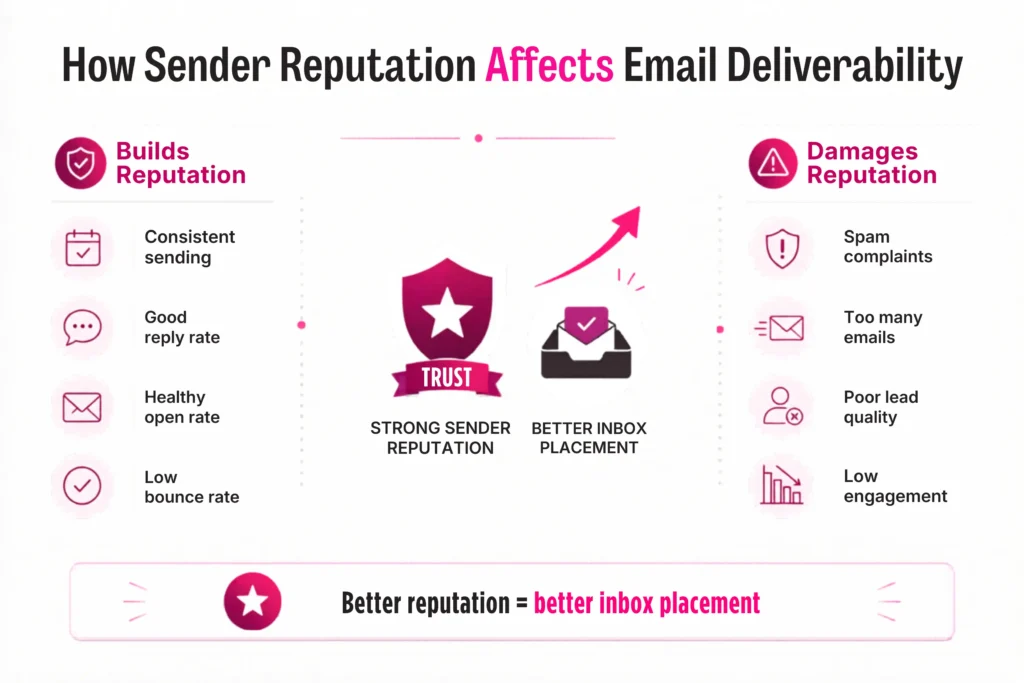
Sender reputation works like a trust score for email accounts and domains. Email providers calculate this score using many different engagement and behavior signals. Positive activity strengthens reputation over time, while negative behavior can damage it quickly.
What Improves Reputation:
Consistent engagement and natural sending behavior also help email providers view accounts as reliable and trustworthy. These actions help build trust with providers and improve deliverability:
- Consistent sending activity
- Good reply rates
- Healthy open rates
- Low bounce rates
- Minimal spam complaints
- Positive engagement patterns, etc.
What Damages Reputation:
Email providers closely monitor suspicious activity patterns that often appear during poorly managed cold outreach campaigns. Certain behaviors can quickly reduce sender trust and hurt inbox placement, including:
- Sending too many emails too quickly
- High spam complaint rates
- Poor lead quality
- Large numbers of bounced emails
- Sudden spikes in activity
- Low engagement rates, etc.
Effective email warm-up requires multiple activities working together, and below we explain how the full process works.
1. Setting Up Email Accounts Before Warm-Up
Proper setup creates a stronger foundation for sender reputation. We suggest preparing email accounts carefully before warm-up begins:
Create Professional Email Accounts
Professional domains create more trust than free email services like Gmail or Yahoo. So, use company-related domains with proper branding, real employee names, and business signatures for cold email outreach campaigns.
Email providers often view branded domains as more legitimate, which helps improve inbox placement and supports stronger sender reputation over time.
Configure Technical Authentication
Technical authentication settings help providers verify that your email accounts are legitimate and safe for recipients. Proper configuration reduces spam risks and improves deliverability performance during outreach campaigns.
These records work together to strengthen authentication and build greater trust with email providers over time:
- SPF
- DKIM
- DMARC
- Custom tracking domains
Complete Account Profiles
Email accounts should appear real, active, and trustworthy before warm-up begins. We recommend adding profile photos, display names, company details, email signatures, and other business information whenever possible.
Complete account profiles create more natural engagement patterns and reduce suspicion from providers that monitor account activity during cold email campaigns and ongoing outreach efforts.
Avoid Immediate Outreach
New email accounts should never start sending cold sales emails immediately after setup because sudden outreach activity often triggers spam filters quickly. We recommend beginning with warm-up activity first so providers can observe natural engagement, replies, and steady sending behavior. Gradual trust-building creates a safer foundation before launching larger cold email campaigns.
2. Using Automated Tools for Email Warm-Up
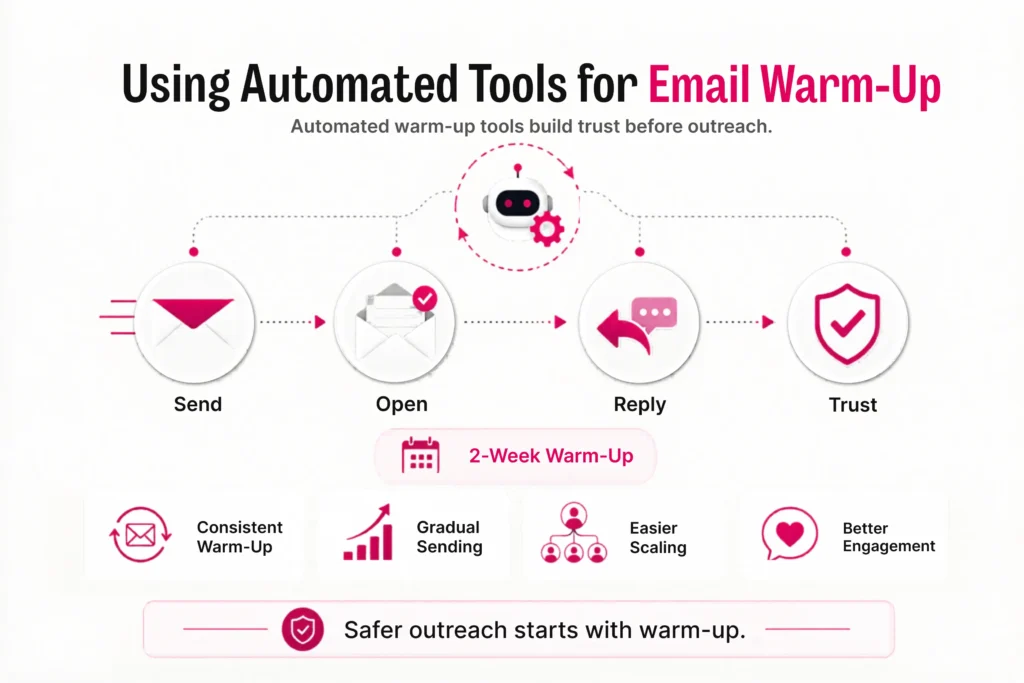
Manual warm-up becomes difficult once multiple email accounts are involved. Automated warm-up platforms like Warmup Inbox, Instantly, Mailreach, etc. solve this process much more efficiently through automated engagement and gradual sending activity.
These tools connect large networks of accounts and create natural-looking interactions between them. Emails get sent, opened, replied to, archived, and marked as important automatically.
Benefits of Automated Warm-Up
Automated systems reduce human error while maintaining consistent sending behavior that keeps email accounts stable throughout long outreach campaigns. They provide several advantages for outreach teams:
- Consistent warm-up activity
- Gradual sending increases
- Better efficiency
- Easier scaling
- Automated engagement
How We Use Warm-Up Tools
Our outreach team normally runs warm-up activity for around two weeks before launching campaigns. During this stage, the system sends pre-generated conversations between accounts while increasing volume slowly. This process creates a natural email history that helps establish trust with providers.
We go through this approach because:
- Replies show providers that conversations are legitimate and valuable.
- Providers monitor engagement closely because strong engagement often indicates high-quality communication.
- Human-like activity reduces suspicion.
3. Gradually Increasing Email Sending Volume
One of the biggest mistakes in cold outreach is scaling too aggressively too early. Warm-up should increase email volume slowly and steadily over time so providers can observe natural growth patterns.
A typical warm-up process may look like this:
- Week 1: 10 to 15 emails daily
- Week 2: 20 to 30 emails daily
- Week 3: 35 to 50 emails daily
Steady growth appears much more natural than sudden jumps in sending activity.
Sudden spikes create problems. Accounts that instantly jump to large daily sending numbers often trigger spam filtering systems. Consistency matters much more than speed during warm-up.
Here is a simple example of a two-week warm-up structure commonly used in professional outreach operations.
| Timeline | Daily Email Volume | Main Focus |
| Days 1 to 3 | 5 to 10 emails | Focus on replies and opens while avoiding links and attachments. |
| Days 4 to 7 | 10 to 15 emails | Continue engagement activity and maintain steady sending behavior. |
| Days 8 to 10 | 15 to 20 emails | Maintain strong reply activity and monitor inbox placement carefully. |
| Days 11 to 14 | 20 to 30 emails | Prepare accounts for real campaigns and continue automated warm-up activity. |
4. Creating Multiple Email Account Batches for Cold Outreach
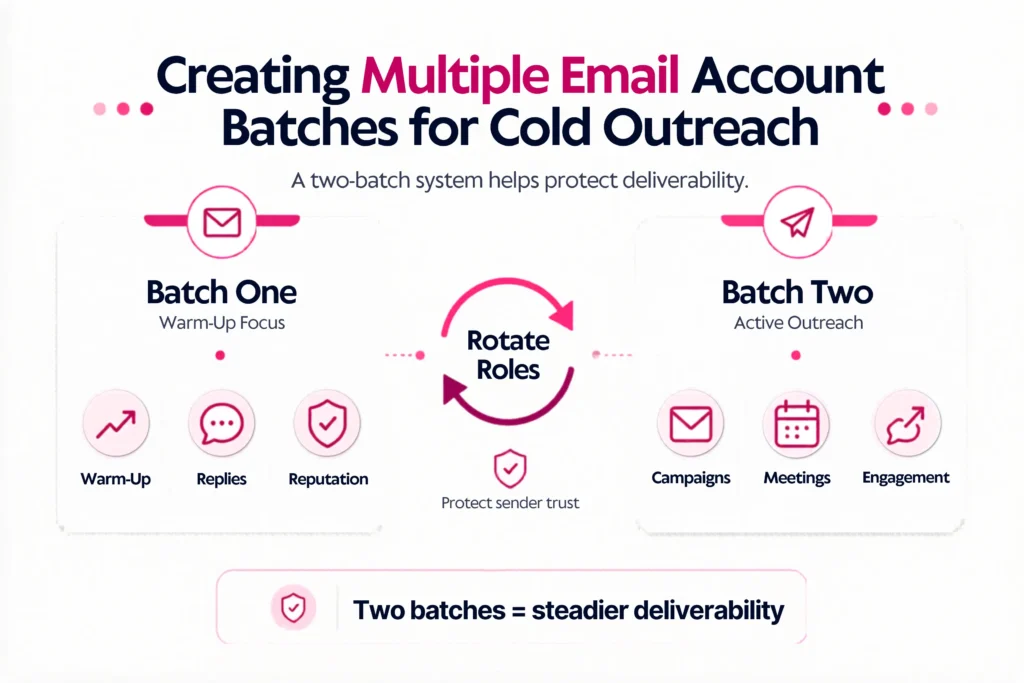
We create two separate batches of accounts for campaign management. Multiple batches provide better stability and reduce long-term reputation risk:
Batch One
Batch One mainly focuses on warm-up activity instead of active sales outreach. These accounts continue sending warm-up emails, receiving replies, and generating positive engagement signals daily.
This steady activity helps maintain a healthy sender reputation and keeps trust levels stable with providers like Gmail and Outlook. Our team often uses this batch as a recovery and reputation-maintenance group while another batch handles real outreach campaigns.
Since sender reputation naturally declines over time, keeping one batch heavily focused on warm-up activity helps preserve long-term deliverability and protects overall campaign performance much more effectively.
Batch Two
Batch Two mainly handles cold outreach campaigns while still participating in regular warm-up activity at the same time. They send campaign emails to prospects, book meetings, and generate replies while automated warm-up tools continue creating positive engagement in the background.
This balance helps reduce the negative impact that cold outreach can create on sender reputation. We regularly rotate accounts between active outreach and warm-up-focused activity to maintain healthier deliverability.
The two-batch structure helps protect account quality during long-term campaigns and reduces the chances of sudden spam placement or account restrictions.
How the Two-Batch Rotation Strategy Works
Sender reputation naturally changes over time. Heavy outreach activity slowly weakens trust scores, especially during large campaigns. Batch rotation helps solve this problem.
One batch remains focused mainly on warm-up activity while the other batch handles campaign outreach. After a certain period, the roles switch. It allows one group of accounts to recover while the other remains active.
Reputation management never fully stops. Even active campaign accounts continue participating in warm-up systems to maintain positive engagement signals. This strategy supports more stable deliverability over long-term campaigns.
5. Balancing Warm-Up Emails and Real Campaign Emails
Email accounts should not spend all daily activity on sales outreach because providers monitor engagement quality and sending behavior closely. Positive engagement should continue alongside campaign emails so accounts maintain healthy reputation signals over time. Warm-up emails, replies, opens, and regular interaction patterns help create natural activity for email providers.
Our team keeps automated warm-up systems running after campaigns begin. This activity helps offset the lower engagement rates common in cold outreach campaigns. It also creates a healthier balance between outreach emails and normal conversation activity. Accounts that stop warm-up activity often experience faster reputation decline and weaker inbox placement during long-term campaigns.
Campaign growth should remain gradual and controlled because aggressive scaling can damage reputation. Open rates, bounce rates, reply rates, and spam placement should receive regular monitoring so teams can identify problems before account performance drops.
Best Practices to Maintain a Healthy Sender Reputation
Strong deliverability requires ongoing discipline and careful campaign management like followings:
- Use High-Quality Lead Lists: Poor data quality creates bounce problems that damage sender reputation quickly.
- Personalize Outreach Messages: Relevant emails usually generate stronger engagement and fewer spam complaints.
- Keep Sending Patterns Consistent: Stable activity appears more trustworthy than unpredictable spikes in volume.
- Continue Warm-Up Activity: Warm-up should continue even after campaigns become active.
- Spread Campaigns Across Domains: Many outreach teams use multiple domains to reduce pressure on individual accounts.
- Monitor Deliverability Metrics: Tracking performance closely helps identify problems before accounts become severely damaged.
Risks of Sending Cold Emails Without Warm-Up
Skipping warm-up creates several serious problems for cold email campaigns. Common risks include:
- New email accounts sending large outreach volumes immediately often trigger spam filters and lose inbox placement quickly.
- Email providers may block or suspend accounts showing suspicious sending behavior during cold outreach campaigns.
- Spam folder placement reduces open rates because prospects never see outreach emails inside their primary inboxes.
- Damaged domain reputation can affect all connected accounts and even disrupt internal company email communication systems.
- Poor deliverability wastes campaign resources, including software costs, lead generation efforts, copywriting work, and management time.
Signs Your Email Accounts Are Properly Warmed Up
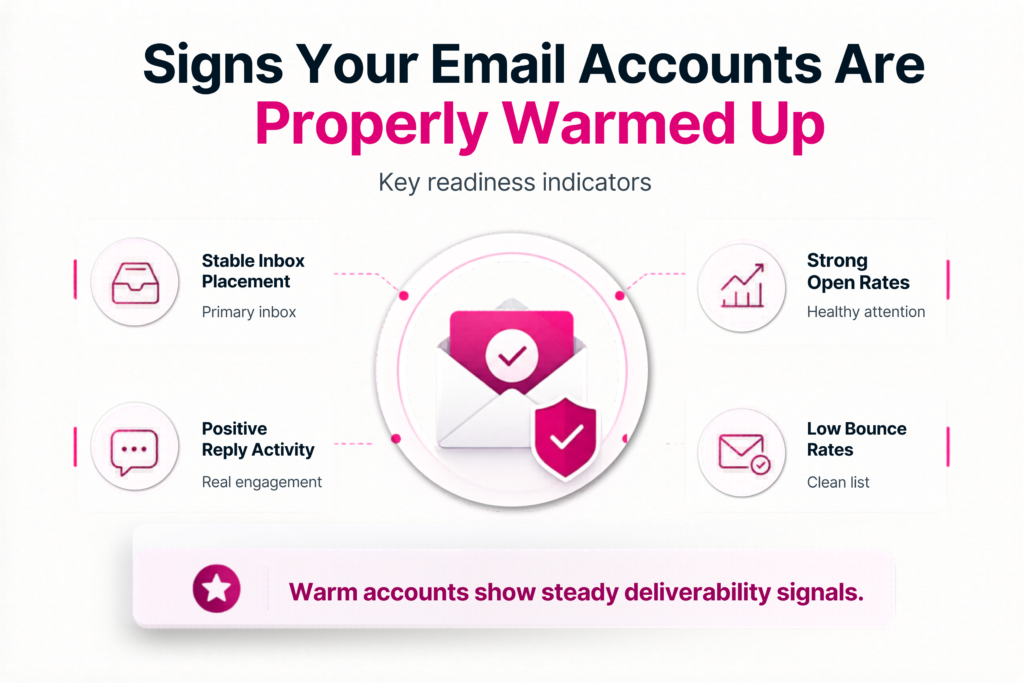
Indicators like these suggest accounts are ready for cold outreach campaigns:
Stable Inbox Placement
One of the clearest signs of a properly warmed email account is consistent inbox placement. Emails should land inside primary inboxes instead of spam or promotional folders across different providers. Strong inbox placement shows providers trust the account’s sending behavior and engagement history. It also creates better visibility for cold outreach campaigns and improves reply opportunities.
Strong Open Rates
Healthy open rates usually indicate good deliverability and stronger sender reputation. When prospects regularly open outreach emails, providers recognize positive engagement patterns and continue trusting the account. Poor open rates often suggest spam placement or reputation issues. Our team monitors open rates closely because they provide one of the earliest signs of account health problems.
Positive Reply Activity
Reply activity helps confirm that recipients view emails as legitimate conversations instead of spam. Accounts receiving steady replies often maintain healthier sender reputation and stronger inbox placement during campaigns. Positive engagement also helps providers recognize natural communication patterns. Cold outreach accounts with good reply activity usually experience more stable deliverability and lower spam filtering risks.
Low Bounce Rates
Low bounce rates show that outreach campaigns use clean prospect data and valid email addresses. High bounce rates often damage sender reputation because providers may view poor list quality as suspicious behavior. Healthy accounts maintain low bounce percentages during campaigns and warm-up activity. Strong list management supports better deliverability and helps protect long-term account stability.
Final Thoughts
Email account warm-up plays a major role in cold email success because deliverability depends heavily on sender reputation and engagement quality. A proper warm-up process helps providers trust new email accounts through gradual sending activity, replies, opens, and steady interaction patterns. Automated warm-up systems also help maintain these positive signals during active outreach campaigns.
We have seen many campaigns fail because companies skipped warm-up or increased sending volume too aggressively. Strong outreach systems focus on long-term reputation management through gradual scaling, batch rotation, and continuous warm-up activity. Cold email remains highly effective for B2B lead generation when email accounts maintain healthy reputation and stable inbox placement over time.
Frequently Asked Questions
Can I send cold emails without warm-up?
You can, but the risk of spam placement and account restrictions increases significantly without proper preparation.
What happens during email warm-up?
Accounts send emails, receive replies, generate opens, and create positive engagement signals that help build trust with providers.
Do warm-up tools actually help?
Yes. Automated warm-up tools create consistent engagement activity and simplify reputation management for outreach teams.
Should warm-up stop after campaigns launch?
No. Continuous warm-up activity helps maintain sender reputation during ongoing outreach campaigns.
What damages the sender reputation the fastest?
Large sending spikes, spam complaints, poor lead quality, and high bounce rates usually cause the fastest reputation decline.