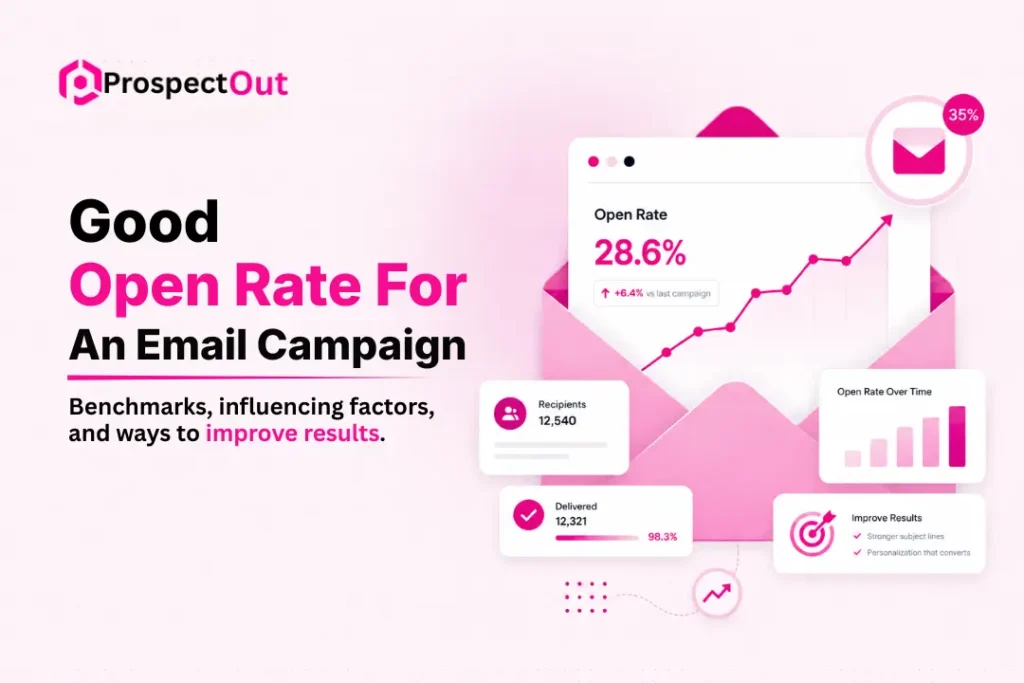
A good open rate for a B2B cold email campaign is usually 15% to 25%, while 25% to 40% signals strong performance. In cold outreach, you are contacting people who may not know your brand, so results depend heavily on how relevant your message feels from the first glance.
Factors like a clear subject line, a trusted sender name, and a clean contact list all play a role. Industry, job role, and timing also affect how often emails get opened. For example, decision makers in niche sectors may open more if your offer matches their current needs.
If your numbers fall short, it often points to targeting gaps or weak positioning rather than volume issues. In the sections ahead, you will learn what drives open rates in B2B cold outreach and how to improve them step by step.
What Is the Meaning of Open Rate in a B2B Cold Email Campaign?
Open rate shows the percentage of recipients who open your cold emails out of the total delivered messages. In B2B outreach, this metric reflects how well your subject line, sender name, and initial targeting attract attention. It does not measure replies or sales, but it helps you judge first level engagement:
- This metric shows how many recipients opened your email compared to the total number of delivered messages.
- It reflects how effective your subject line and sender name are at gaining initial attention from prospects.
- The data point helps identify if your targeting aligns with the right audience segments within your B2B outreach list.
- You understand the list quality, since invalid or outdated contacts can reduce delivery and lower visible open rates.
- It offers early visibility into campaign performance before deeper metrics like replies, meetings, or conversions are reviewed.
Also read: Cold Email vs Email Marketing
What Is A Good Open Rate Benchmark Across Different B2B Industries
A good open rate in B2B cold email depends heavily on the industry you target. Different sectors show different engagement patterns based on urgency, competition, and communication habits. The top ones are:
| Industry | Good Open Rate Benchmark |
| SaaS / Tech | 20% – 35% |
| Marketing / Advertising | 18% – 30% |
| Finance / Banking | 25% – 40% |
| Real Estate | 15% – 28% |
| Manufacturing | 20% – 32% |
| Healthcare B2B | 22% – 38% |
| Consulting Services | 25% – 40% |
What Is The Difference Between Open Rate And Response Rate In Email Campaigns
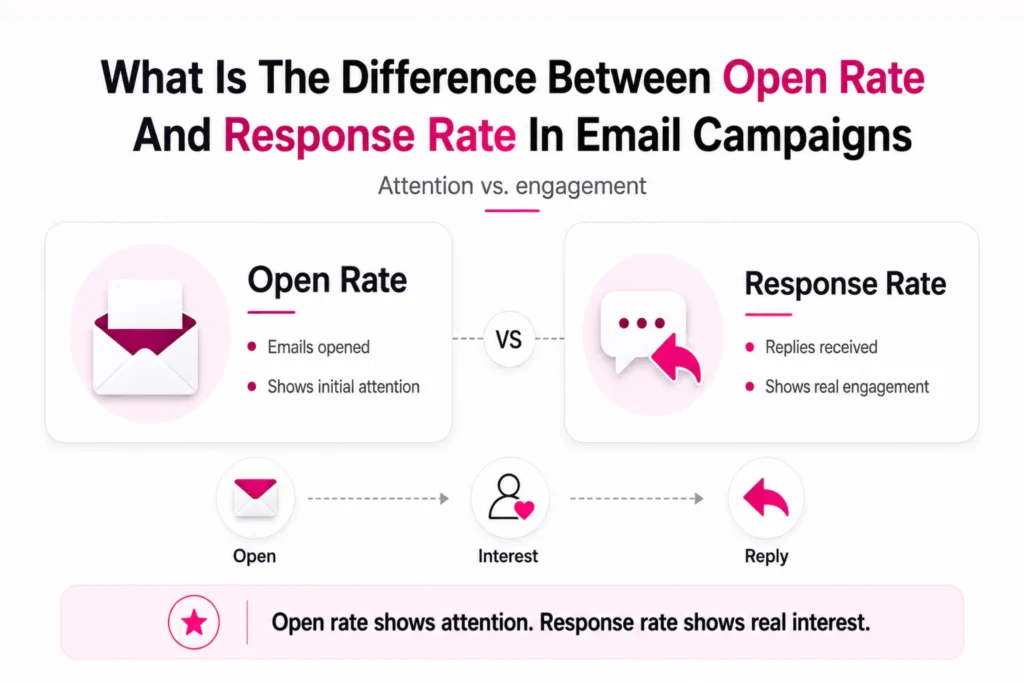
Open rate and response rate measure different stages of engagement in email campaigns and show different levels of prospect interest:
Open Rate
Open rate shows how many recipients opened your email compared to total delivered messages. It reflects initial attention, mainly influenced by subject line strength, sender name, and inbox placement. In B2B cold outreach, this metric helps you understand if your message is getting noticed at all. It does not indicate interest in your offer, only that the email was viewed in the inbox or opened by the recipient, sometimes even briefly.
Response Rate
Response rate shows how many recipients replied to your email compared to total delivered messages. It measures active engagement and indicates real interest or curiosity about your offer. In B2B campaigns, this metric is more valuable for sales outcomes because it reflects conversation potential. Strong response rates often come from relevant targeting, clear messaging, and a compelling call to action that encourages recipients to reply instead of ignoring the message.
How Do You Measure B2B Email Campaign Open Rate?
Measuring open rate in a B2B cold email campaign helps you see how many prospects actually view your message after it reaches their inbox. This metric gives early feedback on campaign performance and shows if your emails attract attention. To get reliable data, you need a clear method and the right tools in place.
The formula for open rate is simple and easy to apply:
Open Rate (%) = (Unique Opens ÷ Delivered Emails) × 100
For example: If 1,000 emails are delivered and 200 recipients open them, then:
Open Rate = (200 ÷ 1,000) × 100 = 20%
Focus on unique opens instead of total opens, since one person may open the same email more than once. Also, use delivered emails in your calculation, not sent emails, because bounced messages should not be counted.
Most B2B teams rely on email platforms to measure this automatically. Tools like Mailchimp, HubSpot, and Lemlist track opens through a small invisible image placed inside each email. When a recipient loads the message, the tool records the opening. These platforms also provide reports, trends, and comparisons across campaigns, which helps you spot patterns and improve future outreach.
How To Improve The B2B Cold Email Campaign Open Rate
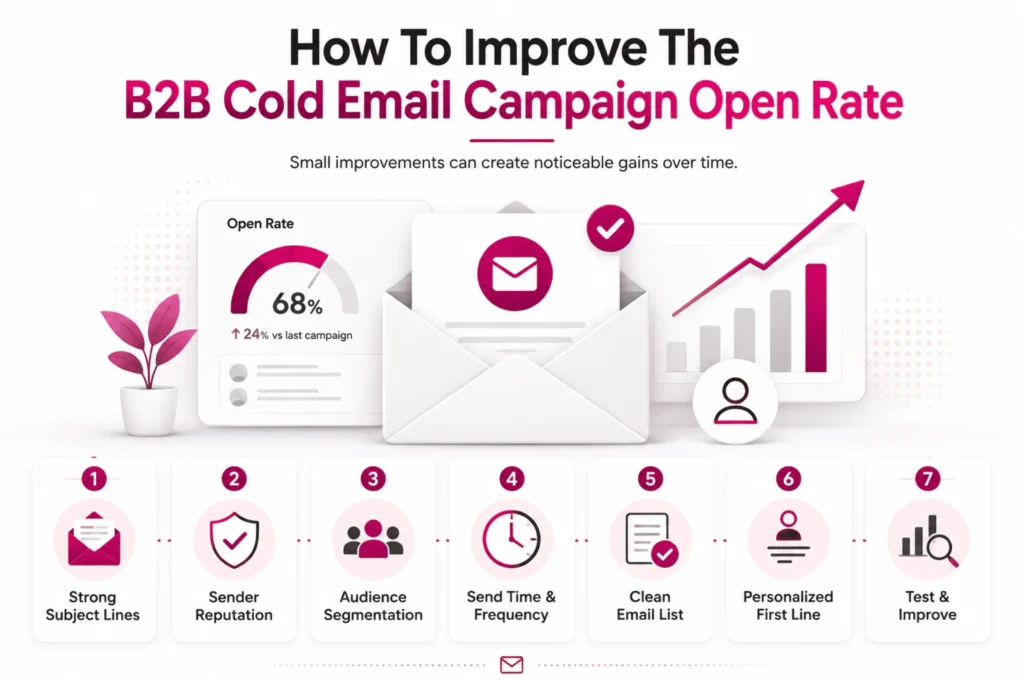
Small changes in setup, wording, and timing can create noticeable gains over time. Some actions include:
1. Write Strong Subject Lines
Subject lines decide if your email gets opened or ignored, so they must feel clear and relevant to the reader’s role or need. Avoid vague phrases and focus on direct value or curiosity without being misleading. Keep them short so they display fully on mobile devices. Testing different styles, such as question-based or outcome-based lines, helps identify what works best for your specific audience. Consistency in tone also builds recognition over multiple campaigns.
2. Improve Sender Reputation
Your sender name and domain trust strongly affect whether recipients open your emails or skip them. Use a recognizable sender name instead of generic addresses, and keep your domain properly authenticated with SPF, DKIM, and DMARC settings. Avoid sudden spikes in sending volume, as this can trigger spam filters. Warm up new domains gradually to build credibility. A stable sending pattern improves inbox placement and increases the chance of higher engagement.
3. Segment Your Audience Properly
Better targeting leads to better engagement because recipients are more likely to open messages that match their job role or industry. Divide your list based on factors like company size, position, or pain points. This allows you to send more relevant messages instead of one broad pitch. Personalized relevance increases curiosity at the inbox level. Clean and updated data also reduces bounce rates and improves overall campaign quality over time.
4. Optimize Sending Time and Frequency
Timing plays a big role in whether emails get noticed in busy inboxes. Test different days and hours to find when your audience is most active. Many B2B campaigns perform better during mid-week mornings, but this can vary by industry. Avoid sending too many emails in a short period, as this can reduce attention and increase unsubscribes. A steady and planned schedule helps maintain visibility without overwhelming recipients.
5. Clean And Verify Email List
A clean email list improves open rates because your messages reach real and active business contacts. Remove invalid, inactive, or duplicate addresses before sending campaigns. Use verification tools to reduce bounce rates and protect sender reputation. High bounce rates can hurt inbox placement and reduce visibility. Updating your list regularly ensures you are targeting people who are more likely to engage, which naturally increases the chance of emails being opened over time.
6. Personalize The First Line
Personalization helps your email feel relevant instead of generic, which increases the chance of an open. Go beyond using just the first name and include details like role, company type, or industry pain points. When recipients see familiar context, they are more likely to pay attention. Avoid overused templates and focus on natural language that feels human. Even small personalization improvements can significantly improve curiosity and engagement in cold B2B outreach.
7. Test And Improve Continuously
Testing helps you understand what actually drives higher open rates in your specific audience. Try different subject lines, sender names, and sending times to compare results. A/B testing is especially useful for identifying patterns that work best. Track performance over multiple campaigns instead of relying on a single send. Small adjustments made consistently over time can lead to steady improvements in open rates and overall campaign performance.
What Factors Affect The Open Rate Of B2B Email Outreach Campaign
Several elements influence how often B2B prospects open your emails. These factors shape first impressions inside crowded inboxes and determine if your message gets attention:
- Subject Line Quality: Clear and relevant subject lines increase curiosity and encourage recipients to open emails instead of ignoring them.
- Sender Reputation: A trusted sender name and clean domain setup improve inbox placement and raise chances of email opens.
- Audience Targeting: Well-segmented lists ensure messages reach relevant professionals who are more likely to engage with content.
- Email Timing: Sending emails when prospects are active increases visibility and improves the likelihood of immediate attention.
- List Quality: Verified and updated contact lists reduce bounce rates and help maintain strong deliverability and open performance.
- Email Personalization: Relevant personalization creates familiarity, making recipients more interested in opening and reading your message.
How Email Deliverability Impacts Open Rate Performance
Email deliverability plays a direct role in how many recipients actually see your message in their inbox. If your emails land in spam or are blocked by filters, your open rate will drop even if your content is strong. Good deliverability ensures your emails reach the primary inbox, where they have a real chance of being opened and read by B2B prospects.
Poor sender reputation, weak domain setup, or unclean lists can reduce inbox placement. This means fewer people see your email, which automatically lowers engagement metrics. Even a well-written subject line cannot improve results if the message never reaches the recipient’s inbox in the first place.
Using a reliable B2B email deliverability service helps improve inbox placement by managing authentication, domain health, and sending patterns. It also reduces bounce rates and spam risks. With better deliverability, your campaigns gain higher visibility, which naturally leads to improved open rate performance over time.
Final Thoughts
Open rate in B2B cold email campaigns is often treated as a simple metric, but it actually reflects deeper issues in targeting, messaging, and inbox placement. Relying only on high volume sending rarely improves results. What matters more is how relevant and trustworthy your email feels at the moment it reaches the prospect.
Sustainable improvement comes from combining clean data, strong positioning, and consistent testing rather than quick fixes. Even small refinements in subject lines or segmentation can change performance noticeably. Over time, teams that focus on quality signals tend to outperform those chasing short-term spikes in opens.
Frequently Asked Questions
What time of day is best for B2B cold email opens?
Mid-morning on weekdays, especially Tuesday to Thursday, often performs best since professionals are active and checking inboxes during work hours.
Does email length affect open rates?
Email length does not directly affect opens, but shorter, clearer subject lines often improve curiosity and encourage more recipients to open messages.
Can emojis in subject lines increase open rates?
Emojis may increase visibility in some industries, but overuse can look unprofessional in B2B contexts and reduce trust among decision-makers.
How often should you send cold emails to the same prospect?
Spacing follow-ups three to five days apart is common, ensuring persistence without overwhelming recipients or triggering negative perceptions.