
Getting business listings is not always easy for business brokers. Many brokers blame the market, competition, or business owners for slow results. But the real problem is often closer to home.
The primary reason I found that most business brokers struggle to get listings is that they do not have a proper lead generation channel. Without steady outreach, brokers remain invisible to owners who may be thinking about selling.
Other problems also matter, including weak trust, poor online presence, and weak sales skills. These issues make it harder to turn prospects into listings.
Read the rest of this blog to learn why brokers lose listings and what they can do differently.
#1. Don’t Have a Proper Lead Generation Channel
If you ask me, one major reason business brokers struggle to get listings is that they do not have a proper lead generation channel. Many brokers depend mainly on referrals. Referrals bring good leads, but they are not predictable. You never know when the next business owner will be ready to sell.
My experience says cold email and LinkedIn outreach work better when used together. This combination can get 3–4x more replies than using either channel alone. It also gives brokers a chance to reach business owners before they start looking for a broker.
Winning brokers use a simple, regular outreach system instead of sending one message and waiting. They follow up 7–10 times over 2–3 weeks. These follow-ups keep the broker in front of potential sellers and create more conversations. A well-planned cold email and LinkedIn sequence can generate 30–40% more replies than using just one channel.
#2. Lack of Trust and Credibility
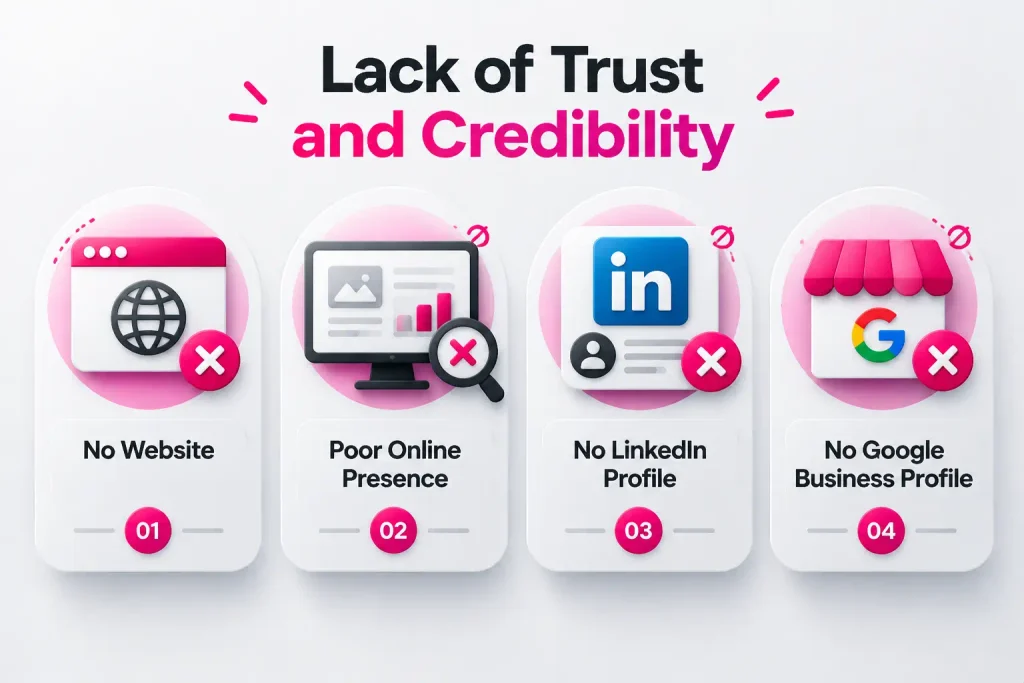
Trust matters when business owners are deciding who should handle the sale of their company. However, I often notice these weak online presences make brokers look less credible:
No Website
Around 89–90% of B2B buyers research a vendor online before they decide to engage. A business broker without a website may look less established or harder to trust. Potential sellers often search for a broker before replying to an email or LinkedIn message. A professional website gives them a place to learn about the broker, services, experience, and past results.
Poor Online Presence
Business owners often do most of their research before speaking with a broker. Research suggests buyers complete around 70–80% of their research before talking to someone. A weak online presence may create doubts before the first conversation even starts. Good content, clear information, and an active online presence give sellers more confidence and make the broker easier to trust.
No LinkedIn Profile (or Unoptimized)
LinkedIn is not just an outreach tool. It also gives potential sellers a quick way to check who is contacting them. A thin or incomplete profile may reduce connection and reply rates. Sellers want to know who they are dealing with before starting a conversation. A complete profile with experience, services, achievements, and a professional photo makes the outreach feel more credible.
No Google Business Profile (or No Reviews)
Reviews give potential sellers proof that other people have worked with the broker and had a good experience. Selling a business is a major decision, so trust matters. A Google Business Profile with genuine reviews gives owners another reason to feel confident. No reviews leave sellers with little third-party proof and make them rely only on what the broker says.
#3. Weak Sales Process or Skills
Weak sales skills are another reason brokers struggle to get listings. Many brokers are good at handling deals but do not have much sales experience. Knowing how to close a deal is different from knowing how to win a new listing.
A common mistake is talking about services too soon. Brokers may start explaining their experience, marketing plan, or buyer network before learning what the owner really wants. The owner may care most about price, timing, privacy, or a smooth sale.
A good first call should feel like a conversation, not a sales pitch. Ask about the owner’s goals, reason for selling, timeline, and concerns. Listen first, then explain how you fit their needs.
Good brokers also know when to be honest. If an owner expects an unrealistic price, simply agreeing to win the listing may cause problems later. Honest advice builds trust and shows the owner that you care about the right result.
Final Words
Getting more listings is not always about finding the perfect market. It is about being visible, building trust, and having a clear process for reaching business owners. I once believed strong deal experience was enough to attract new clients, but winning listings requires strong sales and consistent outreach too.
My view is simple: brokers need a steady system that keeps new prospects coming into the pipeline. Referrals are valuable, but they should not be the only source of listings. A strong online presence, regular outreach, and better discovery calls can make a real difference.
Our lead generation for business brokers service gives you a consistent way to reach and connect with business owners.
Frequently Asked Questions
What’s the fastest way for a new business broker to get their first listing?
Start with consistent outreach to business owners, using cold email and LinkedIn together. Build trust quickly, understand their goals, and follow up regularly.
Is cold email or LinkedIn outreach more effective for business brokers?
Using both works best. Cold email reaches owners directly, while LinkedIn adds credibility and another touchpoint, making your outreach more effective overall.
Do I really need a website if I’m active on LinkedIn?
Yes. LinkedIn shows who you are, while a website gives potential clients more information about your services, experience, and credibility before contacting you.
How many times should a business broker follow up with a potential seller?
Follow up consistently without being pushy. A 7–10 touch sequence over two to three weeks gives prospects several chances to respond.