
Including a prospect’s pain point in your B2B email means focusing on a real problem they already face and showing you understand it. This approach makes your message feel relevant instead of generic.
In our campaigns, emails built around clear pain points consistently perform better than feature-focused messages. Studies show that personalized emails can increase response rates by over 30%, which highlights the impact of relevance.
Prospects pay attention when they see their situation reflected in your message. Let’s explore how to do it effectively.
What Does Prospect’s Pain Point Mean in Cold Emailing?
In B2B cold email outreach, a prospect’s pain point is a specific problem that affects their results, revenue, or daily work. It can be slow lead flow, low conversion rates, or wasted ad spend. We see that most prospects ignore emails that talk only about services. They respond when the message reflects a real issue they already face.
Pain points make your email feel relevant and worth reading. They show that you understand the prospect’s situation and not just your offer. In our experience, emails that focus on a clear problem create stronger interest and start real conversations.
Pain points in cold emails increases reply rates because it:
- Grabs attention with immediate problem relevance
- Makes email feel personal and relatable
- Shows clear understanding of their situation
- Builds trust without sounding sales heavy
- Creates urgency around fixing the issue
- Encourages quick and natural responses
How Do You Identify a Prospect’s Pain Points Before Emailing?
Strong outreach starts with clear research that reveals real problems prospects face daily, so your message connects with purpose:
i. ICP analysis: We study your ideal customer profile to spot common challenges across similar companies, roles, and sizes. This helps predict real issues they face without relying on guesswork.
ii. LinkedIn insights: We review posts, comments, and activity to see what prospects discuss or struggle with. Hiring updates and shared content often reveal current priorities and ongoing problems.
iii. Industry trends: We track market shifts, common complaints, and rising challenges within the industry. This allows us to align messaging with real pressures businesses are facing right now.
What Are the Types of B2B Pain Points You Should Target?
Not all problems drive action. So, focus on pain points that directly affect revenue, efficiency, and growth to make your cold emails more compelling:
- Financial pain: high costs, low ROI, wasted budget.
- Operational pain: slow processes, manual work, inefficiencies.
- Productivity pain: low output, poor team performance.
- Growth pain: limited pipeline, stalled revenue expansion.
- Lead generation pain: inconsistent or low-quality leads.
- Conversion pain: poor close rates, weak sales results.
- Scalability pain: systems that fail during growth stages.
Ways to Incorporate Pain Points in Cold Emails
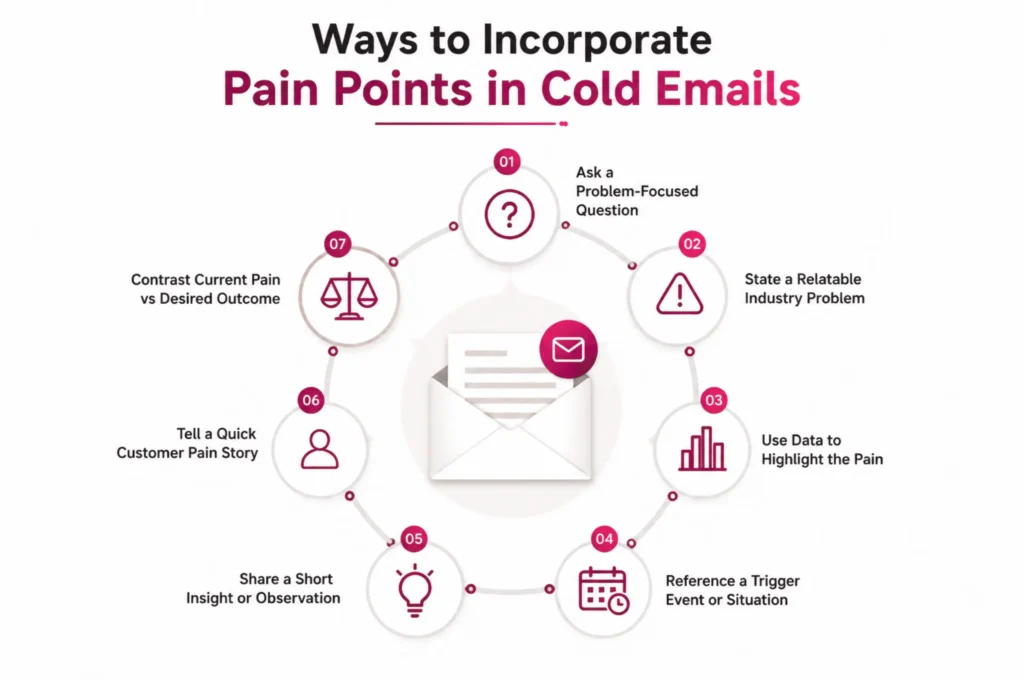
You can include pain points in simple, natural ways that make your emails feel relevant and clear to the prospect:
1. Ask a Problem-Focused Question
Asking a direct question helps prospects pause and think about their current situation. We often use this approach to start conversations without sounding sales focused. The question should reflect a real challenge they likely face in their role or industry.
It works best when it feels natural and easy to answer. Keep it short and specific so it does not confuse the reader. This method invites engagement instead of pushing a message.
Example: Are you getting enough qualified meetings from your current outreach efforts?
2. State a Relatable Industry Problem
Mentioning a common issue within the prospect’s industry builds instant connection. We use this when targeting a specific market where patterns are clear. It shows that you understand what companies like theirs deal with every day. This approach works well at scale since many prospects share similar struggles.
Keep the statement simple and grounded in real scenarios. Avoid broad claims and focus on problems they recognize.
Example: Many SaaS teams struggle to maintain a steady flow of qualified leads.
3. Use Data to Highlight the Pain
Numbers help make problems feel real and urgent. We often include simple data points to support the pain we mention. This builds trust and shows that your message is based on real outcomes.
Use clear and easy figures instead of complex reports. Even a single stat can strengthen your point. Make sure the data connects directly to the prospect’s situation.
Example: Teams often see reply rates drop below 2% without a clear outreach strategy.
4. Reference a Trigger Event or Situation
Trigger events give context to your message and make it timely. We track signals like new hires, funding rounds, or product launches to connect pain points with recent changes.
This makes your email feel relevant and thoughtful. It shows you are paying attention to what is happening in their business. Keep the reference short and link it to a possible challenge.
Example: Saw your team is expanding, which often makes lead generation harder to manage.
5. Share a Short Insight or Observation
Sharing a quick insight shows expertise and builds credibility. We often highlight small inefficiencies or missed opportunities that prospects may not notice. This positions you as someone who understands their space. Keep the observation clear and focused on one issue. Avoid long explanations and stay practical. A strong insight can make your email stand out.
Example: Many teams rely on one channel, which limits their outreach results.
6. Tell a Quick Customer Pain Story
Short stories make your message more relatable and easier to trust. We use brief examples of clients who faced a similar issue and improved results. This helps prospects see how the problem and solution connect in real situations. Keep the story simple and focused on one outcome. Avoid too many details and stay clear.
Example: One client struggled with low replies but doubled meetings after improving targeting.
7. Contrast Current Pain vs Desired Outcome
Showing the gap between current results and desired outcomes creates a strong impact. We highlight where the prospect is now and where they want to be. This makes the problem feel more real and worth solving.
Keep the comparison simple and easy to understand. Focus on one clear difference. This approach often leads to quick responses.
Example: Most teams want steady meetings but deal with inconsistent outreach results.
The Best Framework to Include Pain Points in Emails (PAS Method)
In our experience, the Problem-Agitate-Solve method works well for writing cold emails that get replies. It gives your message a clear flow and keeps the reader focused on one issue. Many teams struggle when emails jump between ideas or push offers too early.
PAS fixes that with a simple structure:
- Start with the problem. State a real issue your prospect likely faces in their role or industry. Keep it direct and easy to relate to.
- Next comes the agitate part. Expand on the impact of that issue and show what it costs them in time, revenue, or effort. This builds urgency and keeps attention.
- Then present your solution. Show how your service fixes that specific issue without adding fluff.
Example:
Not getting enough qualified leads? Many teams waste time on outreach that brings no replies. We help you book consistent meetings with proven cold email campaigns.
How to Personalize Pain Points Without Over-Personalizing
Personalization should make your email relevant, not complicated or forced. So, focus on patterns and shared challenges instead of deep individual research:
- Use role-based challenges: Focus on common problems tied to the prospect’s job role. Sales leaders, founders, and marketers often share similar struggles that you can address clearly.
- Segment by industry patterns: Group prospects by industry and speak to issues they commonly face. This keeps your messaging relevant without needing deep research for every single contact.
- Avoid unnecessary personal details: Do not mention random facts like hobbies or posts that add no value. Keep the focus on business problems that matter to their results.
- Use simple, relevant observations: Share insights based on what similar companies experience. This shows expertise and keeps your message grounded in real situations without sounding overly specific.
- Stick to one clear pain point: Do not overload your message with multiple issues. One strong and relevant problem makes your email easier to read and more likely to get a response.
How to Back Up Pain Points With Data and Proof
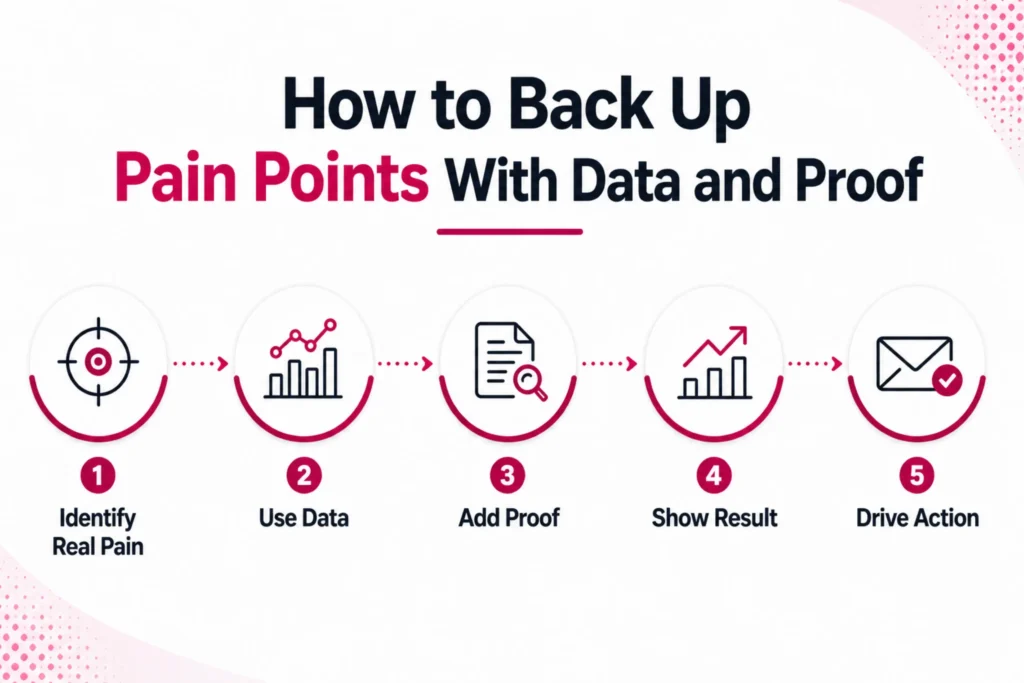
In our outreach campaigns, we see stronger reply rates when pain points are supported with real proof. Claims alone feel weak, but data builds trust fast. Prospects respond more when they see evidence behind the problem and solution.
Case studies work well because they show real situations. We often reference how similar companies faced the same issue and improved results after taking action. This makes the message feel practical and relatable.
Metrics add more weight. Numbers like 30% drop in leads or 2x higher conversion make the pain feel real and urgent. They help prospects picture the impact in their own business.
Results also matter when showing outcomes. We highlight clear improvements achieved after solving the problem, such as increased meetings or reduced costs. This builds confidence in your offer.
When you combine case studies, metrics, and results, your email moves from opinion to proof. That shift often turns cold outreach into real conversations.
What Is a Pain-First Email Structure That Converts?
We notice that simple structure drives better replies than long, complex emails. A pain-first approach keeps your message clear and focused on what matters most to the prospect.
- Pain: Start with a direct problem your prospect likely faces. Make it specific so they instantly relate and feel understood.
- Insight: Add a short observation that shows you know why the problem exists. This builds credibility and keeps the reader engaged.
- Proof: Support your point with a quick result, metric, or example. This shows your claim is based on real outcomes, not assumptions.
- CTA: End with a simple next step tied to solving the problem. Keep it easy and low effort so the prospect feels comfortable replying.
Common Mistakes When Using Pain Points in Emails
Many emails fail because they misuse pain points, which weakens trust and reduces replies. Avoiding these mistakes can improve your outreach results:
Being too generic:
Many emails mention broad problems like low sales or need more leads without context. These statements feel vague and easy to ignore. We see better results when the pain is specific and tied to a real situation. Clear details help prospects feel the message speaks directly to them.
Aggressive:
Some emails push pain too hard and try to create pressure or fear. This approach often feels forced and uncomfortable. We avoid exaggerating problems or making bold claims. A calm and realistic tone works better. Prospects respond more when they feel respected and not pushed into a decision.
Irrelevant:
Pain points that do not match the prospect’s role or business create confusion. This often happens when research is weak or assumptions are wrong. We focus on aligning the message with the prospect’s responsibilities. Relevance builds trust and increases the chance of getting a reply.
How B2B Cold Email Agencies Use Pain Points to Book Meetings
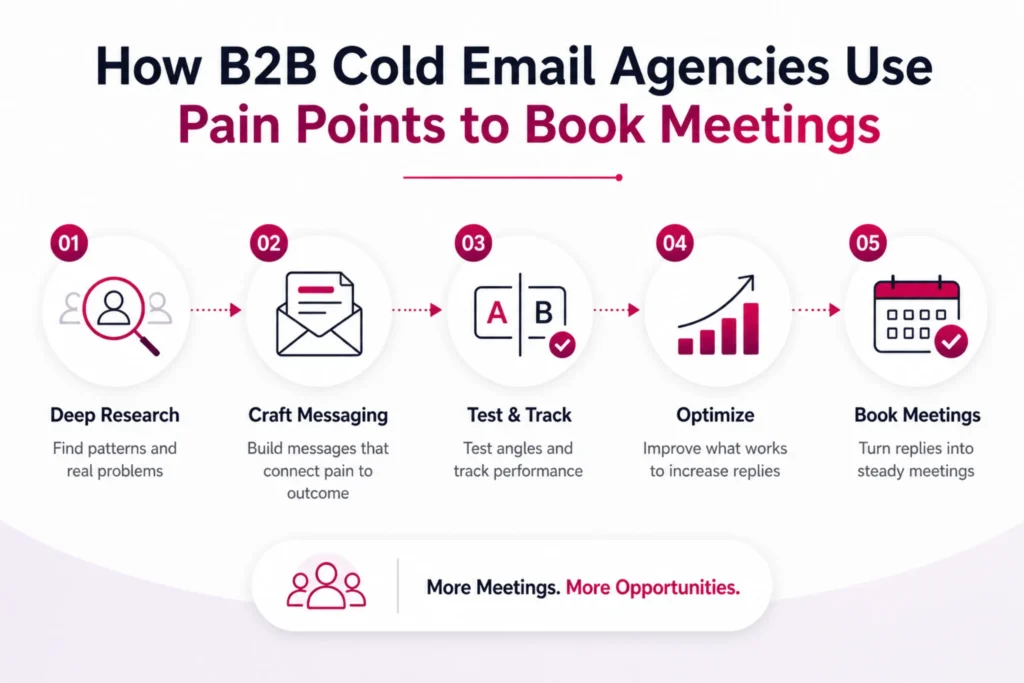
We apply a clear system to turn pain points into booked meetings. Random messaging does not work in B2B outreach. A structured approach based on real problems drives consistent results.
Our experts start with deep research to find patterns across your ideal prospects. This helps us focus on issues that affect revenue, lead flow, or growth. Then we build messaging that speaks to one strong problem at a time. Each email connects that problem to a clear outcome.
We test different angles and track performance to see which pain points get the best responses. This improves campaigns over time and increases reply rates.
Our process combines research, messaging, and testing into one system. That is how ProspectOut helps businesses turn cold emails into steady meetings and real opportunities.
Final Thoughts
Strong outreach always starts with a clear focus on real problems. Prospects do not respond to features or long explanations. They respond to messages that reflect what they deal with daily. When you speak to a specific issue, your email feels relevant and worth their time.
A solid B2B cold email outreach service should do more than send emails. It should identify real challenges, craft clear messaging, and drive consistent conversations. That is what separates average campaigns from those that bring steady meetings.
If your emails are not getting replies, the issue is often not volume. It is the lack of a clear and meaningful pain point.
Frequently Asked Questions
How many pain points should you include in one email?
Focus on one clear pain point per email. This keeps your message simple, easier to understand, and more likely to get a focused response.
How to turn generic problems into specific pain statements?
Replace vague phrases with clear situations and outcomes. Mention what is happening, who it affects, and how it impacts results to make it feel real.
How do you connect your solution directly to the pain point?
Link your solution to the exact problem mentioned. Show how it removes that issue and leads to a clear, practical result the prospect wants.