TL;DR
B2B cold email writing works best when every word serves a clear purpose and guides the reader toward a simple response. Strong writing removes noise, improves clarity, and keeps attention on one focused message. You must:
- Keep sentences short and direct.
- Use plain language without complex terms.
- Write one idea per email.
- Make value clear within seconds.
- Personalize using real research.
- Avoid unnecessary words or filler.
- Maintain a natural conversational tone.
- End with a simple, clear CTA.
Read the full blog to explore deeper writing techniques and practical examples that improve cold email performance.
What Is A B2B Cold Email?
A B2B cold email is a message sent to a business contact who has no prior connection with you. It introduces your service, product, or idea in a direct and professional way. The goal is to start a conversation, not to push a sale in the first message.
Companies use cold emails to reach decision-makers, build relationships, and create new opportunities. It works well in B2B because buyers often need time, trust, and clear value before making a move.
Here is how it stands apart from other email types:
- It targets specific people instead of a large list.
- It focuses on relevance and value for the reader.
- It aims to begin a dialogue, not close a deal instantly.
Cold email is not spam. Spam is sent in bulk with little care for the receiver’s needs. Cold emails use research and personalization to stay useful and respectful.
It also differs from traditional email marketing, which targets subscribers who already showed interest. B2B cold email reaches new prospects and opens the door for future business.
How to Write B2B Cold Email
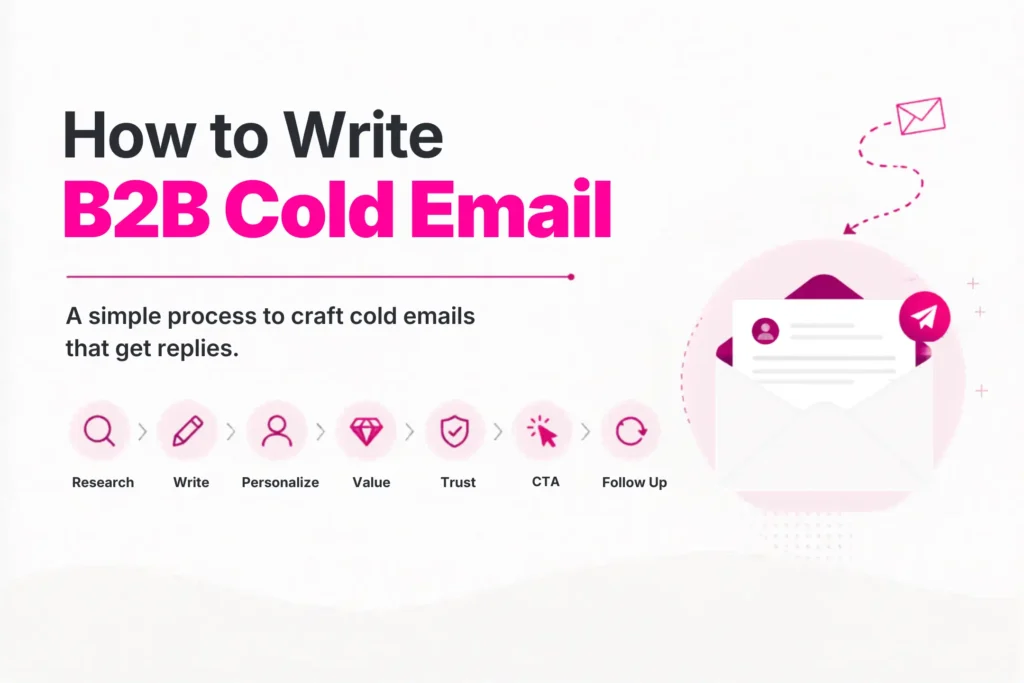
The process of writing a B2B cold email varies depending on many factors. However, the core steps remain similar, as described below:
1. Research Your Prospect
A strong cold email starts with solid research, as this step shapes how relevant your message feels to the reader. In our experience, copywriters in our team review the company’s website, recent updates, hiring trends, and the prospect’s role to connect the message with a real business need.
We recommend going beyond surface-level details and look for signals like growth stage, new offers, or visible gaps in their process. This helps you position your idea in a way that feels useful, not random, and improves the chances of getting a response.
Example: “I noticed your team is expanding your sales department. Many companies at this stage look for better outbound systems, so I thought to reach out.”
2. Write A Clear And Relevant Subject Line
The subject line often decides if your email gets opened, so clarity should always come first. We focus on simple, direct wording that reflects the message inside, instead of trying to sound clever or overly creative.
Short subject lines with a clear benefit or idea tend to perform better, especially when they match the reader’s role or goals. Keep the tone natural and avoid exaggerated claims that may reduce trust.
Example: “Idea to improve your outbound results”
3. Personalize The Opening Line
A personalized opening line helps your email feel human and relevant right away. Copywriters in our team often begin with a recent activity, post, or company update to show that the message is written with care.
Our advice is to keep it short and honest, and avoid overpraising since that can feel forced. A simple, relevant line is enough to capture attention and encourage the reader to continue.
Example: “Hi John, I came across your recent post about scaling your sales team, and it caught my attention.”
4. Present A Clear Value Proposition
Clarity matters most when presenting your value, as decision-makers want to see how you can help without reading long explanations. In our professional experience, focusing on one strong benefit works better than listing multiple features.
Connect your value directly to the insight you found during research so the message feels aligned with their needs. Keep it easy to scan and quick to understand.
Example: “We help B2B teams increase qualified replies without adding extra workload to their sales process.”
5. Build Credibility And Trust
Trust plays a big role in getting replies, especially when the reader has never heard of you before. That is why we include a short proof point that supports the main claim without adding too much detail.
Relevant results, client types, or quick achievements work well here. We recommend keeping it brief so the reader stays focused on the overall message.
Example: “We recently worked with a SaaS company that improved their reply rate by 40% within two months.”
6. Add A Simple And Clear CTA
A clear call to action guides the reader toward the next step and removes confusion. Our cold email strategy keeps this part simple, with one direct question that feels easy to answer.
Avoid asking for too much time or effort, since smaller requests often lead to better response rates. The goal is to start a conversation, not close a deal.
Example: “Would you be open to a quick 10-minute chat next week to explore this?”
7. Follow Up With Purpose
Consistent follow-ups often lead to better results, as many prospects respond after more than one touchpoint. In our experience, each follow-up should introduce a fresh idea or angle instead of repeating the same message.
Keep the tone polite and the content short, while spacing your emails over a few days. This approach keeps you visible without overwhelming the reader.
Example: “Hi John, I wanted to follow up and share a quick idea that could help improve your outreach results. Let me know if you would like me to send it.”
A B2B Cold Email Template and Explanation on Why It Works
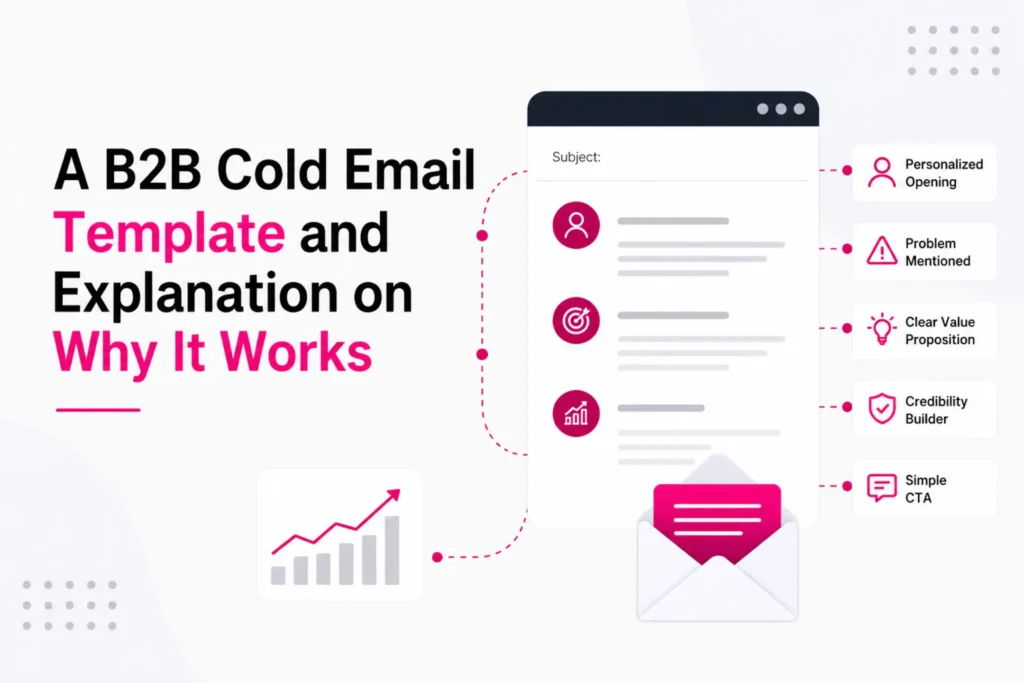
A simple structure helps you stay clear and improves response rates. A good cold email feels relevant, easy to read, and focused on one idea.
Below is a template with a breakdown of why each part works:
Subject: Quick idea for your outbound
Hi [First Name],
I noticed [specific detail about company or role]. Many teams in your space face [related challenge], so I wanted to reach out.
We help [target group] achieve [clear result] without [common pain point]. Recently, we worked with [similar company/type] and saw [specific result].
Would you be open to a quick 10-minute chat next week to explore this?
Best,
[Your Name]
Now, let’s explain why it works:
- Subject line: Short and clear, which improves open rates and sets the right expectation.
- Personalized opening: Shows effort and makes the email feel relevant instead of generic.
- Problem mention: Connects with a real challenge, which builds interest quickly.
- Value proposition: Focuses on results, making it easy to understand the benefit.
- Credibility: Adds proof, which increases trust and reduces doubt.
- CTA: Simple and low effort, which encourages replies without pressure.
Best Practices of Writing B2B Cold Email
Though writing a B2B cold email depends on several factors, following these evergreen practices is always encouraged:
Keep Your Message Short And Focused
A clear and concise message performs better than a long email filled with extra details. We recommend sticking to one main idea and removing anything that does not support it. Short emails respect the reader’s time and make it easier to understand your intent quickly, which improves reply chances.
Write Like A Real Person
A natural tone helps your email feel genuine and easy to read. Our strategy avoids complex language and sales-heavy phrases that create distance. Write as if you are speaking in a simple business conversation. This approach builds comfort and makes the reader more open to engaging with your message.
Focus On The Reader’s Problem
Emails that highlight the reader’s situation perform better than those that focus only on the sender. In our experience, connecting your message to a clear challenge keeps the reader interested. Show that you understand their needs and position your offer as a helpful solution rather than a direct pitch.
Test And Improve Your Approach
Improvement comes through testing different elements like subject lines, opening lines, and CTAs. Our team reviews performance data and adjusts messaging based on what works. Small changes can lead to better results over time, so consistent testing helps refine your overall cold email strategy.
Time Your Emails Carefully
Sending emails at the right time can affect how they perform. We suggest testing different days and hours to find what works best for your audience. Avoid sending messages during busy periods, as they may get ignored. A well-timed email increases the chances of being opened and read.
Also read: Best time to send an email
How to Optimize The B2B Email for Conversion
Small improvements in structure, timing, and messaging can increase replies and conversions. Here are some ways to optimize email that convert:
- A/B Testing: Testing different subject lines, openings, and CTAs helps identify what drives better engagement. Compare variations regularly to refine messaging and improve response rates over time.
- Personalization Depth: Going beyond basic details makes your email feel more relevant and thoughtful. Use specific insights about the prospect’s role, company activity, or challenges to create a stronger connection and improve engagement.
- CTA Improvements: A clear and simple CTA increases the chances of a reply. Test different formats such as questions or soft invites, and keep the request easy so the reader can respond without effort.
- Timing Strategies: Sending emails at the right time improves visibility and engagement. Test different days and hours to find patterns, and avoid periods when your audience is likely busy or less responsive.
- Email Structure And Formatting: Well-structured emails are easier to read and understand. Use short paragraphs, simple sentences, and clear spacing so the reader can quickly scan your message and grasp the main idea.
How Long Should A B2B Cold Email Be?
The ideal B2B cold email stays between 50 and 125 words, which usually takes around 15 to 30 seconds to read. Short emails perform better because busy professionals prefer quick, clear messages they can scan on mobile devices without effort.
Focus on delivering one clear idea instead of a long explanation. Highly personalized and concise emails, especially those under 200 words, often achieve strong response rates, sometimes even above 50%. Keep your message simple, highlight value early, and avoid turning the email into a full sales pitch.
Mistakes To Avoid In B2B Cold Email Writing
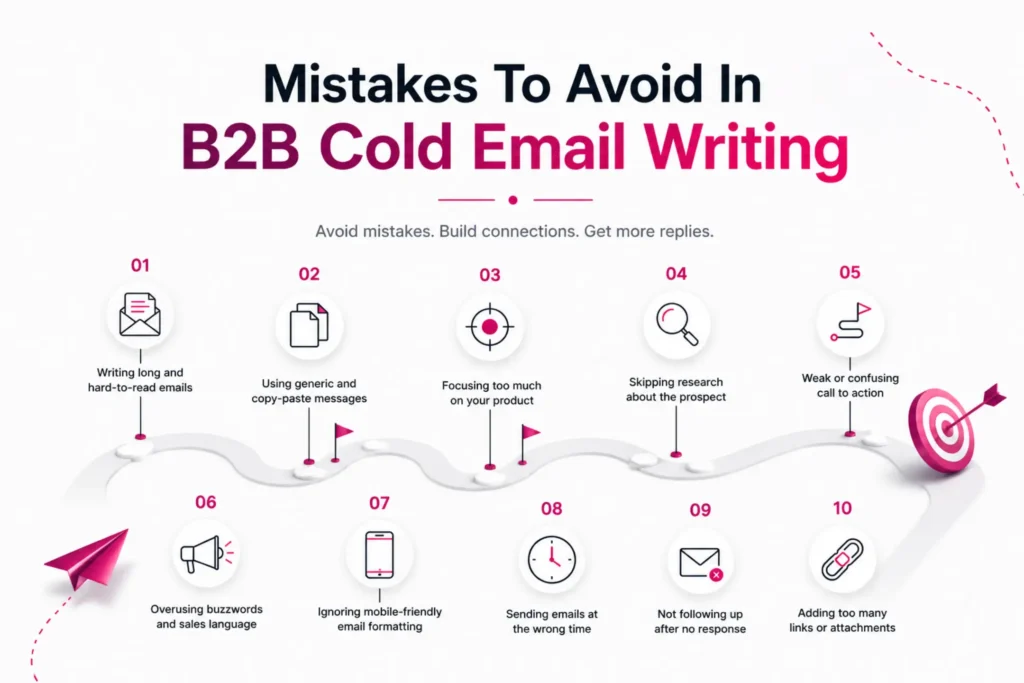
Small mistakes can reduce replies and damage first impressions in cold emails. Avoid these common issues that make your message feel generic, unclear, or too sales-focused:
- Writing long and hard-to-read emails.
- Using generic and copy-paste messages.
- Focusing too much on your product.
- Skipping research about the prospect.
- Weak or confusing call to action.
- Overusing buzzwords and sales language.
- Ignoring mobile-friendly email formatting.
- Sending emails at the wrong time.
- Not following up after no response.
- Adding too many links or attachments.
Does Outsourcing B2B Cold Outreach Services Help?
Outsourcing B2B cold email outreach can help when your team lacks time, skills, or systems to scale results. It allows you to focus on closing deals while experts handle research, writing, and campaign execution with a structured approach.
Teams often struggle with consistency and performance when they manage outreach alone. That is where a specialized service like ProspectOut can add value through tested strategies and efficient workflows.
You should consider outsourcing when:
- Your internal team cannot maintain regular outreach.
- Response rates remain low despite efforts.
- You need faster lead generation at scale.
- You lack experience in cold email strategy.
- You want better targeting and messaging.
Working with experts improves quality and saves time. We use proven methods, refined messaging, and consistent follow-ups to drive better engagement. This approach helps you reach more qualified prospects and build a steady flow of business opportunities without stretching your internal resources.
Final Thoughts
Writing effective B2B cold emails comes down to clarity, simplicity, and intent. Strong writing keeps the message easy to read, focused on one idea, and free from unnecessary words. Each sentence should guide the reader forward and make the purpose of the email clear without effort.
In our opinion, better writing leads to better results. When the message feels natural, relevant, and direct, it builds trust and increases replies. Consistent practice, editing, and attention to detail can turn average emails into high-performing ones that start real business conversations.
Frequently Asked Questions
Should I include links in a cold email?
It is better to limit or avoid links in the first email. Too many links can reduce trust and distract the reader from your message. Focus on starting a conversation first, then share links after they show interest.
Is it okay to use humor in B2B cold emails?
Light humor can work if it fits your audience and feels natural, but it should never confuse your message. Keep it subtle and professional, as not every reader responds the same way to humor.
Should I use images or attachments in cold emails?
Avoid using images or attachments in the first outreach. They can trigger spam filters and lower deliverability. A clean, text-based email is more reliable and easier for the reader to engage with quickly.